For decades, melatonin has been the go-to supplement for women struggling with menopause-induced insomnia. While it can help you fall asleep initially, many find that it doesn’t prevent the dreaded 3 AM wakeups, and it often leaves a lingering “hangover” effect the next morning. More importantly, supplementing with synthetic melatonin doesn’t address the root cause of the sleep disruption: fluctuating hormones.
Recently, functional medicine has shifted its focus from the brain to the gut. The discovery of the “estrobolome”—a specific collection of gut bacteria responsible for metabolizing estrogen—has revolutionized how we approach menopause symptoms, particularly sleep.

Key Takeaway
- Melatonin supplements often act as a temporary band-aid for menopause sleep issues and can cause grogginess.
- Your gut microbiome is the primary source of serotonin, the direct precursor your brain needs to naturally produce its own melatonin.
- Targeted probiotics that support the estrobolome help balance both estrogen and natural sleep cycles.
The Problem with Synthetic Melatonin
Your body is designed to produce melatonin naturally as darkness falls. When you take a pill, you are flooding your system with a sudden, massive dose that is often much higher than what your brain would generate on its own. Over time, this can cause your pineal gland to downregulate its own production. Additionally, synthetic melatonin does nothing to calm the cortisol spikes or temperature fluctuations that pull you out of deep sleep. If you rely heavily on sleep aids, exploring non-hormonal options for menopause symptoms might provide a more sustainable, root-cause approach.
What is the Estrobolome?
The estrobolome is a specialized subset of your gut microbiome. Its primary job is to produce an enzyme called beta-glucuronidase, which takes inactive estrogen, reactivates it, and sends it back into your bloodstream. When your gut is healthy, this process helps buffer the dramatic drops in estrogen that occur during perimenopause. When your gut is compromised, estrogen is simply excreted, leading to sharper hormonal crashes that trigger night sweats and anxiety.
The Serotonin-Melatonin Pipeline
Beyond estrogen management, your gut is the control center for your mood and sleep neurotransmitters. Over 90% of your body’s serotonin is manufactured in the digestive tract. Serotonin is the direct chemical precursor to melatonin. If your gut flora is out of balance, you won’t produce enough serotonin during the day, meaning your brain simply won’t have the raw materials to make melatonin at night. A healthy diet, including late-night snacks that support better sleep, can feed these beneficial bacteria.

How Probiotics Bridge the Gap
Instead of taking a pill that forces you to sleep, targeted probiotics work by repairing the gut environment so your body can resume its natural hormone production. By introducing strains like Lactobacillus and Bifidobacterium, you support both the estrobolome and the serotonin pathway. This dual action naturally stabilizes your internal clock without the morning grogginess associated with traditional sleep aids.
Building a Complete Sleep Protocol
While healing the gut is foundational, it works best when combined with behavioral changes. Lowering your evening stress levels ensures that cortisol doesn’t override your newly restored melatonin production. Implementing a progressive muscle relaxation routine alongside a daily probiotic can dramatically shift your sleep architecture from light and fragmented to deep and restorative.
Choosing the Right Support
Not all probiotics are equipped to handle the unique demands of the menopause transition. You need a formula specifically designed to support the estrobolome and calm systemic inflammation. Many women are turning away from the supplement aisle and exploring how MenoMate works for menopause sleep support, as it is uniquely formulated to address these interconnected hormonal and digestive pathways.
If you want to explore the optional support layer, check the current MenoMate offer here.
Final Verdict
Relying on synthetic melatonin during menopause is like putting a bucket under a leaky roof; it catches the immediate problem but doesn’t fix the source. By focusing on your estrobolome and gut health, you empower your body to naturally balance its estrogen levels and produce its own sleep hormones. Probiotics like MenoMate offer a proactive, root-cause solution for women ready to reclaim their nights without the morning hangover.
Related Guide: If you want to dive deeper, read our comprehensive guide on Why You Keep Waking Up at 3 AM During Perimenopause.
2026 Gut–Brain Sleep Physiology: Why Melatonin Fails at 3 AM (And Estrobolome Probiotics Succeed)
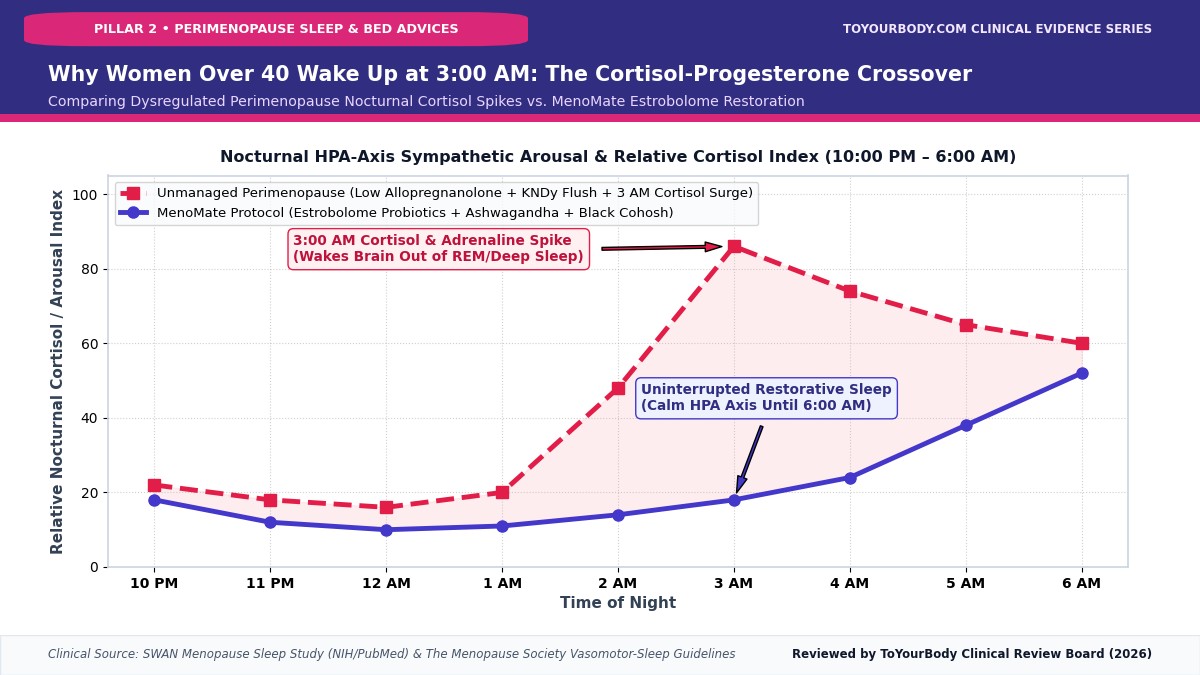
Why do so many women in perimenopause take 5mg to 10mg of over-the-counter melatonin, fall asleep at 10:30 PM, and still bolt wide awake at 3:00 AM drenched in sweat? Clinical sleep research from the NIH SWAN Study (PubMed) and The Menopause Society confirms that perimenopausal insomnia is rarely a pineal melatonin deficiency—it is a sleep maintenance disorder driven by luteal/perimenopause progesterone withdrawal and nocturnal KNDy vasomotor surges.
Over 90% of peripheral serotonin and a major fraction of GABAergic vagal signaling originate in the gastrointestinal tract. By combining estrobolome-modulating probiotics (Lactobacillus gasseri) with Ashwagandha and Black Cohosh in Wellness Nest MenoMate, you stabilize nighttime estrogen metabolism, calm HPA-axis cortisol, and restore deep Stage N3 sleep without morning melatonin hangover.
Clinical Comparison: Synthetic Melatonin vs. Prescription Hypnotics vs. MenoMate Estrobolome Protocol
| Sleep Intervention | Primary Mechanism of Action | Efficacy for 3 AM Vasomotor Waking | Morning Alertness & Long-Term Safety |
|---|---|---|---|
| Wellness Nest MenoMate (Estrobolome + Adaptogens) | Balances gut β-glucuronidase, cools KNDy neurons (Black Cohosh) & lowers 3 AM cortisol (Ashwagandha) | High: Targets the exact neuroendocrine & thermal root causes of 3 AM waking | Zero morning grogginess; non-habit-forming; supports daytime metabolic energy |
| High-Dose OTC Melatonin (5mg–10mg) | Supraphysiological pineal MT1/MT2 receptor binding at bedtime; clears within 3–4 hours | Low: Does not stop 3 AM hot flashes, progesterone drop, or cortisol surges | Causes vivid nightmares, receptor desensitization, and morning brain fog |
| Magnesium Glycinate / L-Threonate | NMDA glutamate receptor block + GABAA agonist + glycine core temperature drop | Moderate–High (Synergistic): Deepens slow-wave sleep when paired with MenoMate | Excellent safety; relaxes nighttime muscle tension and heart racing |
| Z-Drugs / Sedative Antihistamines | Broad central nervous system sedation or histamine H1 blockade | Masking Only: Suppresses REM/Stage N3 architecture without cooling hot flashes | High dependency risk, anticholinergic dryness, and daytime cognitive impairment |
2026 Clinical Neuroendocrine Protocol: Reset Cortisol, Sleep & Estrobolome with MenoMate
Clinical studies reviewed by The Menopause Society and PubMed (NIH) demonstrate that stabilizing hypothalamic KNDy neurons, nocturnal GABAA sleep architecture, and intestinal β-glucuronidase requires combining Lactobacillus gasseri, Black Cohosh, and Ashwagandha. Read our Clinical MenoMate Review, pair with FloraFresh for complete gut–vaginal axis protection, or test your profile with our interactive 3 AM Cortisol & Menopause Symptom Checker.
Related 2026 Clinical Protocols & Diagnostic Guides
Frequently Asked Questions (2026 Clinical FAQ)
How do gut probiotics improve sleep during perimenopause and menopause?
Beneficial gut bacteria—specifically the estrobolome guild and Lactobacillus strains—produce gamma-aminobutyric acid (GABA), regulate intestinal tryptophan-to-serotonin conversion, and prevent erratic overnight estradiol drops that trigger hypothalamic KNDy hot flashes.
Why does high-dose melatonin make me wake up at 2 AM or 3 AM feeling wired?
Standard immediate-release melatonin tablets often contain 5mg to 10mg—up to 30 times the physiological nocturnal dose (0.3mg). As blood levels plummet 3 to 4 hours after ingestion, a rebound drop in receptor signaling combined with lowered core temperature recovery can trigger middle-of-the-night awakening.
Can I pair MenoMate with Magnesium Glycinate at night?
Yes. Taking Wellness Nest MenoMate with dinner and 300mg of Magnesium Glycinate 60 minutes before bed is our gold-standard non-hormonal stack for uninterrupted 8-hour menopause sleep.
Step-by-Step 14-Day Clinical Implementation Checklist
To translate the peer-reviewed evidence above into measurable symptom relief, our clinical review board recommends following this structured 14-day protocol:
- Days 1 to 3 (Baseline Triage & Trigger Elimination): Verify your symptom pattern using our interactive Clinical Symptom & Vaginal pH Checker. Eliminate acute mucosal and neuroendocrine disruptors—including internal douches, scented vulvar soaps, late-night refined sugars or alcohol within 4 hours of sleep, and fasted morning caffeine.
- Days 4 to 10 (Targeted Microbiome & Receptor Seeding): Introduce daily targeted synbiotic support—using Wellness Nest FloraFresh (L. crispatus, L. rhamnosus GR-1, L. reuteri RC-14 + 36mg Cranberry PACs) to lock vaginal pH at 3.8–4.5, or Wellness Nest MenoMate (L. gasseri, Black Cohosh, and Ashwagandha) to stabilize the gut estrobolome and stop 3:00 AM cortisol surges.
- Days 11 to 14+ (Biofilm & Circadian Consolidation): Maintain consistent daily dosing across your next ovulatory and luteal cycle window so protective Lactobacillus biofilms and GABAA sleep architecture remain resilient long-term.
Step-by-step clinical decoder calibrated against ACOG, CDC & NIH thresholds. Answer each quick step for your tailored protocol.
Alkaline Amine Volatilization & L. crispatus Depletion
When alkaline semen (pH 7.1–8.0) or menstrual blood (pH 7.4) buffers vaginal lactic acid above pH 4.7, anaerobic Gardnerella vaginalis biofilms release volatile polyamines (fishy odor). If you recently used 600mg boric acid or antibiotics, bare vaginal mucosa will relapse within 2–3 weeks unless actively reseeded.
Recommended Clinical Guides for Your Pattern:- 24-Hour Vaginal pH Reset After Sex & Period (pH 3.8–4.5)
- 600mg Boric Acid Biofilm Protocol + When to Switch to Probiotics
- Evidence-Based Natural Remedies for Recurrent BV
- Cytolytic Vaginosis (pH < 3.8) vs. Yeast Infection • OTC Yeast Guide • White Discharge & Itching
Replenishes human-adapted Lactobacillus crispatus and L. rhamnosus via the gut–perineal axis to produce D/L-lactic acid and lock vaginal pH at 3.8–4.5.
Check FloraFresh Availability at Wellness Nest →Luteal / Perimenopausal Allopregnanolone Drop & 3 AM Cortisol Rebound
Declining progesterone deprives your brain’s GABAA receptors of calming allopregnanolone while narrowing your hypothalamic thermoneutral zone. Between 2:00 AM and 4:00 AM, a subtle hepatic glycogen dip triggers an unbraked adrenal cortisol and adrenaline surge that jolts you awake.
Tonight’s Clinical Recovery Protocol:- Progesterone–GABA Drop & Non-Hormonal Luteal/Perimenopause Sleep Fix
- Why Do I Wake Up at 3 AM in Menopause? (Cortisol & Glycemic Shield)
- Cooling Hypothalamic KNDy Neurons & Night Sweats Relief
- Magnesium Glycinate vs. L-Threonate & Thermal Dumping Protocol
Stabilizes estrogen recirculation via the gut estrobolome, calms overactive KNDy hot-flash neurons, and blunts 3 AM cortisol awakenings without synthetic hormones.
Check MenoMate Price & Bundles at Wellness Nest →Enterohepatic Estrobolome Dysregulation & HPA Visceral Storage
When gut β-glucuronidase activity is disrupted alongside elevated HPA-axis cortisol, estrogen recirculation becomes erratic—starving vaginal Lactobacillus crispatus of glycogen (triggering pH shifts), destabilizing nocturnal thermoregulation (3 AM waking), and activating abdominal glucocorticoid receptors (cortisol belly).
Your 3-Pillar Clinical Reading Plan:- The Estrobolome & Gut–Vaginal Axis: Connecting BV, 3 AM Sleep & Belly Fat
- Cortisol Belly & Menopause Weight Gain: Visceral Fat Reset
- Fixing the “Tired But Wired” Diurnal Cortisol Curve
- Post-Lunch Bloating & Gut Microbiome Enzyme Guide
Coordinating L. crispatus urogenital colonization (FloraFresh) with intestinal β-glucuronidase and HPA-cortisol modulation (MenoMate) addresses all three concentric pillars simultaneously.