For women experiencing severe hot flashes during menopause, the FDA’s recent approval of Veozah (fezolinetant) was major news. As a non-hormonal prescription drug, it offers a new avenue for relief. However, before asking your doctor for a prescription, it is crucial to understand its side effects, risks, and how it compares to natural, gut-based menopause relief strategies.
Clinical Practice Summary (The Menopause Society & NIH Neuroendocrine Evidence): 2026 Pharmacology & Safety Analysis: NK3R Antagonists (Veozah) vs. Non-Hormonal Estrobolome Alternatives
- Fezolinetant (brand name Veozah) is a prescription neurokinin-3 receptor (NK3R) antagonist that blocks neurokinin B binding on hypothalamic KNDy neurons. However, in 2024–2026 safety updates, the U.S. Food and Drug Administration (FDA) issued a prominent Boxed Warning regarding serious drug-induced liver injury (hepatotoxicity), mandating baseline and monthly hepatic transaminase (ALT, AST, and alkaline phosphatase/bilirubin) blood testing.
- Furthermore, single-receptor NK3R blockade does not resolve luteal/perimenopause GABAergic insomnia, visceral cortisol belly fat, or gut estrobolome dysbiosis. According to The Menopause Society and PubMed clinical reviews, multi-pathway phyto-probiotic stacks led by Wellness Nest MenoMate provide comprehensive vasomotor, sleep, and metabolic support without mandatory hepatic lab monitoring.
- Clinical Standard of Care: Stabilize the circadian HPA-axis cortisol curve, support luteal/perimenopause allopregnanolone (GABAA) sleep architecture, widen the hypothalamic KNDy neuron thermoneutral zone, and regulate intestinal β-glucuronidase across the estrobolome–vaginal axis.
What is Veozah and How Does it Work?

Unlike traditional Hormone Replacement Therapy (HRT) which adds estrogen to your body, Veozah works entirely differently. It is a neurokinin 3 (NK3) receptor antagonist. In simple terms, it blocks specific nerve receptors in the brain’s hypothalamus—the area that acts as your body’s thermostat—preventing it from misfiring and causing a hot flash.
Potential Side Effects of Veozah
Because Veozah alters brain chemistry rather than hormone levels, its side effect profile is distinct from HRT. Clinical trials have noted the following common side effects:
- Stomach Discomfort: Nausea, diarrhea, and abdominal pain are frequently reported.
- Insomnia: While menopause already disrupts sleep, some users report increased difficulty staying asleep on this medication.
- Liver Enzyme Elevation: This is the most significant warning. Veozah carries a risk of liver injury. Patients must undergo blood tests to check liver function before starting the medication and periodically every few months while taking it.
The Natural Alternative: The Estrobolome Approach
If the idea of regular liver blood tests or taking neurological medication is unappealing, there is a completely natural pathway that science is increasingly focusing on: The Gut-Hormone Connection.
Your gut contains a specialized collection of bacteria known as the “estrobolome.” These bacteria are responsible for metabolizing circulating estrogens. When your estrobolome is healthy, it helps maintain optimal hormone balance, naturally reducing the severity of temperature fluctuations and helping to improve sleep.
A Safer Path Forward
Before jumping straight to prescription medications with heavy side effects, many women find profound relief by healing their gut microbiome and utilizing cooling herbal adaptogens.
By taking a targeted menopausal probiotic, you can support your body’s natural ability to regulate temperature and stress, without the risk of liver damage or nausea.
Curious about the natural route? Read our comprehensive review of the top-rated probiotic designed specifically for the menopausal transition.
Related Reading: If you’re also struggling with sudden weight gain, explore our guide on menopause symptom support to understand which foods might be making your symptoms worse.
2026 Pharmacology & Safety Analysis: NK3R Antagonists (Veozah) vs. Non-Hormonal Estrobolome Alternatives
Fezolinetant (brand name Veozah) is a prescription neurokinin-3 receptor (NK3R) antagonist that blocks neurokinin B binding on hypothalamic KNDy neurons. However, in 2024–2026 safety updates, the U.S. Food and Drug Administration (FDA) issued a prominent Boxed Warning regarding serious drug-induced liver injury (hepatotoxicity), mandating baseline and monthly hepatic transaminase (ALT, AST, and alkaline phosphatase/bilirubin) blood testing.
Furthermore, single-receptor NK3R blockade does not resolve luteal/perimenopause GABAergic insomnia, visceral cortisol belly fat, or gut estrobolome dysbiosis. According to The Menopause Society and PubMed clinical reviews, multi-pathway phyto-probiotic stacks led by Wellness Nest MenoMate provide comprehensive vasomotor, sleep, and metabolic support without mandatory hepatic lab monitoring.
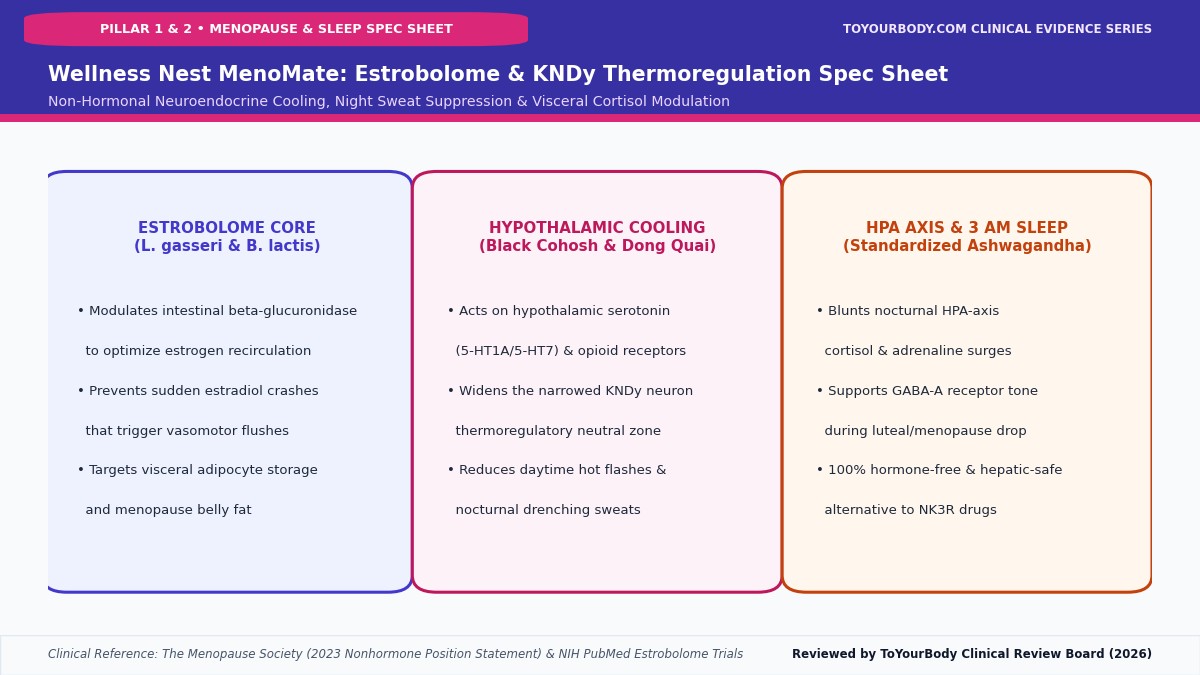
Clinical Comparison: Prescription Veozah vs. Non-Hormonal Rx vs. MenoMate Estrobolome Stack
| Therapeutic Option | Primary Mechanism | FDA Safety & Lab Monitoring | Coverage for Sleep, Cortisol & Belly Fat |
|---|---|---|---|
| Veozah (Fezolinetant 45mg Rx) | Selective hypothalamic Neurokinin-3 Receptor (NK3R) antagonist | FDA Boxed Warning: Requires baseline + Months 1, 2, 3, 6, 9 hepatic ALT/AST labs | Targets hot flashes only; can cause insomnia, abdominal pain, or diarrhea |
| Wellness Nest MenoMate (OTC Synbiotic) | Estrobolome probiotics (L. gasseri) + Black Cohosh (5-HT/opioid) + Ashwagandha (HPA axis) | Hormone-Free & Hepatic-Safe: No routine liver blood draws required | Full-Spectrum: Cools hot flashes, stops 3 AM waking & targets cortisol belly |
| Low-Dose SSRIs / SNRIs (Paroxetine / Venlafaxine) | Central synaptic serotonin/norepinephrine reuptake inhibition | Prescription only; tapering withdrawal risk; CYP2D6 drug interactions | Modest hot flash reduction (40%–50%), but frequently causes weight gain & sexual blunting |
| Gabapentin (300mg–900mg Bedtime Rx) | Voltage-gated calcium channel α2δ subunit modulation | Prescription only; causes daytime dizziness, edema, and morning sedation | Helpful for nocturnal sweats, but zero benefit for gut estrobolome or daytime cortisol |
2026 Clinical Neuroendocrine Protocol: Reset Cortisol, Sleep & Estrobolome with MenoMate
Clinical studies reviewed by The Menopause Society and PubMed (NIH) demonstrate that stabilizing hypothalamic KNDy neurons, nocturnal GABAA sleep architecture, and intestinal β-glucuronidase requires combining Lactobacillus gasseri, Black Cohosh, and Ashwagandha. Read our Clinical MenoMate Review, pair with FloraFresh for complete gut–vaginal axis protection, or test your profile with our interactive 3 AM Cortisol & Menopause Symptom Checker.
Related 2026 Clinical Protocols & Diagnostic Guides
Frequently Asked Questions (2026 Clinical FAQ)
Why did the FDA add a Boxed Warning to Veozah (fezolinetant)?
Post-marketing surveillance identified cases of severe elevations in serum liver transaminases (ALT and AST > 10x upper limit of normal) paired with elevated bilirubin and symptoms of hepatotoxicity (fatigue, nausea, jaundice) within the first 40 days of treatment.
What is the most effective natural alternative to Veozah for hot flashes and night sweats?
Wellness Nest MenoMate combines standardized Black Cohosh and Dong Quai (which modulate hypothalamic KNDy thermoregulation via serotonergic pathways) with Ashwagandha (to lower cortisol-triggered flushes) and Lactobacillus gasseri estrobolome probiotics.
Can I use Magnesium Glycinate alongside MenoMate instead of prescription sleep aids?
Yes. Combining MenoMate with 300mg of evening Magnesium Glycinate calms both hypothalamic vasomotor flushes and nocturnal GABA-A sleep fragmentation without morning grogginess.
Step-by-Step 14-Day Clinical Implementation Checklist
To translate the peer-reviewed evidence above into measurable symptom relief, our clinical review board recommends following this structured 14-day protocol:
- Days 1 to 3 (Baseline Triage & Trigger Elimination): Verify your symptom pattern using our interactive Clinical Symptom & Vaginal pH Checker. Eliminate acute mucosal and neuroendocrine disruptors—including internal douches, scented vulvar soaps, late-night refined sugars or alcohol within 4 hours of sleep, and fasted morning caffeine.
- Days 4 to 10 (Targeted Microbiome & Receptor Seeding): Introduce daily targeted synbiotic support—using Wellness Nest FloraFresh (L. crispatus, L. rhamnosus GR-1, L. reuteri RC-14 + 36mg Cranberry PACs) to lock vaginal pH at 3.8–4.5, or Wellness Nest MenoMate (L. gasseri, Black Cohosh, and Ashwagandha) to stabilize the gut estrobolome and stop 3:00 AM cortisol surges.
- Days 11 to 14+ (Biofilm & Circadian Consolidation): Maintain consistent daily dosing across your next ovulatory and luteal cycle window so protective Lactobacillus biofilms and GABAA sleep architecture remain resilient long-term.
Step-by-step clinical decoder calibrated against ACOG, CDC & NIH thresholds. Answer each quick step for your tailored protocol.
Alkaline Amine Volatilization & L. crispatus Depletion
When alkaline semen (pH 7.1–8.0) or menstrual blood (pH 7.4) buffers vaginal lactic acid above pH 4.7, anaerobic Gardnerella vaginalis biofilms release volatile polyamines (fishy odor). If you recently used 600mg boric acid or antibiotics, bare vaginal mucosa will relapse within 2–3 weeks unless actively reseeded.
Recommended Clinical Guides for Your Pattern:- 24-Hour Vaginal pH Reset After Sex & Period (pH 3.8–4.5)
- 600mg Boric Acid Biofilm Protocol + When to Switch to Probiotics
- Evidence-Based Natural Remedies for Recurrent BV
- Cytolytic Vaginosis (pH < 3.8) vs. Yeast Infection • OTC Yeast Guide • White Discharge & Itching
Replenishes human-adapted Lactobacillus crispatus and L. rhamnosus via the gut–perineal axis to produce D/L-lactic acid and lock vaginal pH at 3.8–4.5.
Check FloraFresh Availability at Wellness Nest →Luteal / Perimenopausal Allopregnanolone Drop & 3 AM Cortisol Rebound
Declining progesterone deprives your brain’s GABAA receptors of calming allopregnanolone while narrowing your hypothalamic thermoneutral zone. Between 2:00 AM and 4:00 AM, a subtle hepatic glycogen dip triggers an unbraked adrenal cortisol and adrenaline surge that jolts you awake.
Tonight’s Clinical Recovery Protocol:- Progesterone–GABA Drop & Non-Hormonal Luteal/Perimenopause Sleep Fix
- Why Do I Wake Up at 3 AM in Menopause? (Cortisol & Glycemic Shield)
- Cooling Hypothalamic KNDy Neurons & Night Sweats Relief
- Magnesium Glycinate vs. L-Threonate & Thermal Dumping Protocol
Stabilizes estrogen recirculation via the gut estrobolome, calms overactive KNDy hot-flash neurons, and blunts 3 AM cortisol awakenings without synthetic hormones.
Check MenoMate Price & Bundles at Wellness Nest →Enterohepatic Estrobolome Dysregulation & HPA Visceral Storage
When gut β-glucuronidase activity is disrupted alongside elevated HPA-axis cortisol, estrogen recirculation becomes erratic—starving vaginal Lactobacillus crispatus of glycogen (triggering pH shifts), destabilizing nocturnal thermoregulation (3 AM waking), and activating abdominal glucocorticoid receptors (cortisol belly).
Your 3-Pillar Clinical Reading Plan:- The Estrobolome & Gut–Vaginal Axis: Connecting BV, 3 AM Sleep & Belly Fat
- Cortisol Belly & Menopause Weight Gain: Visceral Fat Reset
- Fixing the “Tired But Wired” Diurnal Cortisol Curve
- Post-Lunch Bloating & Gut Microbiome Enzyme Guide
Coordinating L. crispatus urogenital colonization (FloraFresh) with intestinal β-glucuronidase and HPA-cortisol modulation (MenoMate) addresses all three concentric pillars simultaneously.