Many women hit their forties and suddenly notice their body shape changing, even if their diet and exercise routines haven’t altered. The waistline expands, and a stubborn layer of belly fat appears seemingly overnight. While slowing metabolism is often blamed, there is a much more powerful hormonal driver at play during the menopause transition: cortisol.
Cortisol is your body’s primary stress hormone. While it’s essential for survival, chronic exposure to high cortisol—combined with the natural decline of estrogen—creates the perfect biological storm for abdominal weight gain. Understanding this connection is the key to reversing it.

Key Takeaway
- As estrogen declines during perimenopause, your body becomes more sensitive to the stress hormone cortisol.
- Chronically high cortisol signals your body to store visceral fat around your abdomen as a protective mechanism.
- Lowering stress, stabilizing blood sugar, and supporting your gut microbiome are essential steps to halting menopause weight gain.
Why Cortisol Targets the Belly
In our ancestral past, high stress meant famine or danger, and the body’s safest place to store emergency energy was the abdomen, close to the vital organs. Today, your body still responds to chronic psychological stress by storing visceral fat. Furthermore, fat cells deep in the abdomen actually have more cortisol receptors than fat cells anywhere else in the body. When you are stressed, cortisol directly commands these cells to expand and store more lipids.
The Estrogen Buffer
In your twenties and thirties, estrogen acts as a natural buffer against cortisol. It helps keep your body’s stress response in check and directs fat storage to your hips and thighs (subcutaneous fat) rather than your belly. As estrogen levels drop during perimenopause, that protective buffer disappears. Your body becomes hypersensitive to stress, and the default fat storage location shifts to your midsection. If you are struggling with severe hormonal symptoms, exploring natural alternatives to Veozah can sometimes provide a broader approach to balancing your system.
The Blood Sugar Rollercoaster
High cortisol also interferes with insulin, the hormone that regulates blood sugar. Cortisol makes your cells more insulin resistant, causing your body to pump out even more insulin to keep blood sugar stable. High insulin levels practically lock the door to your fat stores, making weight loss impossible while simultaneously increasing cravings for sugar and refined carbs. Choosing sleep-friendly evening snacks with high protein can help prevent these nighttime blood sugar crashes that trigger further cortisol release.

Lowering Cortisol Naturally
To lose menopause belly fat, you have to convince your body that it is safe, which means actively lowering your cortisol levels. This doesn’t mean you need to quit your job or move to a remote island. Instead, focus on daily micro-habits. Prioritize high-quality sleep, swap intense daily cardio for strength training and yoga, and practice deep breathing exercises. Managing inflammation is also crucial, as chronic inflammation is a major internal stressor.
The Gut Connection
Your gut microbiome plays a surprisingly large role in how your body handles stress and stores fat. A healthy gut lining prevents inflammatory toxins from leaking into your bloodstream, which would otherwise trigger a cortisol response. Additionally, certain probiotic strains help metabolize estrogen efficiently and produce short-chain fatty acids that improve insulin sensitivity. Many women have found success in targeting their midsection by incorporating MenoMate menopause support into their daily routine.
If you want to explore the optional support layer, check the current MenoMate offer here.
Final Verdict
Menopause belly fat is rarely just about eating too much and moving too little. It is deeply connected to how your body processes stress and insulin without the protective shield of youthful estrogen levels. By shifting your focus from calorie restriction to cortisol reduction and gut health, you can signal to your body that it’s safe to release that stubborn visceral fat.
Related Guide: If you want to dive deeper, read our comprehensive guide on Why You Keep Waking Up at 3 AM During Perimenopause.
2026 Endocrine Metabolism: How Visceral 11β-HSD1 Enzymes Turn Stress Into Menopause Belly Fat
Endocrine studies indexed in PubMed (NIH) and NIH NCCIH explain why women over 40 can eat in a caloric deficit yet still accumulate firm, stubborn abdominal fat. Deep visceral adipocytes (unlike subcutaneous hip or thigh fat) contain up to 4 times more glucocorticoid receptors and express high levels of the enzyme 11β-hydroxysteroid dehydrogenase type 1 (11β-HSD1).
Even when blood cortisol looks normal on a morning lab test, 11β-HSD1 regenerates active cortisol from inactive cortisone directly inside abdominal fat tissue—stimulated by fasted HIIT workouts, intermittent fasting, and 3 AM sleep fragmentation. Pairing HPA-axis adaptogens with Lactobacillus gasseri in Wellness Nest MenoMate downregulates visceral adipogenesis at the root.
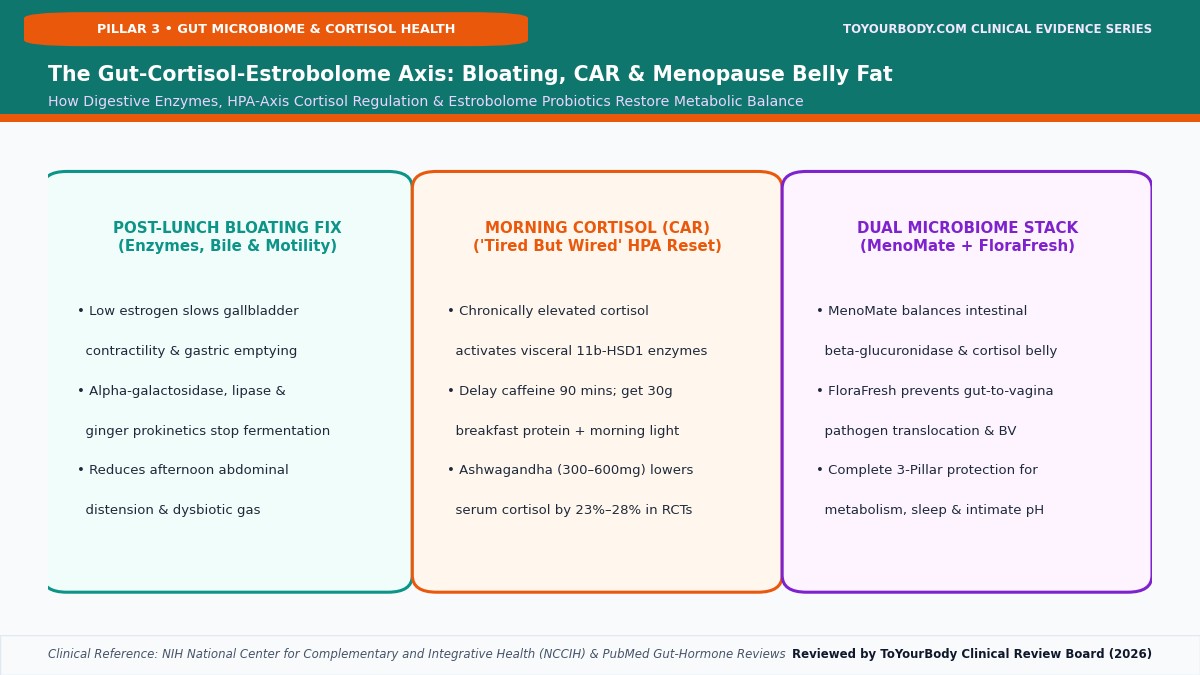
Clinical Comparison: Visceral Cortisol Belly Drivers vs. Evidence-Based HPA Reset Protocols
| Metabolic Pathway | Common Mistakes That Spike Cortisol Belly | Endocrine & Visceral Impact | Targeted Clinical Fix |
|---|---|---|---|
| Adrenal HPA-Axis Tone | Chronic sleep debt (waking at 3 AM) + high mental load | Elevates evening cortisol, inducing insulin resistance and hepatic gluconeogenesis | Daily Wellness Nest MenoMate (Ashwagandha + Black Cohosh + L. gasseri) |
| Exercise Prescription | Daily fasted bootcamps / HIIT + <1,200 kcal crash dieting | Triggers thyroid T4-to-rT3 conversion, lean muscle catabolism & visceral fat lock | 3x/week heavy resistance training (fed state) + 8,000 steps Zone-2 walking |
| Gut Estrobolome & Adipokines | Low-fiber ultra-processed foods + elevated β-glucuronidase | Endotoxemia (LPS) drives visceral adipocyte inflammation and abdominal bloating | Seed L. gasseri & prebiotic fiber + 30g protein at every meal |
| Nocturnal GABA & Mineral Balance | Evening wine to unwind + blue light exposure | Suppresses REM sleep and spikes 2 AM sympathetic norepinephrine | Magnesium Glycinate + 10-min bedtime PMR |
2026 Clinical Neuroendocrine Protocol: Reset Cortisol, Sleep & Estrobolome with MenoMate
Clinical studies reviewed by The Menopause Society and PubMed (NIH) demonstrate that stabilizing hypothalamic KNDy neurons, nocturnal GABAA sleep architecture, and intestinal β-glucuronidase requires combining Lactobacillus gasseri, Black Cohosh, and Ashwagandha. Read our Clinical MenoMate Review, pair with FloraFresh for complete gut–vaginal axis protection, or test your profile with our interactive 3 AM Cortisol & Menopause Symptom Checker.
Related 2026 Clinical Protocols & Diagnostic Guides
Frequently Asked Questions (2026 Clinical FAQ)
Why does high cortisol cause weight gain specifically around the midsection and upper back?
Visceral fat cells surrounding the abdominal organs have a 4-fold higher density of glucocorticoid receptors and lipoprotein lipase (LPL) compared to peripheral fat. When cortisol and insulin are elevated simultaneously, LPL selectively shuttles circulating triglycerides into visceral abdominal stores.
How does Lactobacillus gasseri help reduce menopause belly fat?
In 12-week randomized, double-blind human trials indexed on PubMed, supplementation with Lactobacillus gasseri significantly reduced visceral abdominal fat area (up to 8.5%), waist circumference, and BMI by modulating intestinal lipid absorption and adiponectin signaling.
How quickly can I lower high cortisol naturally?
Acute salivary cortisol drops within 15 minutes of progressive muscle relaxation or a post-meal walk, while resetting chronic HPA-axis hyper-reactivity and visceral 11b-HSD1 expression takes 4 to 8 weeks of consistent sleep, protein timing, and adaptogenic support with MenoMate.
Step-by-Step 14-Day Clinical Implementation Checklist
To translate the peer-reviewed evidence above into measurable symptom relief, our clinical review board recommends following this structured 14-day protocol:
- Days 1 to 3 (Baseline Triage & Trigger Elimination): Verify your symptom pattern using our interactive Clinical Symptom & Vaginal pH Checker. Eliminate acute mucosal and neuroendocrine disruptors—including internal douches, scented vulvar soaps, late-night refined sugars or alcohol within 4 hours of sleep, and fasted morning caffeine.
- Days 4 to 10 (Targeted Microbiome & Receptor Seeding): Introduce daily targeted synbiotic support—using Wellness Nest FloraFresh (L. crispatus, L. rhamnosus GR-1, L. reuteri RC-14 + 36mg Cranberry PACs) to lock vaginal pH at 3.8–4.5, or Wellness Nest MenoMate (L. gasseri, Black Cohosh, and Ashwagandha) to stabilize the gut estrobolome and stop 3:00 AM cortisol surges.
- Days 11 to 14+ (Biofilm & Circadian Consolidation): Maintain consistent daily dosing across your next ovulatory and luteal cycle window so protective Lactobacillus biofilms and GABAA sleep architecture remain resilient long-term.
Step-by-step clinical decoder calibrated against ACOG, CDC & NIH thresholds. Answer each quick step for your tailored protocol.
Alkaline Amine Volatilization & L. crispatus Depletion
When alkaline semen (pH 7.1–8.0) or menstrual blood (pH 7.4) buffers vaginal lactic acid above pH 4.7, anaerobic Gardnerella vaginalis biofilms release volatile polyamines (fishy odor). If you recently used 600mg boric acid or antibiotics, bare vaginal mucosa will relapse within 2–3 weeks unless actively reseeded.
Recommended Clinical Guides for Your Pattern:- 24-Hour Vaginal pH Reset After Sex & Period (pH 3.8–4.5)
- 600mg Boric Acid Biofilm Protocol + When to Switch to Probiotics
- Evidence-Based Natural Remedies for Recurrent BV
- Cytolytic Vaginosis (pH < 3.8) vs. Yeast Infection • OTC Yeast Guide • White Discharge & Itching
Replenishes human-adapted Lactobacillus crispatus and L. rhamnosus via the gut–perineal axis to produce D/L-lactic acid and lock vaginal pH at 3.8–4.5.
Check FloraFresh Availability at Wellness Nest →Luteal / Perimenopausal Allopregnanolone Drop & 3 AM Cortisol Rebound
Declining progesterone deprives your brain’s GABAA receptors of calming allopregnanolone while narrowing your hypothalamic thermoneutral zone. Between 2:00 AM and 4:00 AM, a subtle hepatic glycogen dip triggers an unbraked adrenal cortisol and adrenaline surge that jolts you awake.
Tonight’s Clinical Recovery Protocol:- Progesterone–GABA Drop & Non-Hormonal Luteal/Perimenopause Sleep Fix
- Why Do I Wake Up at 3 AM in Menopause? (Cortisol & Glycemic Shield)
- Cooling Hypothalamic KNDy Neurons & Night Sweats Relief
- Magnesium Glycinate vs. L-Threonate & Thermal Dumping Protocol
Stabilizes estrogen recirculation via the gut estrobolome, calms overactive KNDy hot-flash neurons, and blunts 3 AM cortisol awakenings without synthetic hormones.
Check MenoMate Price & Bundles at Wellness Nest →Enterohepatic Estrobolome Dysregulation & HPA Visceral Storage
When gut β-glucuronidase activity is disrupted alongside elevated HPA-axis cortisol, estrogen recirculation becomes erratic—starving vaginal Lactobacillus crispatus of glycogen (triggering pH shifts), destabilizing nocturnal thermoregulation (3 AM waking), and activating abdominal glucocorticoid receptors (cortisol belly).
Your 3-Pillar Clinical Reading Plan:- The Estrobolome & Gut–Vaginal Axis: Connecting BV, 3 AM Sleep & Belly Fat
- Cortisol Belly & Menopause Weight Gain: Visceral Fat Reset
- Fixing the “Tired But Wired” Diurnal Cortisol Curve
- Post-Lunch Bloating & Gut Microbiome Enzyme Guide
Coordinating L. crispatus urogenital colonization (FloraFresh) with intestinal β-glucuronidase and HPA-cortisol modulation (MenoMate) addresses all three concentric pillars simultaneously.