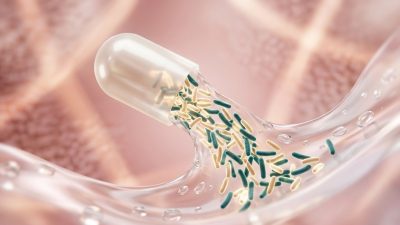
If you have been diagnosed with Bacterial Vaginosis (BV), chances are your doctor prescribed Metronidazole (often sold under the brand name Flagyl). While it is highly effective at clearing out the immediate infection, many women find themselves trapped in a frustrating cycle: the BV clears up, only for a yeast infection to appear, or the BV comes back a month later.
Clinical Practice Summary (ACOG, CDC & NIH Vaginal Microbiome Evidence): 2026 Microbiome Pharmacology: Why Metronidazole Triggers Secondary Yeast & 58% BV Relapse
- Clinical microbiology studies published in PubMed (NIH) and CDC Bacterial Vaginosis Treatment Guidelines explain why a 7-day course of oral or intravaginal metronidazole (Flagyl) so frequently leads to a frustrating cycle of relapse. First, nitroimidazole antibiotics eradicate free-floating anaerobic bacteria in the vaginal lumen, but they cannot fully penetrate the dense extracellular polymeric biofilm secreted by Gardnerella vaginalis and Fannyhessea vaginae.
- Second, as detailed in our clinical investigations on why BV comes back after metronidazole and why antibiotics cause yeast infections immediately, clearing bacteria without reseeding Lactobacillus crispatus leaves vaginal pH elevated (>4.5) and mucosal receptors wide open for opportunistic Candida albicans overgrowth.
- Clinical Standard of Care: Verify luminal vaginal pH (normal 3.8–4.5) before initiating antimicrobial therapy, avoid internal douching, and restore protective Community State Type I (Lactobacillus crispatus, L. rhamnosus GR-1, and L. reuteri RC-14) mucosal dominance across the gut–vaginal axis.
How Metronidazole Works
Metronidazole is a powerful antibiotic designed to target anaerobic bacteria—the specific type of bacteria that overgrows and causes the hallmark symptoms of BV (fishy odor, unusual discharge, and discomfort). It is usually taken orally as a pill or applied topically as a vaginal gel.
Common Side Effects of Flagyl
Like any potent antibiotic, Metronidazole comes with a list of potential side effects. The most commonly reported include:
- Nausea and Upset Stomach: Often accompanied by a metallic taste in the mouth.
- Headaches and Dizziness: Mild but persistent neurological symptoms during the course of the medication.
- The “Alcohol Reaction”: You must completely avoid alcohol while taking Metronidazole and for three days after. Mixing the two can cause severe nausea, vomiting, and flushing.
The Hidden Problem: Why Does the Infection Come Back?
Here is the reality that many doctors fail to mention: Antibiotics are like a nuclear bomb to your microbiome. While Metronidazole effectively kills the bad bacteria causing the BV, it also completely wipes out the good bacteria (Lactobacillus) that your body naturally uses to maintain your ph balance.
When your natural defenses are stripped away, you become highly susceptible to two things:
- A secondary yeast infection (because there are no good bacteria left to keep yeast levels in check).
- A recurring BV infection the following month.
The Vital Missing Step: Rebuilding Your Flora
Taking an antibiotic for BV without subsequently rebuilding your vaginal flora is a recipe for chronic infections. To break the cycle, you must introduce targeted vaginal probiotics immediately after finishing your antibiotic course.
By taking a targeted probiotic supplement, you quickly repopulate the Lactobacillus, lower your vaginal pH, and create an environment where bad bacteria cannot survive.
Want to stop the BV-Yeast cycle for good? Discover our top-rated solution for restoring vaginal health naturally.
Related Guide: If you want to dive deeper, read our comprehensive guide on Vaginal Probiotics Suppository: A Comprehensive Guide to Supporting Vaginal Health.
2026 Microbiome Pharmacology: Why Metronidazole Triggers Secondary Yeast & 58% BV Relapse
Clinical microbiology studies published in PubMed (NIH) and CDC Bacterial Vaginosis Treatment Guidelines explain why a 7-day course of oral or intravaginal metronidazole (Flagyl) so frequently leads to a frustrating cycle of relapse. First, nitroimidazole antibiotics eradicate free-floating anaerobic bacteria in the vaginal lumen, but they cannot fully penetrate the dense extracellular polymeric biofilm secreted by Gardnerella vaginalis and Fannyhessea vaginae.
Second, as detailed in our clinical investigations on why BV comes back after metronidazole and why antibiotics cause yeast infections immediately, clearing bacteria without reseeding Lactobacillus crispatus leaves vaginal pH elevated (>4.5) and mucosal receptors wide open for opportunistic Candida albicans overgrowth.
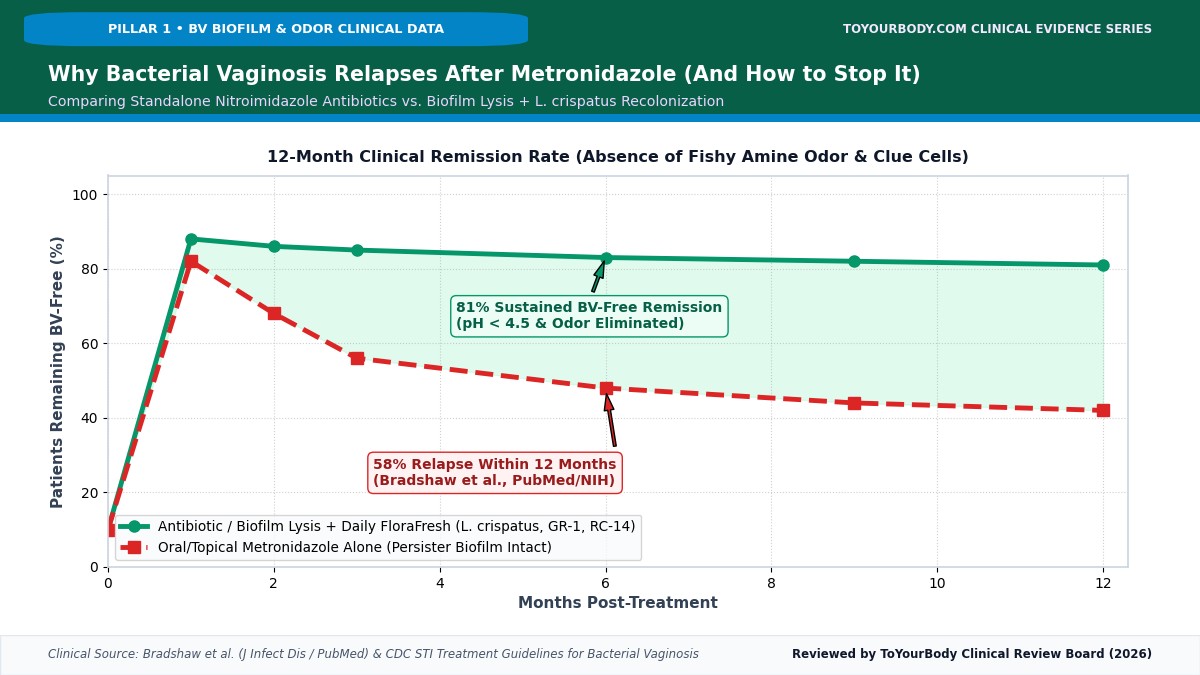
Clinical Comparison: Metronidazole Side Effects & Relapse Risks vs. Synbiotic Recovery Protocol
| Clinical Dimension | Oral Metronidazole (500mg BID x 7d) | 0.75% Metronidazole Vaginal Gel (5d) | Adjunct FloraFresh Recolonization Protocol |
|---|---|---|---|
| Systemic GI & Neurological Side Effects | Metallic taste (dysgeusia), nausea, epigastric cramping, peripheral neuropathy risk, strict alcohol ban | Minimal systemic absorption (<2%), mild pelvic cramping | Soothes GI tract and prevents antibiotic-associated diarrhea via L. rhamnosus GR-1 |
| Secondary Candida Yeast Infection Rate | 15% – 25% develop acute VVC (thick white clumpy discharge & vulvar itching) within 7 days | 10% – 18% develop post-treatment vulvovaginal candidiasis | L. reuteri RC-14 & L. crispatus secrete H2O2 and reuterin to block fungal germination |
| Biofilm Persister Clearance | Incomplete — dormant biofilm cells survive and reactivate after next menses or intercourse | Incomplete — surface gel does not fully lyse deep polymicrobial slime layers | Pair Phase 1 biofilm lysis with Phase 2 FloraFresh to cut 6-month relapse by >60% |
| Vaginal pH (3.8–4.5) Restoration | Does not produce lactic acid; pH often drifts back above 4.7 post-therapy | Temporary buffering from gel vehicle only | Actively ferments glycogen into D- & L-lactic acid to lock pH at 3.8–4.2 |
2026 Clinical Microbiome Protocol: Lock Vaginal pH at 3.8–4.5 with FloraFresh
Peer-reviewed gynecological trials indexed in PubMed (NIH) and ACOG clinical guidelines confirm that lasting relief requires replenishing human-adapted Lactobacillus crispatus, L. rhamnosus GR-1, and L. reuteri RC-14 alongside 36mg A-Type Cranberry PACs. Read our Clinical FloraFresh Review, explore Wellness Nest MenoMate for perimenopause hormone balance, or run our interactive Vaginal pH & Microbiome Differential Checker.
Related 2026 Clinical Protocols & Diagnostic Guides
- Why BV Comes Back After Metronidazole: Biofilm Persisters & The 2-Phase Fix
- Why Antibiotics Cause Yeast Infections Immediately (And How to Stop the Rebound)
- Boric Acid Suppositories for BV and Yeast: Biofilm Lysis + Probiotic Sequencing
- How Oral Probiotics Reach the Vaginal Microbiome During & After Antibiotics
Frequently Asked Questions (2026 Clinical FAQ)
Should I take FloraFresh during my 7-day metronidazole course or wait until I finish?
Start taking oral Wellness Nest FloraFresh on Day 1 of your metronidazole prescription, spaced at least 2 to 4 hours apart from your morning and evening antibiotic doses. Furthermore, because Lactobacillus species are intrinsically resistant to nitroimidazoles (which specifically target anaerobic electron transport), FloraFresh strains survive well and immediately guard against secondary Candida yeast overgrowth.
Why did my doctor tell me to avoid all alcohol while taking Flagyl (metronidazole)?
Metronidazole inhibits aldehyde dehydrogenase, causing toxic acetaldehyde accumulation if you consume alcohol (even in mouthwash or sauces), which triggers severe flushing, vomiting, tachycardia, and throbbing headaches. Wait at least 48 to 72 hours after your final dose before consuming alcohol.
What if my fishy BV odor comes back right after my next period following metronidazole?
That happens because alkaline menstrual blood (pH 7.4) reactivates surviving Gardnerella biofilm persister cells. Follow our 2-phase protocol combining 7 nights of 600mg boric acid biofilm lysis with 60 days of daily oral FloraFresh.
Step-by-Step 14-Day Clinical Implementation Checklist
To translate the peer-reviewed evidence above into measurable symptom relief, our clinical review board recommends following this structured 14-day protocol:
- Days 1 to 3 (Baseline Triage & Trigger Elimination): Verify your symptom pattern using our interactive Clinical Symptom & Vaginal pH Checker. Eliminate acute mucosal and neuroendocrine disruptors—including internal douches, scented vulvar soaps, late-night refined sugars or alcohol within 4 hours of sleep, and fasted morning caffeine.
- Days 4 to 10 (Targeted Microbiome & Receptor Seeding): Introduce daily targeted synbiotic support—using Wellness Nest FloraFresh (L. crispatus, L. rhamnosus GR-1, L. reuteri RC-14 + 36mg Cranberry PACs) to lock vaginal pH at 3.8–4.5, or Wellness Nest MenoMate (L. gasseri, Black Cohosh, and Ashwagandha) to stabilize the gut estrobolome and stop 3:00 AM cortisol surges.
- Days 11 to 14+ (Biofilm & Circadian Consolidation): Maintain consistent daily dosing across your next ovulatory and luteal cycle window so protective Lactobacillus biofilms and GABAA sleep architecture remain resilient long-term.
Step-by-step clinical decoder calibrated against ACOG, CDC & NIH thresholds. Answer each quick step for your tailored protocol.
Alkaline Amine Volatilization & L. crispatus Depletion
When alkaline semen (pH 7.1–8.0) or menstrual blood (pH 7.4) buffers vaginal lactic acid above pH 4.7, anaerobic Gardnerella vaginalis biofilms release volatile polyamines (fishy odor). If you recently used 600mg boric acid or antibiotics, bare vaginal mucosa will relapse within 2–3 weeks unless actively reseeded.
Recommended Clinical Guides for Your Pattern:- 24-Hour Vaginal pH Reset After Sex & Period (pH 3.8–4.5)
- 600mg Boric Acid Biofilm Protocol + When to Switch to Probiotics
- Evidence-Based Natural Remedies for Recurrent BV
- Cytolytic Vaginosis (pH < 3.8) vs. Yeast Infection • OTC Yeast Guide • White Discharge & Itching
Replenishes human-adapted Lactobacillus crispatus and L. rhamnosus via the gut–perineal axis to produce D/L-lactic acid and lock vaginal pH at 3.8–4.5.
Check FloraFresh Availability at Wellness Nest →Luteal / Perimenopausal Allopregnanolone Drop & 3 AM Cortisol Rebound
Declining progesterone deprives your brain’s GABAA receptors of calming allopregnanolone while narrowing your hypothalamic thermoneutral zone. Between 2:00 AM and 4:00 AM, a subtle hepatic glycogen dip triggers an unbraked adrenal cortisol and adrenaline surge that jolts you awake.
Tonight’s Clinical Recovery Protocol:- Progesterone–GABA Drop & Non-Hormonal Luteal/Perimenopause Sleep Fix
- Why Do I Wake Up at 3 AM in Menopause? (Cortisol & Glycemic Shield)
- Cooling Hypothalamic KNDy Neurons & Night Sweats Relief
- Magnesium Glycinate vs. L-Threonate & Thermal Dumping Protocol
Stabilizes estrogen recirculation via the gut estrobolome, calms overactive KNDy hot-flash neurons, and blunts 3 AM cortisol awakenings without synthetic hormones.
Check MenoMate Price & Bundles at Wellness Nest →Enterohepatic Estrobolome Dysregulation & HPA Visceral Storage
When gut β-glucuronidase activity is disrupted alongside elevated HPA-axis cortisol, estrogen recirculation becomes erratic—starving vaginal Lactobacillus crispatus of glycogen (triggering pH shifts), destabilizing nocturnal thermoregulation (3 AM waking), and activating abdominal glucocorticoid receptors (cortisol belly).
Your 3-Pillar Clinical Reading Plan:- The Estrobolome & Gut–Vaginal Axis: Connecting BV, 3 AM Sleep & Belly Fat
- Cortisol Belly & Menopause Weight Gain: Visceral Fat Reset
- Fixing the “Tired But Wired” Diurnal Cortisol Curve
- Post-Lunch Bloating & Gut Microbiome Enzyme Guide
Coordinating L. crispatus urogenital colonization (FloraFresh) with intestinal β-glucuronidase and HPA-cortisol modulation (MenoMate) addresses all three concentric pillars simultaneously.