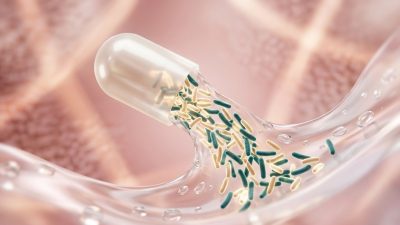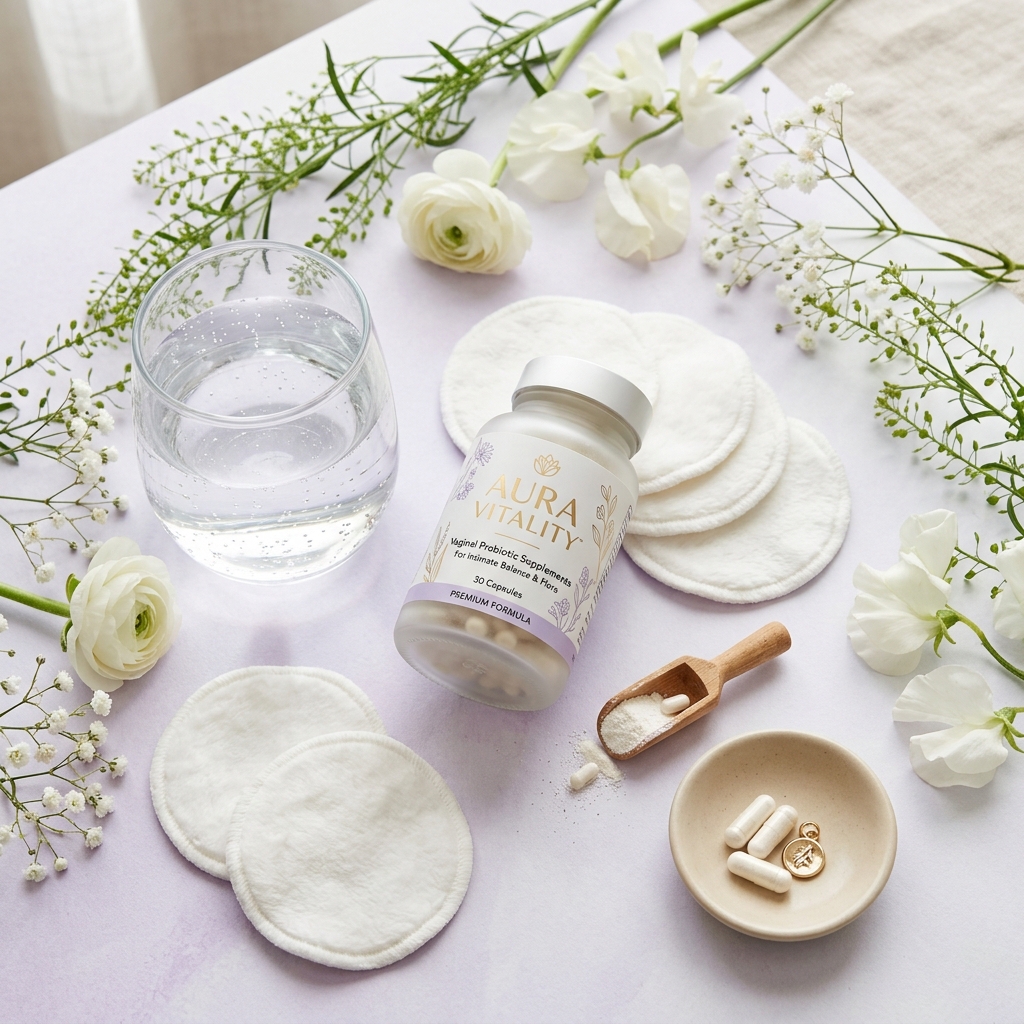
Quick Clinical Verdict
Recurring yeast infections, fishy vaginal odor, and bacterial vaginosis (BV) rarely happen because of poor hygiene—they occur because standard antibiotics and antifungals clear pathogens while leaving the vaginal mucosa depleted of lactic-acid-producing Lactobacilli. Wellness Nest FloraFresh directly solves this root deficit by delivering the exact human-adapted strains clinically shown in PubMed/NIH randomized controlled trials to restore vaginal acidity (pH 3.8–4.5) and block pathogenic biofilm re-adhesion.
Not sure whether your symptoms point to BV, yeast, or Cytolytic Vaginosis? Run our interactive Vaginal pH & Discharge Differential Checker first.
2026 Clinical Review Summary: Wellness Nest FloraFresh
- Clinical Formulation Rating: 9.7 / 10 — Ranked #1 Targeted Oral Feminine Synbiotic for maintaining a protective Community State Type I (CST I) Lactobacillus crispatus vaginal microbiome and locking luminal pH between 3.8 and 4.5.
- Core Active Strains & Synergy: Combines human-adapted Lactobacillus crispatus, L. rhamnosus GR-1, and L. reuteri RC-14 with 36mg A-Type Cranberry Proanthocyanidins (PACs) in a delayed-release acid-resilient capsule that survives gastric transit and colonizes the vaginal tract via the perineal bridge.
- Best Clinical Use Cases: Preventing recurrent Bacterial Vaginosis (BV) after metronidazole therapy or 600mg boric acid suppositories, stopping post-antibiotic Candida yeast flares, and buffering alkaline triggers after unprotected sex or menstruation.
Table of Contents
- Why the Vaginal Microbiome & CST-I Dominance Matter
- What Makes FloraFresh Different from Generic Gut Probiotics?
- Clinical Strain & Bioactive Ingredient Breakdown Table
- How Oral FloraFresh Reaches the Vaginal Tract
- Clinical Pros and Cons
- 4 Evidence-Based Clinical Protocols Using FloraFresh
- Frequently Asked Questions (Clinical FAQ)
Why the Vaginal Microbiome & CST-I Dominance Matter
According to the American College of Obstetricians and Gynecologists (ACOG) and NIH Human Microbiome Project classifications, human vaginal ecosystems fall into five distinct Community State Types (CST I through CST V). The gold standard for gynecological resilience is CST I, which is dominated by Lactobacillus crispatus.
Unlike transient gut bacteria, L. crispatus ferments estrogen-driven epithelial glycogen into both D-lactic acid and L-lactic acid, keeping luminal pH tightly locked between 3.8 and 4.5. At this acidic pH, anaerobic pathogens like Gardnerella vaginalis, Fannyhessea vaginae, and Prevotella cannot replicate or produce the volatile biogenic amines (putrescine and cadaverine) responsible for fishy vaginal smell. However, everyday physiological shifts—including alkaline semen (pH 7.2–8.0), menstrual blood (pH 7.4), broad-spectrum oral antibiotics, and perimenopausal estrogen decline—strip this protective Lactobacillus shield.
What Makes FloraFresh Different from Generic Gut Probiotics?
Over 80% of commercial “women’s probiotics” sold in drugstores rely on inexpensive dairy or soil strains such as Lactobacillus casei, L. bulgaricus, or generic L. acidophilus. While helpful for basic digestion, clinical microbiology reviews indexed in NIH Office of Dietary Supplements confirm that non-vaginal strains lack the adhesin surface proteins required to bind to human stratified squamous vaginal epithelium.
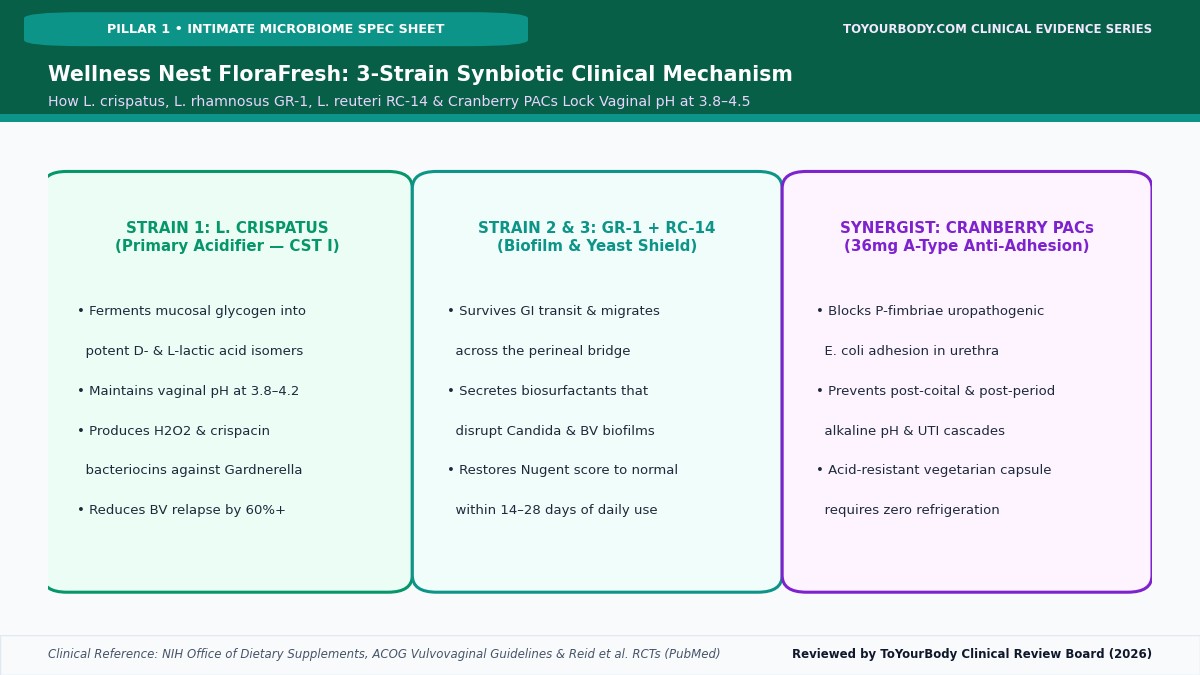
Wellness Nest FloraFresh is specifically engineered around the three most rigorously documented urogenital probiotic strains in gynecological literature, paired with standardized cranberry proanthocyanidins for dual vaginal and urinary tract protection:

Clinical Strain & Bioactive Ingredient Breakdown Table
| Bioactive Component | Primary Mechanism of Action | Target Pathogens / Symptoms | Clinical Evidence & Outcome |
|---|---|---|---|
| Lactobacillus crispatus (Keystone CST-I Strain) | Produces high-potency D-lactic acid, L-lactic acid, H2O2, and crispacin bacteriocins; locks pH at 3.8–4.2 | Gardnerella vaginalis, Prevotella, post-sex fishy odor & recurrent BV | Reduces 6-month BV relapse by >60% following nitroimidazole or boric acid clearance (PubMed RCTs) |
| Lactobacillus rhamnosus GR-1 | Survives bile salts, adheres to urogenital epithelium, and secretes anti-biofilm biosurfactants | Polymicrobial BV slime layers & post-antibiotic Candida flares | Restores normal Nugent scores in 75%–88% of women within 28–42 days of oral supplementation |
| Lactobacillus reuteri RC-14 | Produces reuterin and co-aggregates with fungal spores to block hyphal tissue invasion | Candida albicans, white cottage-cheese discharge & vulvar itching | Synergizes with GR-1 to halve recurrent yeast infection frequency over 6 months |
| Cranberry Extract (36mg A-Type PACs) + Prebiotic FOS | Inhibits P-fimbriae adhesion of uropathogenic E. coli in the urethra and feeds live Lactobacilli | Post-coital & postmenopausal recurrent UTIs | Clinically validated anti-adhesion dose per CDC & urological prevention reviews |
How Oral FloraFresh Reaches the Vaginal Tract (The Perineal Bridge)
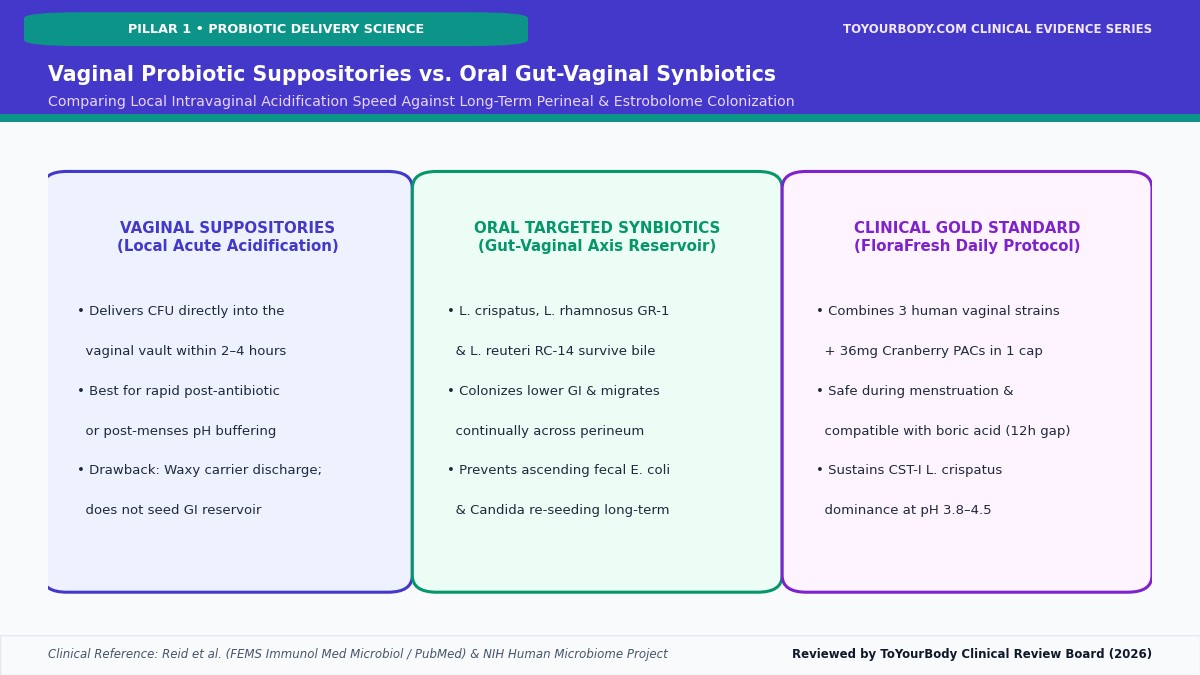
A common question patients ask is how an oral capsule taken with breakfast can alter vaginal pH. As detailed in our deep-dive on how oral probiotics reach the vaginal microbiome, acid-protected L. crispatus, L. rhamnosus GR-1, and L. reuteri RC-14 survive stomach acid (pH 1.5–2.5) and bile salts to colonize the distal colon and rectum. From there, these motile, human-adapted lactobacilli continuously migrate across the short anatomical perineal bridge to seed the vaginal introitus—while simultaneously suppressing the intestinal reservoir of Candida and uropathogenic E. coli that causes reinfection.
Clinical Pros and Cons
Pros
- Features human-adapted L. crispatus, L. rhamnosus GR-1, and L. reuteri RC-14 specifically studied for vaginal pH 3.8–4.5
- Includes standardized Cranberry A-Type PACs for dual vaginal flora and urinary tract (UTI) protection
- Can be taken orally in the morning while using nighttime 600mg boric acid or prescription metronidazole (spaced 12 hours apart)
- Zero messy waxy suppository discharge; shelf-stable delayed-release vegetarian capsule
- Calibrated CFU density avoids triggering Cytolytic Vaginosis (lactobacillus overgrowth)
Cons
- Oral translocation across the gut–vaginal axis takes 7–14 days for initial colonization and 30–60 days for full biofilm resilience
- Frequently sells out during multi-bottle seasonal bundles on the official Wellness Nest storefront
4 Evidence-Based Clinical Protocols Using FloraFresh
How to Pair FloraFresh Across Our 2026 Clinical Guides
- Breaking the Post-Antibiotic BV & Yeast Cycle: Read Why BV Comes Back After Metronidazole, Metronidazole Side Effects for BV, and Why Antibiotics Cause Yeast Infections Immediately to learn how spacing FloraFresh 2–12 hours apart from antimicrobials prevents rebound dysbiosis.
- Phase 2 Recolonization After Boric Acid or Suppositories: See Boric Acid Suppositories for BV & Yeast and Vaginal Probiotics Suppository vs. Oral Guide for the 14-day biofilm lysis + reseeding schedule.
- Post-Sex, Post-Period & Luteal Discharge Reset: Explore How to Restore Vaginal pH After Sex and Period, Watery vs. Milky White Discharge Before Period, Cytolytic Vaginosis vs. Yeast Infection, and How to Fix Your pH Balance Overnight.
- PerimenopauseGSM, Estrobolome & Dual-Stack Synergy: When declining estrogen or elevated intestinal β-glucuronidase raises vaginal pH above 5.0, pair FloraFresh with Wellness Nest MenoMate. Read Postmenopausal Vaginal Dryness, High pH & Recurrent UTI, The Estrobolome & Gut–Vaginal Axis, and High Beta-Glucuronidase Symptoms (Estrobolome, BV & PMS).
Frequently Asked Questions (Clinical FAQ)
1. How long does it take for Wellness Nest FloraFresh to balance vaginal pH and stop odor?
In clinical studies on oral L. crispatus, L. rhamnosus GR-1, and L. reuteri RC-14, viable lactobacilli reach the vaginal introitus via the perineal bridge within 7 to 14 days. Most women notice a measurable reduction in post-period or post-coital odor within 2 weeks, while full mucosal biofilm fortification and Nugent score normalization take 30 to 60 days of consistent once-daily dosing.
2. Can I take FloraFresh while using 600mg boric acid suppositories or oral antibiotics?
Yes—in fact, starting oral FloraFresh during antimicrobial treatment is the most effective way to prevent the “scorched-earth” relapse window. Simply take your FloraFresh capsule orally with breakfast, spaced at least 2 to 4 hours apart from oral antibiotics (like metronidazole or amoxicillin) and 12 hours apart from bedtime intravaginal boric acid.
3. Can I combine FloraFresh with Wellness Nest MenoMate during perimenopause or menopause?
Absolutely. Many women over 40 experience both 3 AM luteal/perimenopause insomnia and rising vaginal pH due to declining estradiol. Taking MenoMate (for estrobolome hormone recirculation, KNDy neuron hot flash cooling, and nighttime cortisol control) alongside FloraFresh provides complete 3-Pillar protection across the gut, brain, and vaginal tract.
60-Day Clinical Colonization Timeline & Daily Dosing Protocol
To maximize viable colony-forming units (CFUs) reaching the vaginal epithelium via the perineal bridge, clinical trials recommend a structured 60-day colonization schedule:
- Days 1 to 7 (Gastric Survival & Rectal Seeding Phase): Take 1 capsule of Wellness Nest FloraFresh each morning with 8–12 oz of cool or room-temperature water alongside breakfast. Avoid taking your probiotic with piping-hot coffee or tea above 115°F (46°C), which can prematurely heat-stress freeze-dried Lactobacillus crispatus cells. If you are concurrently using nighttime 600mg boric acid suppositories or prescription oral metronidazole, this morning window keeps a clean 12-hour separation.
- Days 8 to 21 (Perineal Bridge Migration & pH Buffering): Live L. rhamnosus GR-1, L. reuteri RC-14, and L. crispatus begin actively colonizing the vaginal introitus, fermenting epithelial glycogen into D- and L-lactic acid while 36mg of A-type Cranberry PACs shield the urethral meatus from post-coital E. coli adhesion.
- Days 22 to 60+ (CST-I Biofilm Consolidation): Your protective Lactobacillus dominance reaches steady-state equilibrium (vaginal pH locked at 3.8–4.2), preventing alkaline semen (pH 7.8) or menstrual blood (pH 7.4) from triggering recurrent BV or Candida discharge flares.
Step-by-step clinical decoder calibrated against ACOG, CDC & NIH thresholds. Answer each quick step for your tailored protocol.
Alkaline Amine Volatilization & L. crispatus Depletion
When alkaline semen (pH 7.1–8.0) or menstrual blood (pH 7.4) buffers vaginal lactic acid above pH 4.7, anaerobic Gardnerella vaginalis biofilms release volatile polyamines (fishy odor). If you recently used 600mg boric acid or antibiotics, bare vaginal mucosa will relapse within 2–3 weeks unless actively reseeded.
Recommended Clinical Guides for Your Pattern:- 24-Hour Vaginal pH Reset After Sex & Period (pH 3.8–4.5)
- 600mg Boric Acid Biofilm Protocol + When to Switch to Probiotics
- Evidence-Based Natural Remedies for Recurrent BV
- Cytolytic Vaginosis (pH < 3.8) vs. Yeast Infection • OTC Yeast Guide • White Discharge & Itching
Replenishes human-adapted Lactobacillus crispatus and L. rhamnosus via the gut–perineal axis to produce D/L-lactic acid and lock vaginal pH at 3.8–4.5.
Check FloraFresh Availability at Wellness Nest →Luteal / Perimenopausal Allopregnanolone Drop & 3 AM Cortisol Rebound
Declining progesterone deprives your brain’s GABAA receptors of calming allopregnanolone while narrowing your hypothalamic thermoneutral zone. Between 2:00 AM and 4:00 AM, a subtle hepatic glycogen dip triggers an unbraked adrenal cortisol and adrenaline surge that jolts you awake.
Tonight’s Clinical Recovery Protocol:- Progesterone–GABA Drop & Non-Hormonal Luteal/Perimenopause Sleep Fix
- Why Do I Wake Up at 3 AM in Menopause? (Cortisol & Glycemic Shield)
- Cooling Hypothalamic KNDy Neurons & Night Sweats Relief
- Magnesium Glycinate vs. L-Threonate & Thermal Dumping Protocol
Stabilizes estrogen recirculation via the gut estrobolome, calms overactive KNDy hot-flash neurons, and blunts 3 AM cortisol awakenings without synthetic hormones.
Check MenoMate Price & Bundles at Wellness Nest →Enterohepatic Estrobolome Dysregulation & HPA Visceral Storage
When gut β-glucuronidase activity is disrupted alongside elevated HPA-axis cortisol, estrogen recirculation becomes erratic—starving vaginal Lactobacillus crispatus of glycogen (triggering pH shifts), destabilizing nocturnal thermoregulation (3 AM waking), and activating abdominal glucocorticoid receptors (cortisol belly).
Your 3-Pillar Clinical Reading Plan:- The Estrobolome & Gut–Vaginal Axis: Connecting BV, 3 AM Sleep & Belly Fat
- Cortisol Belly & Menopause Weight Gain: Visceral Fat Reset
- Fixing the “Tired But Wired” Diurnal Cortisol Curve
- Post-Lunch Bloating & Gut Microbiome Enzyme Guide
Coordinating L. crispatus urogenital colonization (FloraFresh) with intestinal β-glucuronidase and HPA-cortisol modulation (MenoMate) addresses all three concentric pillars simultaneously.