Almost every woman has experienced that sudden moment of panic the morning after unprotected intimacy or on the final days of her period: you notice a distinct, sharp, fishy or metallic-musty odor that was never there the day before. Immediately, you wonder, “Why does my vagina smell fishy after unprotected sex or my period—even when I shower every single day?”
First, take a deep breath: experiencing a post-coital or post-menstrual odor shift does not mean you have poor hygiene or a “dirty vagina.” In fact, aggressively washing inside the vaginal canal with soap or douching is the single fastest way to turn a temporary 12-hour pH shift into full-blown Bacterial Vaginosis (BV).
Within our Intimate & Vaginal Health clinical library, we break down the exact acid–base biochemistry happening inside your vaginal ecosystem during sex and menstruation—and how to restore your protective 3.8–4.5 pH shield within 24 hours.
Clinical Key Takeaways: The 24-Hour Post-Sex & Post-Period pH Reset
- The Alkaline Chemistry Trigger: Healthy vaginal pH sits between 3.8 and 4.5. Unprotected ejaculate has a heavily buffered alkaline pH of 7.1 to 8.0, while menstrual blood carries a pH of 7.4 plus heme iron. Both triggers neutralize vaginal lactic acid for 8 to 24+ hours.
- Why “Fishy” Odor Happens Overnight: When vaginal pH rises above 4.7, anaerobic bacteria (Gardnerella vaginalis, Prevotella) thrive and their metabolic byproducts—polyamines such as trimethylamine, putrescine, and cadaverine—chemically volatilize into the air, creating an immediate fishy scent (the exact chemistry of a clinical “whiff test”).
- How to Reset in 24 Hours Without Douching: Urinate within 15 minutes, rinse only the external vulva with lukewarm water, switch to breathable cotton, and fortify your lactic acid buffering capacity daily with Wellness Nest FloraFresh (L. crispatus + L. rhamnosus).
The Biochemistry of Vaginal pH Spikes: Semen Alkalinity (pH 7.1–8.0) vs. Menstrual Blood (pH 7.4)
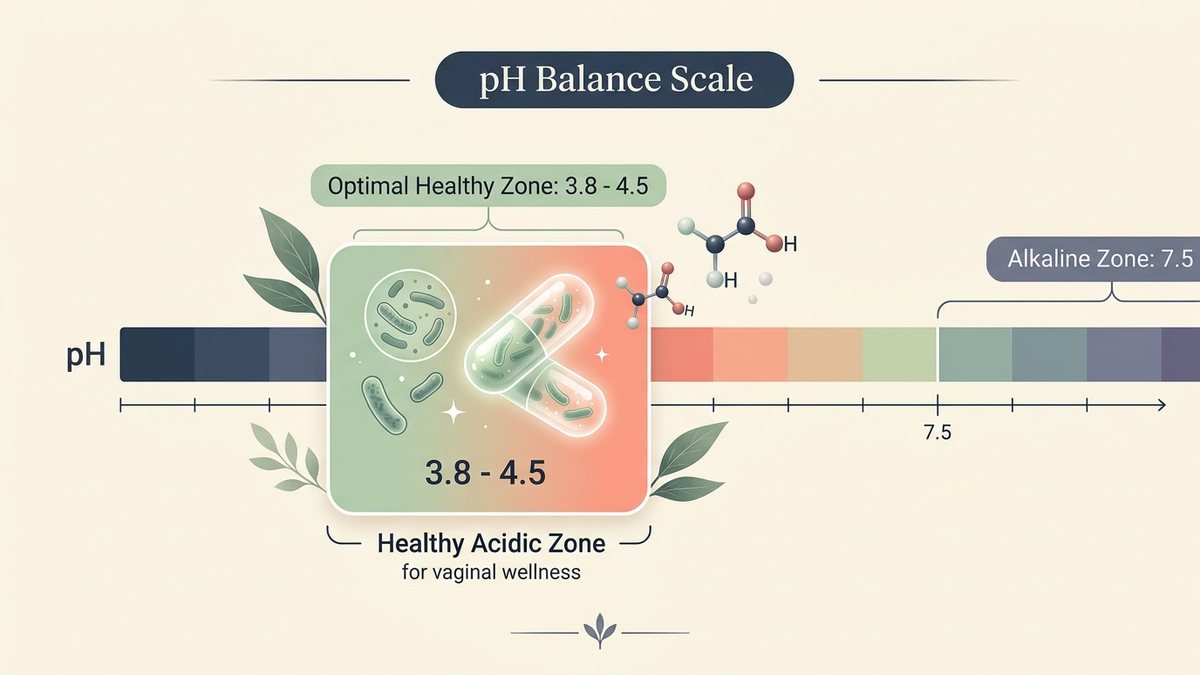
Because the pH scale is logarithmic, a healthy vagina at pH 4.0 is 1,000 times more acidic than neutral water (pH 7.0). That acidity is generated almost entirely by dominant Lactobacillus crispatus, L. jensenii, and L. gasseri strains converting glycogen from your vaginal walls into D- and L-lactic acid. At pH 3.8–4.5, uropathogenic bacteria and BV-associated anaerobes are kept dormant and metabolically paralyzed.
1. Why Unprotected Sex Causes an Immediate Fishy Odor (The Natural “Whiff Test”)
Human sperm cannot survive in an acidic pH of 4.0; acidity immobilizes sperm flagella within minutes. To protect sperm during reproduction, male seminal vesicles and the prostate gland secrete a powerful alkaline buffer (bicarbonate, phosphate, and spermine) with a pH between 7.1 and 8.0.
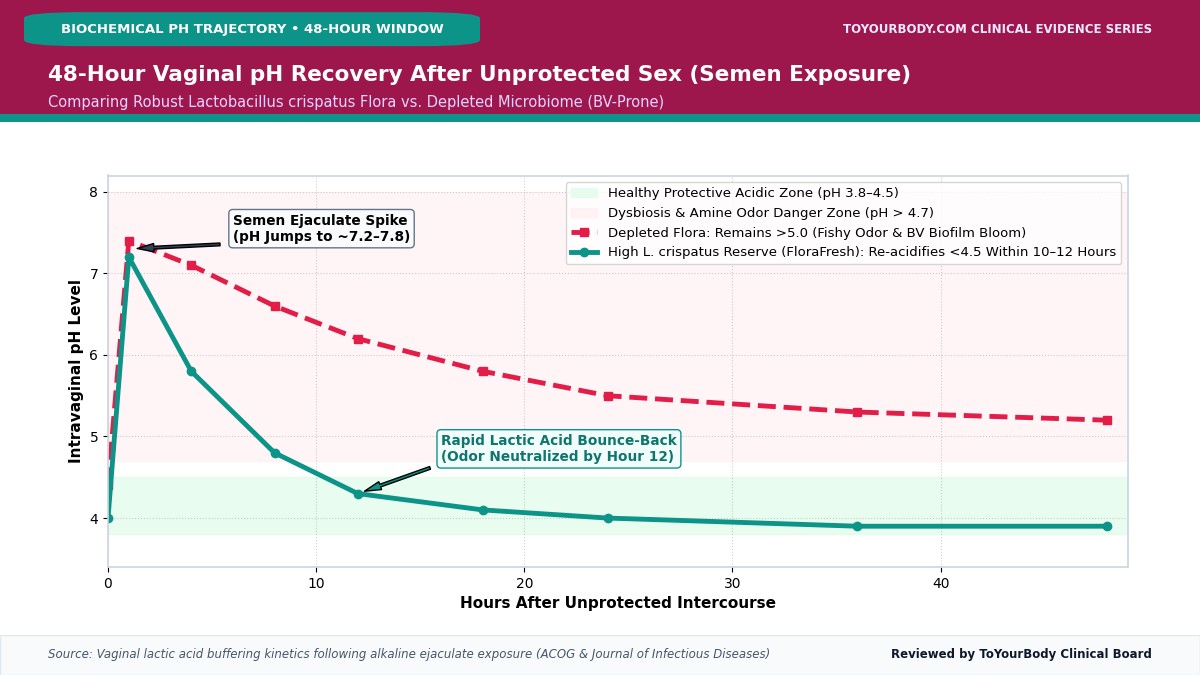
When ejaculate enters the vagina during unprotected intercourse, its buffering capacity overwhelms vaginal lactic acid within seconds, jumping intravaginal pH to 7.0–7.5 for 8 to 24 hours. If you already harbor low levels of Gardnerella vaginalis or Prevotella, those bacteria produce non-volatile amine salts (trimethylamine, putrescine, and cadaverine). In an acidic pH (<4.5), those amines stay protonated and odorless. The moment alkaline semen hits them, a chemical deprotonation reaction occurs—converting them into volatile gases with an unmistakable fishy smell. In a gynecologist’s office, adding alkaline potassium hydroxide (KOH) to vaginal fluid is called the Clinical Whiff Test; unprotected sex performs that exact same chemical reaction inside your body.
2. Why Menstruation Triggers End-of-Period BV and Metallic/Musty Odor
Menstruation delivers a double biochemical blow to your vaginal microbiome:
- Pre-Period Estrogen Withdrawal: Right before Day 1 of bleeding, estrogen and progesterone plummet. Because estrogen drives glycogen deposition in vaginal epithelial cells, your protective Lactobacillus bacteria temporarily lose their primary food source.
- Alkaline Blood (pH 7.4) + Heme Iron Feast: Venous menstrual blood has a pH of 7.4 (producing the characteristic metallic-smelling discharge during flow) and is packed with iron-rich hemoglobin. Unlike beneficial lactobacilli—which do not require iron to grow—Gardnerella vaginalis is an iron-hungry pathogen that uses heme iron to accelerate biofilm formation and secrete the cytolysin toxin vaginolysin.
Clinical Comparison: Post-Coital vs. Post-Menstrual Vaginal Shifts
| Vaginal Shift Trigger | Trigger pH & Chemistry | Primary Odor & Discharge Pattern | Microbiome Impact | 48-Hour Clinical Reset Protocol |
|---|---|---|---|---|
| Unprotected Intercourse (Semen Exposure) | pH 7.1–8.0 (High bicarbonate/phosphate buffer) | Sharp “fishy” amine scent within 1–12 hours; thin milky fluid | Neutralizes lactic acid for 8–24h; volatilizes anaerobic polyamines | Post-coital urination + lukewarm external rinse + daily FloraFresh |
| Menstruation (Days 1–6 of Cycle) | pH 7.4 (Alkaline blood + abundant heme iron + low E2) | Coppery/metallic during flow; musty or fishy on Days 5–8 if BV blooms | Low glycogen starves Lactobacilli while iron fuels Gardnerella biofilm | Change pads/cups every 4h + double hydration + post-period probiotic boost |
| Alkaline Lubricants, Saliva & Sweat | pH 6.5–7.5 (+ hyperosmolar glycerin in cheap lubes) | Mild tangy-to-savory or onion-like apocrine sweat odor; irritation | Hyperosmolar lubes cause epithelial cell shedding & candidiasis | Switch to pH-balanced (3.8–4.5), iso-osmolar, glycerin-free lubricant |
The Evidence-Based 24-Hour Post-Sex & Post-Period Microbiome Reset Routine
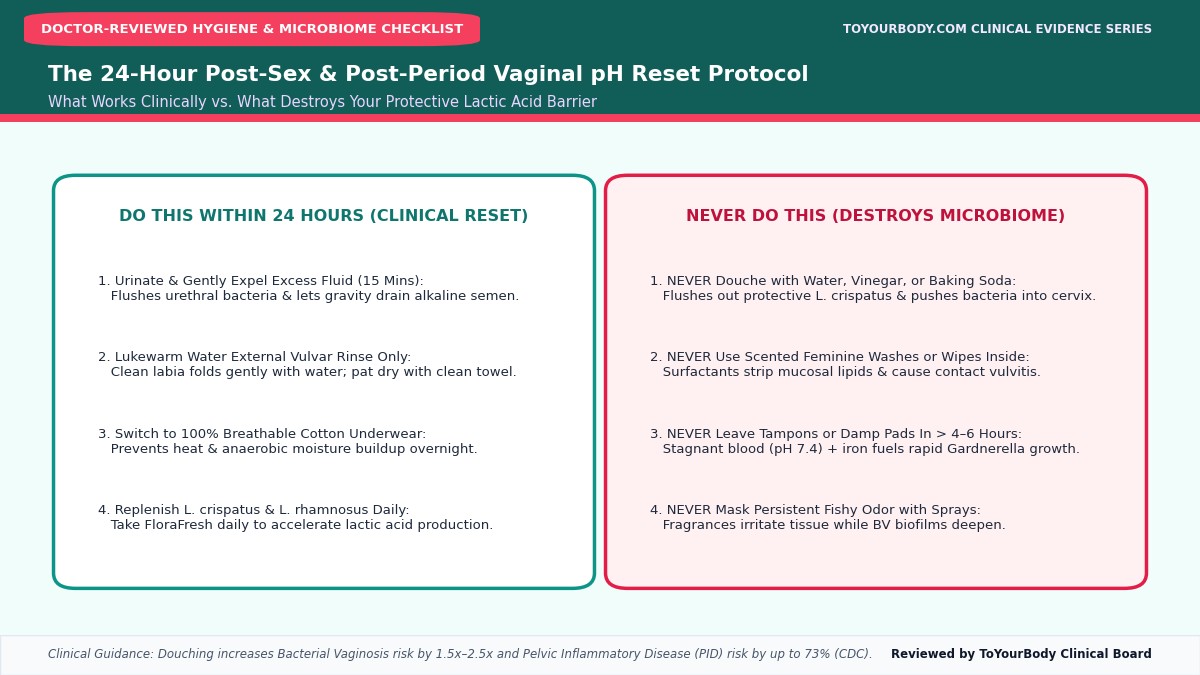
When your vaginal pH is pushed upward by semen or menstrual blood, the speed at which your body rebounds back below 4.5 determines whether you experience a harmless 6-hour blip or a 3-week BV infection. Follow this exact 4-step clinical routine:
Step 1: Immediate Post-Coital Urination & Gravity Evacuation (Within 15 Minutes)
Sitting upright on the toilet within 15 minutes of intercourse accomplishes two physiological tasks at once: urinating flushes E. coli bacteria away from the short female urethra, while sitting upright allows gravity and pelvic floor relaxation to expel the bulk of alkaline seminal fluid from the vaginal vault—dramatically reducing the total alkaline buffering load your Lactobacilli must neutralize overnight.
Step 2: Lukewarm Water External Vulvar Rinse Only (Never Douche!)
According to ACOG Vulvovaginal Health Guidelines and HHS Office on Women’s Health, internal douching with water, vinegar, or commercial washes flushes out protective Lactobacillus crispatus biofilms and increases your risk of Bacterial Vaginosis and Pelvic Inflammatory Disease (PID) by up to 73%. Instead, rinse only the external labia and inguinal skin folds with plain lukewarm water, and gently pat dry with a clean towel.
Step 3: Breathable Barrier & Internal Hydration Support
Sleep in loose, 100% breathable cotton underwear (or without underwear in clean cotton pajamas) to prevent perineal heat and moisture buildup. Pair external care with the mucosal hydration and polyphenol strategies covered in our guide on what to drink to support vaginal self-cleaning from the inside.
Step 4: Daily Lactobacillus crispatus & L. rhamnosus Replenishment
As shown in Figure 2 above, a vagina with a high baseline population of Lactobacillus crispatus can neutralize an alkaline semen spike and return to pH 4.2 within 10 to 12 hours, whereas a depleted flora stays stuck above pH 5.2 for days.
Clinical Microbiome Shield: Why We Recommend Wellness Nest FloraFresh
If your vaginal pH crashes every single month after your period or after unprotected intimacy with your partner, your native Lactobacillus reserve is running too thin to buffer alkaline shifts on its own. Wellness Nest FloraFresh combines clinically studied Lactobacillus crispatus and Lactobacillus rhamnosus with concentrated Organic Cranberry Extract to rebuild your lactic acid reservoir and protect both the vaginal and urinary tracts simultaneously.
See full strain breakdown in our FloraFresh Clinical Review or explore our 600mg Boric Acid + Probiotic Biofilm Guide for stubborn recurrent BV.
When Post-Sex or Post-Period Odor Signals an Infection Requiring Treatment
While a mild tangy, coppery, or transient post-coital scent that clears within 12 to 24 hours is physiological, schedule a clinical evaluation if you notice any of the following:
- Fishy Odor Lasting Longer Than 48 Hours: Indicates established Bacterial Vaginosis (vaginal pH persistently > 4.5 with clue cells) or Trichomonas vaginalis.
- Retained Foreign Body (Forgotten Tampon): A sudden, extremely strong, foul or decaying odor at the end of your period is the classic sign of a retained tampon fragment—which requires prompt removal to prevent toxic shock or secondary anaerobic infection.
- Pelvic Pain, Fever, Post-Coital Bleeding, or Yellow-Green Frothy Discharge: Requires immediate STI and cervical screening.
Frequently Asked Questions (Clinician-Reviewed FAQ)
Why does my vagina smell fishy after my partner finishes inside me?
Semen is strongly alkaline (pH 7.1–8.0). When it mixes with acidic vaginal fluid, it raises vaginal pH and chemically releases volatile amines (like trimethylamine) produced by anaerobic bacteria. Building a dense Lactobacillus crispatus flora with FloraFresh keeps anaerobic bacteria suppressed so no amines are present to volatilize.
How long does it take for vaginal pH to go back to normal after a period?
In a healthy microbiome, vaginal pH rebounds from menstrual blood’s 7.4 back down to 3.8–4.5 within 24 to 48 hours after bleeding stops, as rising follicular-phase estrogen restores vaginal glycogen.
Should I use boric acid after every period or every time I have sex?
Routine boric acid after every intercourse can over-strip your mucosal lining. Reserve 600mg boric acid suppositories for active biofilm resets, and rely on daily oral Lactobacillus crispatus probiotics for everyday post-sex and post-period pH defense.
Step-by-step clinical decoder calibrated against ACOG, CDC & NIH thresholds. Answer each quick step for your tailored protocol.
Alkaline Amine Volatilization & L. crispatus Depletion
When alkaline semen (pH 7.1–8.0) or menstrual blood (pH 7.4) buffers vaginal lactic acid above pH 4.7, anaerobic Gardnerella vaginalis biofilms release volatile polyamines (fishy odor). If you recently used 600mg boric acid or antibiotics, bare vaginal mucosa will relapse within 2–3 weeks unless actively reseeded.
Recommended Clinical Guides for Your Pattern:- 24-Hour Vaginal pH Reset After Sex & Period (pH 3.8–4.5)
- 600mg Boric Acid Biofilm Protocol + When to Switch to Probiotics
- Evidence-Based Natural Remedies for Recurrent BV
- Cytolytic Vaginosis (pH < 3.8) vs. Yeast Infection • OTC Yeast Guide • White Discharge & Itching
Replenishes human-adapted Lactobacillus crispatus and L. rhamnosus via the gut–perineal axis to produce D/L-lactic acid and lock vaginal pH at 3.8–4.5.
Check FloraFresh Availability at Wellness Nest →Luteal / Perimenopausal Allopregnanolone Drop & 3 AM Cortisol Rebound
Declining progesterone deprives your brain’s GABAA receptors of calming allopregnanolone while narrowing your hypothalamic thermoneutral zone. Between 2:00 AM and 4:00 AM, a subtle hepatic glycogen dip triggers an unbraked adrenal cortisol and adrenaline surge that jolts you awake.
Tonight’s Clinical Recovery Protocol:- Progesterone–GABA Drop & Non-Hormonal Luteal/Perimenopause Sleep Fix
- Why Do I Wake Up at 3 AM in Menopause? (Cortisol & Glycemic Shield)
- Cooling Hypothalamic KNDy Neurons & Night Sweats Relief
- Magnesium Glycinate vs. L-Threonate & Thermal Dumping Protocol
Stabilizes estrogen recirculation via the gut estrobolome, calms overactive KNDy hot-flash neurons, and blunts 3 AM cortisol awakenings without synthetic hormones.
Check MenoMate Price & Bundles at Wellness Nest →Enterohepatic Estrobolome Dysregulation & HPA Visceral Storage
When gut β-glucuronidase activity is disrupted alongside elevated HPA-axis cortisol, estrogen recirculation becomes erratic—starving vaginal Lactobacillus crispatus of glycogen (triggering pH shifts), destabilizing nocturnal thermoregulation (3 AM waking), and activating abdominal glucocorticoid receptors (cortisol belly).
Your 3-Pillar Clinical Reading Plan:- The Estrobolome & Gut–Vaginal Axis: Connecting BV, 3 AM Sleep & Belly Fat
- Cortisol Belly & Menopause Weight Gain: Visceral Fat Reset
- Fixing the “Tired But Wired” Diurnal Cortisol Curve
- Post-Lunch Bloating & Gut Microbiome Enzyme Guide
Coordinating L. crispatus urogenital colonization (FloraFresh) with intestinal β-glucuronidase and HPA-cortisol modulation (MenoMate) addresses all three concentric pillars simultaneously.