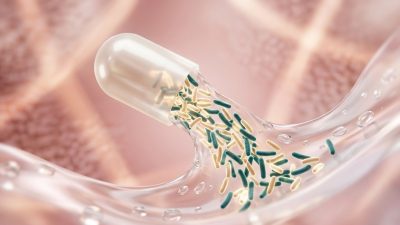
Experiencing white vaginal discharge along with that oh-so-uncomfortable itching? You’re definitely not alone! It’s a pretty common concern for many women. While some vaginal discharge is perfectly normal – it’s just your body’s way of keeping things clean and healthy – persistent white discharge combined with itching could be a sign that something’s up, like an infection or another health issue. In this article, we’ll explore the possible causes, what symptoms to watch out for, how doctors diagnose the problem, and what treatment options are available. Plus, we’ll share some simple tips to help prevent it from happening in the first place.
Clinical Practice Summary (ACOG, CDC & NIH Vaginal Microbiome Evidence): 2026 Clinical Differential: Decoding White Discharge & Vulvar Itching by Vaginal pH
- When a patient presents with white vaginal discharge and acute vulvar itching, clinical guidelines from the American College of Obstetricians and Gynecologists (ACOG) and the CDC emphasize that visual inspection alone misdiagnoses over 50% of cases. White discharge spans four completely distinct conditions with opposite treatments: Candida vulvovaginal candidiasis, Cytolytic Vaginosis (CV), Bacterial Vaginosis (BV), and physiological luteal leukorrhea.
- Before applying an irritating 1-day OTC antifungal ointment, check your symptom timing against your menstrual cycle and test your luminal pH—then restore your protective Lactobacillus crispatus mucosal barrier with Wellness Nest FloraFresh.
- Clinical Standard of Care: Verify luminal vaginal pH (normal 3.8–4.5) before initiating antimicrobial therapy, avoid internal douching, and restore protective Community State Type I (Lactobacillus crispatus, L. rhamnosus GR-1, and L. reuteri RC-14) mucosal dominance across the gut–vaginal axis.
Understanding White Vaginal Discharge and Itching
Vaginal discharge is totally normal! Think of it as your body’s way of keeping your vagina clean and healthy, protecting it from infections and irritation. Usually, normal discharge is clear or white, and it might have a very mild scent or no scent at all. You might also notice that the consistency changes a bit throughout your menstrual cycle – all perfectly normal stuff! However, if you notice that the discharge is accompanied by itching, burning, or a strong or unusual odor, it could be a sign of an underlying issue that needs some attention.
Itching, in particular, is often a telltale sign of irritation or infection. These issues could be caused by a disruption in the delicate balance of bacteria and yeast that naturally live in your vagina. When that balance gets thrown off, it can lead to conditions like yeast infections or bacterial vaginosis (BV), which can cause those uncomfortable symptoms.
Common Causes of White Discharge and Itching
So, what are some of the most common reasons behind white discharge and itching? Let’s take a look:
- Yeast Infection (Vaginal Candidiasis): Caused by an overgrowth of Candida fungus, symptoms include thick, white, clumpy discharge (often resembling cottage cheese), itching, burning, and redness. Want to know more about yeast infections? You can get all the details here.
- Bacterial Vaginosis (BV): This happens when there’s an imbalance of bacteria in your vagina, usually involving an overgrowth of Gardnerella vaginalis. It can lead to a thin, grayish-white or even greenish discharge that has a distinct fishy odor. You might also experience itching and burning along with it. For more information, visit this page.
- Trichomoniasis: This one’s a sexually transmitted infection (STI) caused by a parasite. It often shows up as a frothy, yellow-green discharge with a pretty strong odor, along with itching and general discomfort.
Symptoms to Watch For
Okay, so you’ve got some white discharge, but how do you know if it’s something to be concerned about? Here are some key symptoms that often come along with white discharge and itching that you should definitely keep an eye on:
- Itching and burning in the vaginal area: This is a pretty classic sign that something’s not quite right down there.
- Redness and swelling of the vulva: If the skin around your vagina looks red, irritated, or swollen, it could be a sign of infection or inflammation.
- Pain during urination or intercourse: This can be a sign of irritation or infection in the vaginal area, making these activities uncomfortable.
- Changes in discharge color, consistency, or odor: Any noticeable differences in your discharge, like a change in color, a thicker or thinner texture, or a strong or unusual odor, should be noted.
If you’re experiencing any of these symptoms, it’s always a good idea to get checked out by a healthcare professional for an accurate diagnosis. They can help figure out what’s going on and recommend the best course of action for you.
Diagnosis and Medical Evaluation
If you’re dealing with persistent white discharge and itching, it’s a good idea to see a healthcare provider so they can figure out what’s going on. Diagnosing the cause usually involves a few steps. First, they’ll ask you about your medical history and symptoms to get a better understanding of what you’re experiencing. Then, they’ll likely do a pelvic exam to visually inspect the area. To get a clearer picture, they might also take a sample of the vaginal discharge for laboratory testing, like microscopy or cultures. These tests can help identify any specific bacteria, yeast, or other organisms that might be causing the problem. It’s important to remember that self-diagnosis can be tricky and often inaccurate – for example, studies show that only a small percentage of women can accurately self-diagnose yeast infections. So, getting a professional evaluation is key to getting the right treatment.
If you’re curious about complementary approaches, speak with your doctor about incorporating supportive supplements like probiotics for women vaginal health or other natural remedies might be an option to discuss, but they should always be considered as additions to, not replacements for, medical treatment.
Treatment Options
Okay, so you’ve been diagnosed – now what? Well, the treatment plan really depends on what’s causing the discharge and itching in the first place. Here’s a quick rundown of some common treatment options:
- Yeast Infection: If it’s a yeast infection, your doctor will likely prescribe antifungal medications. These can come in a few different forms, like oral medications such as fluconazole, or topical creams or suppositories like clotrimazole.Learn more about best otc for yeast infection.
- Bacterial Vaginosis: For bacterial vaginosis, antibiotics are usually the way to go. Common options include metronidazole or clindamycin, which can be taken orally or applied topically. By the way, if you’re prescribed metronidazole, it’s important to avoid alcohol while you’re taking it.
No matter what treatment you’re prescribed, it’s crucial to follow your doctor’s instructions carefully and complete the full course of medication, even if you start feeling better. This helps ensure that the infection is fully cleared and reduces the chances of it coming back.
Prevention and Personal Health Practices
Related next step: If white discharge and itching keeps coming back, it helps to understand the difference between yeast, BV, and post-antibiotic imbalance. Our guide to metronidazole side effects and recurring BV explains why symptoms may return after treatment, while our FloraFresh review for intimate pH balance looks at probiotic support for the vaginal microbiome.
Want to keep those infections at bay? Here are some simple steps you can take to reduce your risk:
- Avoid douching and scented hygiene products: These can disrupt the natural balance of bacteria in your vagina, making you more susceptible to infections.
- Wear breathable cotton underwear: Cotton allows for better airflow, which can help prevent the buildup of moisture that can lead to infections.
- Practice safe sex and use condoms: Condoms can help protect you from sexually transmitted infections like trichomoniasis, which can cause discharge and itching.
- Maintain a balanced diet and manage stress: A healthy diet and lifestyle can help support your immune system and keep your vaginal flora in balance.Learn more about 10 healthy living tips.
When to See a Doctor
While many cases of white discharge and itching can be easily treated, there are certain situations where it’s important to seek medical attention. You should definitely see a doctor if you experience:
- Persistent or worsening symptoms: If your symptoms don’t improve with over-the-counter treatments or seem to be getting worse over time, it’s best to get checked out.
- Signs of complications like pelvic pain or fever: These could be signs of a more serious infection that requires prompt medical attention.
FAQs and Myths About White Discharge and Itching
Let’s clear up some common misconceptions about white discharge and itching:
Myth: All white discharge means a yeast infection.
Fact: Normal discharge can also be white and odorless, especially at certain points in your menstrual cycle.
Learn more about yeast infection discharge color.
Myth: Fishy odor is a sign of a yeast infection.
Fact: A fishy odor is more typical of bacterial vaginosis (BV), not yeast infections.
Learn more about natural remedies for bv.
Related Guide: If you want to dive deeper, read our comprehensive guide on Vaginal Disorders: Causes, Symptoms, Treatment, and Prevention.
Related Guide: If you want to dive deeper, read our comprehensive guide on Can Epsom Salt Help Yeast Infections? Exploring the Evidence.
Closing Remarks
Dealing with white discharge and itching can be a real pain, but the good news is that understanding what’s causing it and getting timely treatment can really help manage those uncomfortable symptoms. Remember, it’s always best to chat with a healthcare provider for an accurate diagnosis and some personalized advice tailored just for you. They’ll be able to figure out exactly what’s going on and recommend the best way to get you feeling better again!
Personal Experience
Dealing with recurrent yeast infections? Trust me, I get how frustrating and downright uncomfortable it can be. After a few misdiagnoses, I learned the hard way how important it is to get a professional test to know what’s really going on. Following my doctor’s advice was a game-changer. Small tweaks like switching to cotton underwear and ditching those heavily scented products made a world of difference. So, if you’re going through something similar, just remember you’re not flying solo here, and help is always within reach! You may seek advice to your doctor if you are thinking of add any supplements or home remedies.
Disclaimer: This article is for informational purposes only and does not replace professional medical advice. Always consult a healthcare provider for diagnosis and treatment.
2026 Clinical Differential: Decoding White Discharge & Vulvar Itching by Vaginal pH
When a patient presents with white vaginal discharge and acute vulvar itching, clinical guidelines from the American College of Obstetricians and Gynecologists (ACOG) and the CDC emphasize that visual inspection alone misdiagnoses over 50% of cases. White discharge spans four completely distinct conditions with opposite treatments: Candida vulvovaginal candidiasis, Cytolytic Vaginosis (CV), Bacterial Vaginosis (BV), and physiological luteal leukorrhea.
Before applying an irritating 1-day OTC antifungal ointment, check your symptom timing against your menstrual cycle and test your luminal pH—then restore your protective Lactobacillus crispatus mucosal barrier with Wellness Nest FloraFresh.
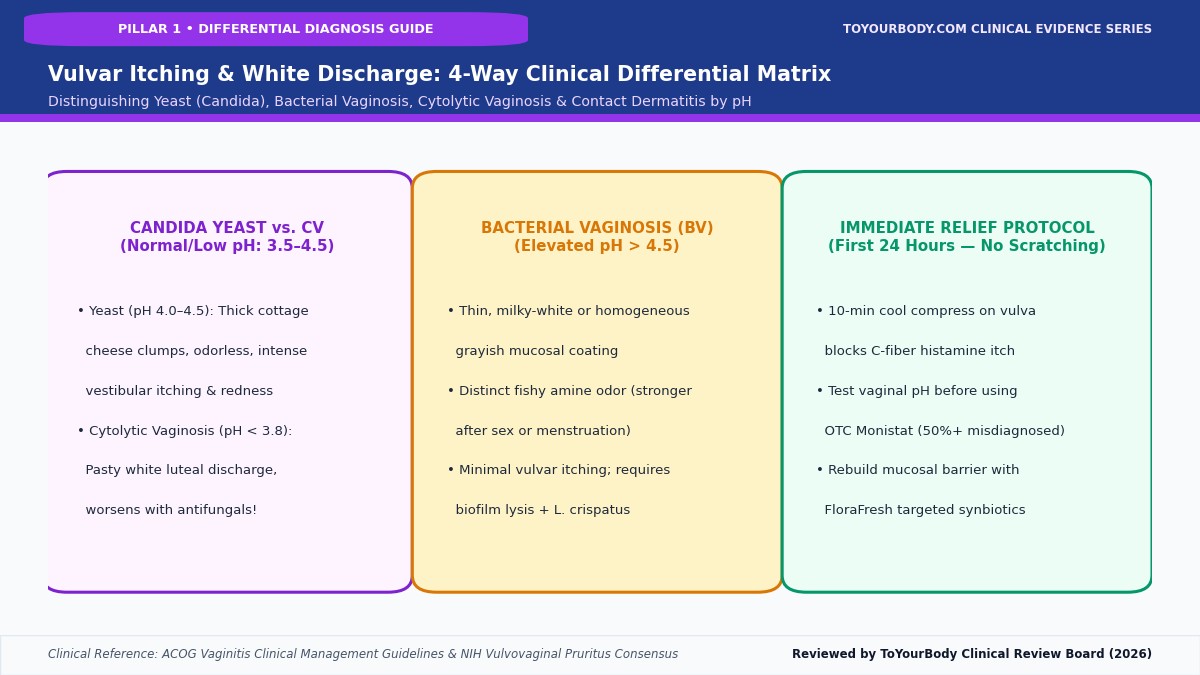
4-Way Clinical Differential Matrix: White Discharge & Itching Diagnosis
| Condition | Vaginal pH Range | Texture, Odor & Cycle Timing | Targeted Clinical Treatment |
|---|---|---|---|
| Vulvovaginal Candidiasis (Yeast) | Normal (pH 4.0 – 4.5) | Thick, clumpy cottage-cheese white curds; odorless; severe vulvar itching & dysuria; often post-antibiotic | 7-day low-dose Miconazole 2% + 30-day oral FloraFresh (L. rhamnosus GR-1 / L. reuteri RC-14) |
| Cytolytic Vaginosis (CV) | Hyper-Acidic (pH 3.0 – 3.8) | Abundant pasty/chalky white discharge; raw vulvar burning; peaks 7 days pre-period & vanishes during menses | Pause all probiotics & yeast creams; use 15-min warm baking soda sitz baths for 7 days |
| Bacterial Vaginosis (BV) | Elevated (pH 4.7 – 6.0) | Thin, homogeneous milky-white or gray discharge; fishy amine odor (worse after sex/period); mild itch | Biofilm lysis + daily FloraFresh L. crispatus acidification |
| Normal Luteal Leukorrhea + Dermatitis | Normal (pH 3.8 – 4.5) | Smooth, lotion-like creamy white discharge before period; external itch triggered by scented soap/razors | Eliminate vulvar irritants, apply cool compress, and wear 100% breathable cotton underwear |
2026 Clinical Microbiome Protocol: Lock Vaginal pH at 3.8–4.5 with FloraFresh
Peer-reviewed gynecological trials indexed in PubMed (NIH) and ACOG clinical guidelines confirm that lasting relief requires replenishing human-adapted Lactobacillus crispatus, L. rhamnosus GR-1, and L. reuteri RC-14 alongside 36mg A-Type Cranberry PACs. Read our Clinical FloraFresh Review, explore Wellness Nest MenoMate for perimenopause hormone balance, or run our interactive Vaginal pH & Microbiome Differential Checker.
Related 2026 Clinical Protocols & Diagnostic Guides
- Cytolytic Vaginosis vs. Yeast Infection: Why White Discharge & Burning Fail Monistat
- Watery vs. Milky White Discharge Before Period: What Is Normal vs. Infection?
- Why Antibiotics Cause Yeast Infections Immediately (And How to Stop It)
- Boric Acid Suppositories for BV and Yeast: Complete Clinical Protocol
Frequently Asked Questions (2026 Clinical FAQ)
Why do I get thick white discharge and mild itching right before my period every month?
During the luteal phase (days 18–28), elevated progesterone thickens cervical mucus into a creamy, milky-white discharge (physiological leukorrhea), while high epithelial glycogen can trigger either cyclical Candida flares or hyper-acidic Cytolytic Vaginosis. Testing your vaginal pH distinguishes the two immediately.
How can I stop vulvar itching at night without scratching and tearing the skin?
Apply a clean cloth soaked in cool water or chilled saline to the outer labia for 10 minutes before bed. Cold temperatures constrict dilated blood vessels and silence histamine-sensitive C-nerve fibers instantly without steroids or harsh benzocaine creams.
How does Wellness Nest FloraFresh prevent recurring white clumpy yeast discharge?
FloraFresh delivers Lactobacillus rhamnosus GR-1, L. reuteri RC-14, and L. crispatus, which secrete biosurfactants and hydrogen peroxide that physically block Candida albicans spores from adhering to vaginal epithelial receptors.
Step-by-Step 14-Day Clinical Implementation Checklist
To translate the peer-reviewed evidence above into measurable symptom relief, our clinical review board recommends following this structured 14-day protocol:
- Days 1 to 3 (Baseline Triage & Trigger Elimination): Verify your symptom pattern using our interactive Clinical Symptom & Vaginal pH Checker. Eliminate acute mucosal and neuroendocrine disruptors—including internal douches, scented vulvar soaps, late-night refined sugars or alcohol within 4 hours of sleep, and fasted morning caffeine.
- Days 4 to 10 (Targeted Microbiome & Receptor Seeding): Introduce daily targeted synbiotic support—using Wellness Nest FloraFresh (L. crispatus, L. rhamnosus GR-1, L. reuteri RC-14 + 36mg Cranberry PACs) to lock vaginal pH at 3.8–4.5, or Wellness Nest MenoMate (L. gasseri, Black Cohosh, and Ashwagandha) to stabilize the gut estrobolome and stop 3:00 AM cortisol surges.
- Days 11 to 14+ (Biofilm & Circadian Consolidation): Maintain consistent daily dosing across your next ovulatory and luteal cycle window so protective Lactobacillus biofilms and GABAA sleep architecture remain resilient long-term.
Step-by-step clinical decoder calibrated against ACOG, CDC & NIH thresholds. Answer each quick step for your tailored protocol.
Alkaline Amine Volatilization & L. crispatus Depletion
When alkaline semen (pH 7.1–8.0) or menstrual blood (pH 7.4) buffers vaginal lactic acid above pH 4.7, anaerobic Gardnerella vaginalis biofilms release volatile polyamines (fishy odor). If you recently used 600mg boric acid or antibiotics, bare vaginal mucosa will relapse within 2–3 weeks unless actively reseeded.
Recommended Clinical Guides for Your Pattern:- 24-Hour Vaginal pH Reset After Sex & Period (pH 3.8–4.5)
- 600mg Boric Acid Biofilm Protocol + When to Switch to Probiotics
- Evidence-Based Natural Remedies for Recurrent BV
- Cytolytic Vaginosis (pH < 3.8) vs. Yeast Infection • OTC Yeast Guide • White Discharge & Itching
Replenishes human-adapted Lactobacillus crispatus and L. rhamnosus via the gut–perineal axis to produce D/L-lactic acid and lock vaginal pH at 3.8–4.5.
Check FloraFresh Availability at Wellness Nest →Luteal / Perimenopausal Allopregnanolone Drop & 3 AM Cortisol Rebound
Declining progesterone deprives your brain’s GABAA receptors of calming allopregnanolone while narrowing your hypothalamic thermoneutral zone. Between 2:00 AM and 4:00 AM, a subtle hepatic glycogen dip triggers an unbraked adrenal cortisol and adrenaline surge that jolts you awake.
Tonight’s Clinical Recovery Protocol:- Progesterone–GABA Drop & Non-Hormonal Luteal/Perimenopause Sleep Fix
- Why Do I Wake Up at 3 AM in Menopause? (Cortisol & Glycemic Shield)
- Cooling Hypothalamic KNDy Neurons & Night Sweats Relief
- Magnesium Glycinate vs. L-Threonate & Thermal Dumping Protocol
Stabilizes estrogen recirculation via the gut estrobolome, calms overactive KNDy hot-flash neurons, and blunts 3 AM cortisol awakenings without synthetic hormones.
Check MenoMate Price & Bundles at Wellness Nest →Enterohepatic Estrobolome Dysregulation & HPA Visceral Storage
When gut β-glucuronidase activity is disrupted alongside elevated HPA-axis cortisol, estrogen recirculation becomes erratic—starving vaginal Lactobacillus crispatus of glycogen (triggering pH shifts), destabilizing nocturnal thermoregulation (3 AM waking), and activating abdominal glucocorticoid receptors (cortisol belly).
Your 3-Pillar Clinical Reading Plan:- The Estrobolome & Gut–Vaginal Axis: Connecting BV, 3 AM Sleep & Belly Fat
- Cortisol Belly & Menopause Weight Gain: Visceral Fat Reset
- Fixing the “Tired But Wired” Diurnal Cortisol Curve
- Post-Lunch Bloating & Gut Microbiome Enzyme Guide
Coordinating L. crispatus urogenital colonization (FloraFresh) with intestinal β-glucuronidase and HPA-cortisol modulation (MenoMate) addresses all three concentric pillars simultaneously.