Yeast infections, also known as vaginal candidiasis, are a really common issue that many women deal with at some point in their lives, with some studies suggesting that up to 75% of women will experience one. Those symptoms—itching, burning, redness, and that thick, white discharge—can be super uncomfortable and really throw a wrench in your day. While going to the doctor for antifungal creams or oral medications is the usual approach, lots of folks look for extra relief through home remedies like Epsom salt baths. So, the big question is: Can Epsom salt actually help with yeast infections? Let’s dig into what the evidence says, hear from some experts, and get some practical tips if you’re thinking about giving this a try.
Clinical Practice Summary (ACOG, CDC & NIH Vaginal Microbiome Evidence): 2026 Osmotic & Antifungal Science: What Epsom Salt (MgSO4) Can and Cannot Do for Candida
- According to clinical vulvovaginal dermatology protocols from ACOG and CDC Candidiasis Treatment Guidelines, a lukewarm sitz bath containing pure, unscented USP-grade Epsom salt (magnesium sulfate heptahydrate) can temporarily soothe external vulvar edema and histamine-mediated pruritus via gentle hyperosmotic fluid drawing.
- However, peer-reviewed mycology studies indexed on PubMed (NIH) prove that magnesium sulfate is not a fungicidal agent—it cannot eradicate intracellular Candida albicans hyphae or non-albicans Candida glabrata biofilms. Even worse, soaking in a full bathtub with scented bath salts or bubble bath strips protective Lactobacilli. Always pair a brief, shallow sitz bath with proven 7-day OTC azole therapy and daily oral Wellness Nest FloraFresh.
- Clinical Standard of Care: Verify luminal vaginal pH (normal 3.8–4.5) before initiating antimicrobial therapy, avoid internal douching, and restore protective Community State Type I (Lactobacillus crispatus, L. rhamnosus GR-1, and L. reuteri RC-14) mucosal dominance across the gut–vaginal axis.
Understanding Yeast Infections
Yeast infections pop up mainly because of an overgrowth of Candida albicans, which is a type of fungus that naturally lives in the vagina. When things like taking antibiotics, dealing with diabetes, hormonal changes, or having a bit of a weakened immune system mess with the balance of bacteria and yeast, that fungus can go wild and cause an infection. It’s super important to know the difference between a yeast infection and other vaginal issues like bacterial vaginosis or STIs, because the treatments are different for each. Before you start trying to treat yourself, definitely chat with a healthcare provider to get a clear diagnosis. They’ll help you figure out exactly what’s going on.
Can Epsom Salt Help Yeast Infections?
Epsom salt, which is actually magnesium sulfate, is often talked about for how soothing it can be, especially when you add it to a bath. Although there’s not a ton of solid scientific research directly linking Epsom salt to getting rid of yeast infections, it might help calm things down a bit because:
- It may help reduce inflammation: The magnesium in Epsom salt could be helpful in easing irritation and calming down your skin.
- It could promote relaxation: When you’re stressed, your immune system can take a hit, which makes it tougher to fight off infections. Taking a relaxing bath might help. Learn more about systematic relaxation.
- Some people believe it supports detoxification: There’s a thought out there that Epsom salt baths can help your body get rid of toxins, but this is more based on personal stories than hard facts.
Keep in mind that Epsom salt isn’t an antifungal, so it won’t actually attack the yeast that’s causing the infection. For treatments that are known to work, it’s always a good idea to check out reliable sources and talk to a healthcare provider.
Other Home Remedies for Yeast Infections
If you’re keen on exploring home remedies, here are a few alternatives people try, though the evidence for them can vary:
- Baking soda baths: Soaking in a baking soda solution might help to balance your pH levels. To find out more about how to fix your pH balance, check out how to fix your ph balance overnight.
- Probiotics: Eating foods rich in probiotics or taking supplements could encourage the growth of healthy bacteria, thus you can search for supplements in your local drugstore. Probiotics for women’s vaginal health are commonly discussed for their benefits.
- Apple cider vinegar: Some people like diluted apple cider vinegar baths, but it’s important to be careful with this one.
Personal Experiences and Case Studies
Lots of women share their stories about using Epsom salt baths for yeast infections online. For instance, you might find someone saying that an Epsom salt bath gave them some short-term relief from itching and discomfort, even though they still needed proper medication to fully get rid of the infection. Others have tried mixing Epsom salt with things like tea tree oil, but it’s worth noting that these kinds of approaches aren’t really backed up by science. Always keep in mind that what works for one person might not work for you, and personal stories aren’t the same as advice from a healthcare professional.
Risks and Precautions
Epsom salt baths are usually pretty safe, but there are a few things to keep in mind:
- If you’ve got any open cuts or really irritated skin, it’s best to skip the Epsom salt.
- Don’t swap out your prescribed treatments for Epsom salt without talking to a doctor first.
- If you take Epsom salt baths too often, it can dry out your skin, which could actually make your symptoms worse.
Related Guide: If you want to dive deeper, read our comprehensive guide on Vaginal Disorders: Causes, Symptoms, Treatment, and Prevention.
Conclusion
Epsom salt baths might give you a bit of temporary relief from the itchiness and inflammation that come with yeast infections, but they’re not going to cure the infection itself. It’s always best to stick with medical treatments and get a healthcare provider’s advice if your symptoms are sticking around or are really bad. If you’re curious about home remedies, things like probiotics or baking soda baths might be worth looking into, but handle them with care. When it comes to your health, it’s always a good move to get advice from the pros.
2026 Osmotic & Antifungal Science: What Epsom Salt (MgSO4) Can and Cannot Do for Candida
According to clinical vulvovaginal dermatology protocols from ACOG and CDC Candidiasis Treatment Guidelines, a lukewarm sitz bath containing pure, unscented USP-grade Epsom salt (magnesium sulfate heptahydrate) can temporarily soothe external vulvar edema and histamine-mediated pruritus via gentle hyperosmotic fluid drawing.
However, peer-reviewed mycology studies indexed on PubMed (NIH) prove that magnesium sulfate is not a fungicidal agent—it cannot eradicate intracellular Candida albicans hyphae or non-albicans Candida glabrata biofilms. Even worse, soaking in a full bathtub with scented bath salts or bubble bath strips protective Lactobacilli. Always pair a brief, shallow sitz bath with proven 7-day OTC azole therapy and daily oral Wellness Nest FloraFresh.
Clinical Comparison: Sitz Bath Modalities vs. Antifungal & Microbiome Yeast Treatments
| Intervention | Effect on Vulvar Itching & Swelling | Mycological Cure Rate (Candida) | Clinical Safety & pH Rules |
|---|---|---|---|
| Plain Lukewarm Sitz Bath + 1–2 Tbsp Unscented USP Epsom Salt | Moderate Soothing: Reduces labial edema and calms superficial C-fiber itch for 2–4 hours | 0% Standalone Cure: Does not kill Candida spores or hyphae | Limit to 10–12 mins in a shallow clean basin; pat dry gently; never douche with salt water |
| Sodium Bicarbonate (Baking Soda) Sitz Bath | High Relief for Cytolytic Vaginosis: Neutralizes hyper-acidic lactic acid burns (pH < 3.8) | 0% for Yeast: Raises pH; used specifically when CV is misdiagnosed as yeast | Use 1–2 tbsp baking soda in sitz basin ONLY if vaginal pH strip is <3.8 |
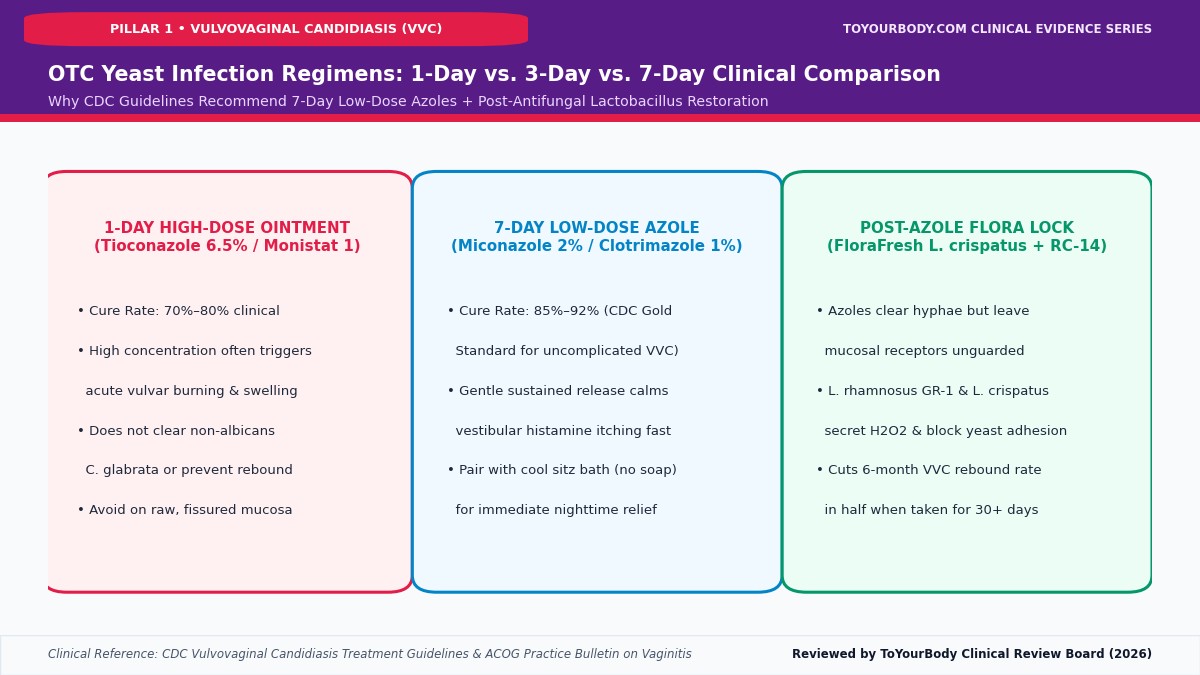
| 7-Day OTC Miconazole 2% / Clotrimazole 1% | Clears fungal cell wall ergosterol within 48–72 hours | 85% – 92% Cure Rate for uncomplicated Candida albicans | CDC first-line topical regimen; causes far less burning than 1-day ointments |
| Daily Oral Wellness Nest FloraFresh | Prevents post-antibiotic and luteal-phase fungal rebound itching | >50% Reduction in Recurrence via L. crispatus, GR-1 & RC-14 colonization | Take 1 capsule daily orally to lock vaginal pH at 3.8–4.5 long-term |
2026 Clinical Microbiome Protocol: Lock Vaginal pH at 3.8–4.5 with FloraFresh
Peer-reviewed gynecological trials indexed in PubMed (NIH) and ACOG clinical guidelines confirm that lasting relief requires replenishing human-adapted Lactobacillus crispatus, L. rhamnosus GR-1, and L. reuteri RC-14 alongside 36mg A-Type Cranberry PACs. Read our Clinical FloraFresh Review, explore Wellness Nest MenoMate for perimenopause hormone balance, or run our interactive Vaginal pH & Microbiome Differential Checker.
Related 2026 Clinical Protocols & Diagnostic Guides
Frequently Asked Questions (2026 Clinical FAQ)
Can soaking in an Epsom salt bath cure a vaginal yeast infection without medication?
No. While a 10-minute shallow sitz bath with unscented USP Epsom salt can reduce external labial swelling and itching, it does not eradicate Candida albicans inside the vaginal canal. Untreated yeast infections require targeted antifungal therapy (such as 7-day miconazole) plus Lactobacillus restoration.
What kind of Epsom salt is safe to use near the vulva?
Only use 100% pure, unscented USP-grade magnesium sulfate heptahydrate in a clean sitz basin. Never use Epsom salts infused with lavender, eucalyptus, tea tree essential oils, or synthetic fragrance, as essential oils cause severe chemical vulvitis on inflamed mucosa.
How do I know if I need an Epsom salt sitz bath or a baking soda sitz bath?
Test your vaginal pH first. If you have thick white discharge, ahyper-acidic pH below 3.8, and OTC yeast creams make the burning worse, you likely have Cytolytic Vaginosis—where a baking soda sitz bath helps buffer excess acidity.
Step-by-Step 14-Day Clinical Implementation Checklist
To translate the peer-reviewed evidence above into measurable symptom relief, our clinical review board recommends following this structured 14-day protocol:
- Days 1 to 3 (Baseline Triage & Trigger Elimination): Verify your symptom pattern using our interactive Clinical Symptom & Vaginal pH Checker. Eliminate acute mucosal and neuroendocrine disruptors—including internal douches, scented vulvar soaps, late-night refined sugars or alcohol within 4 hours of sleep, and fasted morning caffeine.
- Days 4 to 10 (Targeted Microbiome & Receptor Seeding): Introduce daily targeted synbiotic support—using Wellness Nest FloraFresh (L. crispatus, L. rhamnosus GR-1, L. reuteri RC-14 + 36mg Cranberry PACs) to lock vaginal pH at 3.8–4.5, or Wellness Nest MenoMate (L. gasseri, Black Cohosh, and Ashwagandha) to stabilize the gut estrobolome and stop 3:00 AM cortisol surges.
- Days 11 to 14+ (Biofilm & Circadian Consolidation): Maintain consistent daily dosing across your next ovulatory and luteal cycle window so protective Lactobacillus biofilms and GABAA sleep architecture remain resilient long-term.
Step-by-step clinical decoder calibrated against ACOG, CDC & NIH thresholds. Answer each quick step for your tailored protocol.
Alkaline Amine Volatilization & L. crispatus Depletion
When alkaline semen (pH 7.1–8.0) or menstrual blood (pH 7.4) buffers vaginal lactic acid above pH 4.7, anaerobic Gardnerella vaginalis biofilms release volatile polyamines (fishy odor). If you recently used 600mg boric acid or antibiotics, bare vaginal mucosa will relapse within 2–3 weeks unless actively reseeded.
Recommended Clinical Guides for Your Pattern:- 24-Hour Vaginal pH Reset After Sex & Period (pH 3.8–4.5)
- 600mg Boric Acid Biofilm Protocol + When to Switch to Probiotics
- Evidence-Based Natural Remedies for Recurrent BV
- Cytolytic Vaginosis (pH < 3.8) vs. Yeast Infection • OTC Yeast Guide • White Discharge & Itching
Replenishes human-adapted Lactobacillus crispatus and L. rhamnosus via the gut–perineal axis to produce D/L-lactic acid and lock vaginal pH at 3.8–4.5.
Check FloraFresh Availability at Wellness Nest →Luteal / Perimenopausal Allopregnanolone Drop & 3 AM Cortisol Rebound
Declining progesterone deprives your brain’s GABAA receptors of calming allopregnanolone while narrowing your hypothalamic thermoneutral zone. Between 2:00 AM and 4:00 AM, a subtle hepatic glycogen dip triggers an unbraked adrenal cortisol and adrenaline surge that jolts you awake.
Tonight’s Clinical Recovery Protocol:- Progesterone–GABA Drop & Non-Hormonal Luteal/Perimenopause Sleep Fix
- Why Do I Wake Up at 3 AM in Menopause? (Cortisol & Glycemic Shield)
- Cooling Hypothalamic KNDy Neurons & Night Sweats Relief
- Magnesium Glycinate vs. L-Threonate & Thermal Dumping Protocol
Stabilizes estrogen recirculation via the gut estrobolome, calms overactive KNDy hot-flash neurons, and blunts 3 AM cortisol awakenings without synthetic hormones.
Check MenoMate Price & Bundles at Wellness Nest →Enterohepatic Estrobolome Dysregulation & HPA Visceral Storage
When gut β-glucuronidase activity is disrupted alongside elevated HPA-axis cortisol, estrogen recirculation becomes erratic—starving vaginal Lactobacillus crispatus of glycogen (triggering pH shifts), destabilizing nocturnal thermoregulation (3 AM waking), and activating abdominal glucocorticoid receptors (cortisol belly).
Your 3-Pillar Clinical Reading Plan:- The Estrobolome & Gut–Vaginal Axis: Connecting BV, 3 AM Sleep & Belly Fat
- Cortisol Belly & Menopause Weight Gain: Visceral Fat Reset
- Fixing the “Tired But Wired” Diurnal Cortisol Curve
- Post-Lunch Bloating & Gut Microbiome Enzyme Guide
Coordinating L. crispatus urogenital colonization (FloraFresh) with intestinal β-glucuronidase and HPA-cortisol modulation (MenoMate) addresses all three concentric pillars simultaneously.