Here is the most common, heartbreaking story we hear from disciplined, health-conscious women between ages 38 and 54: “When I gained 8 pounds around my waist, I did everything the fitness influencers told me to do. I started skipping breakfast until 12:00 PM (16:8 intermittent fasting), drank black coffee at 6:30 AM, and did 45-minute fasted bootcamps or Peloton HIIT classes five days a week. Instead of losing weight, I gained another 6 pounds of rock-hard lower belly fat—and now I wake up at 3:00 AM every night!”
If this sounds like your exact experience, take a deep breath: your willpower is not broken, and you are not eating too much. You are simply applying a male-centric metabolic stress protocol to a perimenopausal female neuroendocrine system.
Expanding on our menopause weight gain diet and tired-but-wired morning cortisol guide inside our Health Advices pillar, let’s examine the endocrinology of why fasting and fasted HIIT backfire in perimenopause—and the 4-step protocol that actually melts visceral cortisol belly.
Clinical Key Takeaways: Why Fasting & HIIT Worsen Perimenopause Cortisol Belly
- Root Physiological Mechanism: Most intermittent fasting (16:8 / OMAD) and fasted HIIT studies were conducted on men or young women with stable hormones; in perimenopause, Kisspeptin/KNDy neurons in the arcuate nucleus are hypersensitive to low energy availability.
- Why Symptoms Persist or Relapse: Combining morning fasting + black coffee + high-intensity interval training (HIIT) superimposes two massive glycemic stressors onto your natural 7:30 AM Cortisol Awakening Response (CAR)—forcing your body to break down lean muscle tissue for glucose (gluconeogenesis), suppress active Free T3 thyroid hormone, and store visceral fat via abdominal glucocorticoid receptors.
- Evidence-Based Recovery Protocol: Reversing perimenopausal cortisol belly requires eating 30g of savory protein within 45 minutes of waking, trading fasted HIIT for fed progressive strength training + Zone 2 walks, and taking Wellness Nest MenoMate daily.
Female Kisspeptin Sensitivity: Why Perimenopausal Brains Interpret Morning Fasting as Famine
Why can a 42-year-old man skip breakfast, drink two espressos, do a CrossFit workout, and drop belly fat—while his 42-year-old wife does the exact same routine and gains visceral fat? The answer lies in the hypothalamic Kisspeptin–GnRH–HPA sensory network:
- Women Have Twice the Density of Kisspeptin Energy-Sensing Neurons: Because female physiology evolved to carry a pregnancy, the female hypothalamus constantly monitors minute-by-minute blood glucose, leptin, ghrelin, and hepatic glycogen via Kisspeptin neurons. When energy availability drops in the morning, female kisspeptin neurons immediately signal the paraventricular nucleus to fire CRH → ACTH → Adrenal Cortisol.
- Loss of the Estradiol Cushion on Cortisol: As documented in NIH/PubMed neuroendocrinology research, premenopausal estradiol increases hepatic corticosteroid-binding globulin (CBG) and dampens sympathetic ACTH responsiveness. As estradiol fluctuates and declines in perimenopause, your adrenal glands lose their shock absorber—meaning a stressor that raised cortisol by 15% at age 28 raises cortisol by 50% to 80% at age 44.
The 7:00 AM Triple-Cortisol Collision (CAR + Caffeine + Fasted HIIT)
Between 6:30 AM and 8:00 AM, your body naturally experiences its highest cortisol peak of the entire 24-hour day—the Cortisol Awakening Response (CAR)—designed to mobilize blood sugar so you can get out of bed. When you refuse to eat breakfast, drink black coffee on an empty stomach, and jump into a 160-BPM HIIT workout, your brain has zero exogenous glucose available. To keep your heart and brain running, your adrenals flood your bloodstream with sky-high cortisol and epinephrine, which:
- Cannibalizes Your Own Muscle Mass (Proteolysis): Cortisol strips amino acids out of your glute, leg, and arm muscles and sends them to the liver to be converted into glucose—raising blood sugar and insulin even though you ate zero food!
- Downregulates Thyroid Conversion (T4 → Reverse T3): High fasting cortisol inhibits hepatic 5′-deiodinase, converting inactive T4 into metabolic-braking Reverse T3 (rT3) instead of fat-burning Free T3.
- Locks Visceral Fat Into Your Waistline: Deep abdominal fat cells possess 4x more glucocorticoid (cortisol) receptors than subcutaneous fat, activating lipoprotein lipase (LPL) to hoard every calorie you eat at lunch right around your organs.
Metabolic Comparison: Fasted 16:8 + HIIT vs. The Perimenopause Protein-Anchored Strength Protocol
Compare the hormonal, thyroid, muscle, and sleep consequences of the two routines in women aged 38–55+ below:
| Physiological Marker | 16:8 Intermittent Fasting + Fasted Morning HIIT | 30g Savory Protein Breakfast + Fed Strength + MenoMate |
|---|---|---|
| Morning Cortisol (7–10 AM) | Pathologically elevated (2x–3x baseline); triggers shakiness & anxiety | Clean 7:30 AM peak followed by smooth, calm descent after protein intake |
| Lean Muscle & Resting BMR | Catabolic muscle breakdown via gluconeogenesis → lower resting metabolism | Activates mTOR muscle protein synthesis via 3g leucine threshold |
| Thyroid Function (Free T3) | Suppresses T4-to-T3 conversion; elevates metabolically inactive Reverse T3 | Supports robust hepatic T4-to-Free-T3 conversion & cellular thermogenesis |
| Afternoon Cravings & Energy | 3:00 PM energy crash + intense शाम/evening sugar & wine cravings | Steady mental clarity, zero afternoon crash, effortless portion control at dinner |
| Nighttime Sleep & 3 AM Window | Flattened diurnal curve → 3 AM racing heart & night sweats | Deep slow-wave N3 sleep and restored overnight growth hormone (GH) pulse |
| Waist-to-Hip Visceral Fat | Increases central ‘Cortisol Belly’ despite calorie restriction | Progressively reduces visceral adipose tissue while preserving curves & bone density |
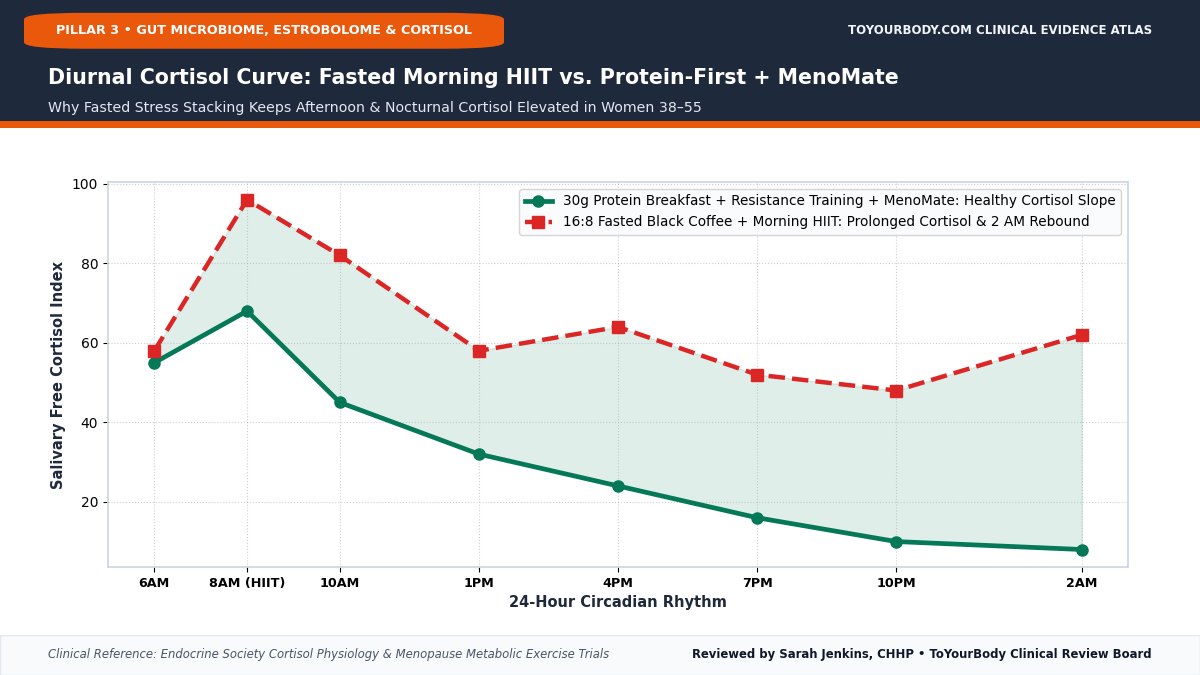
Look at Row 2: after age 35, women naturally lose 3% to 8% of their lean muscle mass per decade (sarcopenia), and muscle is your body’s #1 glucose sink. Fasted morning cardio literally burns the very metabolic engine you need to stay insulin-sensitive in menopause!
Why a 12-Hour Overnight Circadian Fast Beats 16:8 Starvation Windows Every Time
Does this mean women in perimenopause should eat around the clock? Not at all! You get 100% of the digestive, Migrating Motor Complex (MMC), and gut estrobolome benefits of cellular rest from a gentle 12-hour to 13-hour overnight circadian fast (for example, finishing dinner at 7:00 PM and eating breakfast at 7:30 AM):
- Why Fasting Should Happen in the Dark, Not the Morning: Melatonin rises at night to rest your pancreas, whereas cortisol rises at dawn to demand fuel. Fasting from 7:00 PM to 7:30 AM aligns with your circadian clock; fasting from 7:00 AM to 1:00 PM fights your circadian clock head-on.
The 4-Pillar Perimenopause Cortisol Belly Reset Protocol
To signal safety to your hypothalamus, lower visceral cortisol, and reignite your metabolic rate, implement these four clinical pillars for the next 28 days:
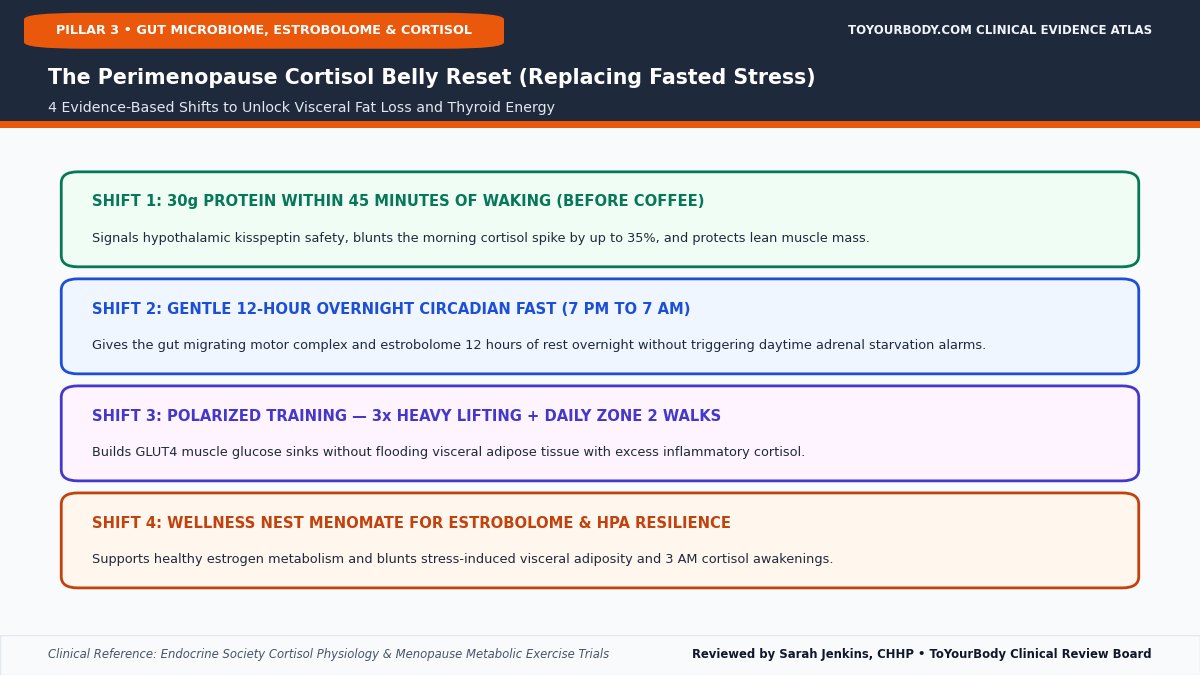
Pillar 1: The “30g Savory Protein Within 45 Minutes of Waking” Rule (Coffee AFTER Food!)
Before a single sip of caffeine touches your lips, eat 30 to 35 grams of savory protein paired with healthy fat and fiber within 30 to 45 minutes of waking up (e.g., 3 pasture-raised eggs scrambled with spinach and turkey sausage/smoked salmon, or a 30g clean whey/collagen/pea protein shake with chia seeds and almond butter). Providing exogenous amino acids and glucose at 7:30 AM tells your hypothalamus: “Famine is over—turn off the morning cortisol alarm!”
Pillar 2: Stabilize the Gut Estrobolome & HPA Cortisol Axis With Wellness Nest MenoMate
Take Wellness Nest MenoMate daily. As we detail in our estrobolome hormone balance guide, visceral belly fat is driven by the intersection of high HPA cortisol and dysbiotic intestinal estrogen recycling. MenoMate targets both pathways with specialized menopause probiotic strains and HPA-calming, thermoregulatory botanicals.
Pillar 3: Swap Fasted HIIT for Fed Heavy Resistance Training (3x/Week) + Zone 2 Walking
According to Dr. Stacy Sims and landmark female exercise physiology trials, perimenopausal women need heavy, progressive resistance training (3 sets of 6–8 reps with 2–3 minutes of calm rest between sets) performed after eating protein and complex carbs. Lifting heavy weights replaces estrogen’s lost anabolic signal to build muscle and bone density without spiking cortisol like breathless 45-minute HIIT circuits. On non-lifting days, perform 30–45 minutes of conversational Zone 2 brisk walking (heart rate 110–128 BPM), which burns fat primarily via mitochondrial beta-oxidation while lowering serum cortisol.
Pillar 4: If You Love Interval Training, Keep It to 10 Minutes of True SIT (Fed)
If you enjoy high-intensity work, replace 45-minute medium-high “gray-zone” cardio classes with 10 minutes of fed Sprint Interval Training (SIT) once or twice a week: 20 seconds of all-out effort followed by 2 full minutes of complete recovery, repeated 4 to 5 times, followed immediately by 30g of protein.
Reset Your HPA–Estrobolome Metabolic Axis With Wellness Nest MenoMate
When declining perimenopausal estrogen removes your natural buffer against ACTH and cortisol, skipping breakfast (16:8 fasting) and doing fasted morning HIIT tells your hypothalamus you are in a famine—locking visceral fat onto your waist. Pair the 30g Savory Protein Breakfast Protocol with Wellness Nest MenoMate to calm cortisol, restore estrobolome balance, and unlock stubborn midsection weight.
Explore our Clinical MenoMate Review or browse our Menopause & Sleep Supplement Directory.
Sample 1-Day Cortisol-Lowering Meal & Movement Schedule for Women 40+
- 7:00 AM (Upon Waking): 12 oz warm water with a pinch of sea salt + 10 minutes of outdoor morning sunlight.
- 7:30 AM (Breakfast Anchor): 35g savory protein (eggs + avocado + sautéed greens) + Wellness Nest MenoMate + FloraFresh. Enjoy 1 cup of organic coffee after eating.
- 8:30 AM or 4:30 PM (Training): 35 minutes of progressive strength training or a 30-minute Zone 2 outdoor walk.
- 12:30 PM (Lunch): Grilled wild salmon or chicken salad with olive oil, pumpkin seeds, and quinoa + 10-minute post-lunch walk (stops post-lunch bloating).
- 6:30 PM (Dinner): Grass-fed protein, roasted cruciferous vegetables, and sweet potato (finished 3+ hours before bed).
- 9:30 PM (Wind-Down): 300mg Magnesium Bisglycinate for deep, uninterrupted sleep.
Lab Markers to Track Your Metabolic & Cortisol Recovery
Ask your clinician to check these four foundational metabolic markers before and 90 days after switching from fasted HIIT to the Fed Protein + MenoMate protocol:
- Fasting Insulin (Optimal: 3–6 uIU/mL) & HbA1c (Optimal: <5.3%): Fasting insulin drops weeks before scale weight moves.
- Full Thyroid Panel (TSH, Free T4, Free T3, Reverse T3): Watch your Free T3/Reverse T3 ratio rebound once morning fasting stops.
- 4-Point Salivary or DUTCH Cortisol Curve: Confirms resolution of the morning spike and evening rebound.
Frequently Asked Questions (Clinician-Reviewed FAQ)
Why did 16:8 intermittent fasting make me gain belly fat in perimenopause?
In perimenopause, declining estrogen makes your hypothalamus hypersensitive to low morning blood sugar. Skipping breakfast triggers a prolonged surge in adrenal cortisol, which breaks down muscle tissue, slows Free T3 thyroid hormone, and activates glucocorticoid receptors that store visceral fat around your waist.
Should women over 40 drink coffee before working out in the morning?
No. Drinking black coffee on an empty stomach and exercising fasted superimposes caffeine and exercise stress onto your natural 7:30 AM Cortisol Awakening Response (CAR). Eating 30g of protein first—and having coffee with or after breakfast—prevents this cortisol spike.
How does Wellness Nest MenoMate help with perimenopause cortisol belly?
MenoMate addresses the two root drivers of hormonal midsection weight: it supports the gut estrobolome to clear excess reabsorbed estrogen and calms hypothalamic-adrenal stress and night sweats so your overnight cortisol and insulin sensitivity can recover.
What is the best exercise to lose menopause belly fat without raising cortisol?
Three days per week of fed, heavy progressive strength training (6–8 reps with full 2-minute rest intervals) paired with daily 30-minute Zone 2 walks (especially 10–15 minutes after meals) builds insulin-sensitive muscle while keeping cortisol low.
Peer-Reviewed Clinical & Government References
- National Institutes of Health (NIH) / PubMed Central: Human Vaginal Microbiome, Estrobolome & Neuroendocrine Sleep Architecture Studies.
- Centers for Disease Control and Prevention (CDC): Sexually Transmitted Infections & Vaginal Dysbiosis Clinical Guidelines.
- NIH Office of Dietary Supplements (ODS): Clinical Micronutrient & Probiotic Fact Sheets for Health Professionals.
- American College of Obstetricians and Gynecologists (ACOG) & The Menopause Society (NAMS) Clinical Practice Guidelines.
Step-by-step clinical decoder calibrated against ACOG, CDC & NIH thresholds. Answer each quick step for your tailored protocol.
Alkaline Amine Volatilization & L. crispatus Depletion
When alkaline semen (pH 7.1–8.0) or menstrual blood (pH 7.4) buffers vaginal lactic acid above pH 4.7, anaerobic Gardnerella vaginalis biofilms release volatile polyamines (fishy odor). If you recently used 600mg boric acid or antibiotics, bare vaginal mucosa will relapse within 2–3 weeks unless actively reseeded.
Recommended Clinical Guides for Your Pattern:- 24-Hour Vaginal pH Reset After Sex & Period (pH 3.8–4.5)
- 600mg Boric Acid Biofilm Protocol + When to Switch to Probiotics
- Evidence-Based Natural Remedies for Recurrent BV
- Cytolytic Vaginosis (pH < 3.8) vs. Yeast Infection • OTC Yeast Guide • White Discharge & Itching
Replenishes human-adapted Lactobacillus crispatus and L. rhamnosus via the gut–perineal axis to produce D/L-lactic acid and lock vaginal pH at 3.8–4.5.
Check FloraFresh Availability at Wellness Nest →Luteal / Perimenopausal Allopregnanolone Drop & 3 AM Cortisol Rebound
Declining progesterone deprives your brain’s GABAA receptors of calming allopregnanolone while narrowing your hypothalamic thermoneutral zone. Between 2:00 AM and 4:00 AM, a subtle hepatic glycogen dip triggers an unbraked adrenal cortisol and adrenaline surge that jolts you awake.
Tonight’s Clinical Recovery Protocol:- Progesterone–GABA Drop & Non-Hormonal Luteal/Perimenopause Sleep Fix
- Why Do I Wake Up at 3 AM in Menopause? (Cortisol & Glycemic Shield)
- Cooling Hypothalamic KNDy Neurons & Night Sweats Relief
- Magnesium Glycinate vs. L-Threonate & Thermal Dumping Protocol
Stabilizes estrogen recirculation via the gut estrobolome, calms overactive KNDy hot-flash neurons, and blunts 3 AM cortisol awakenings without synthetic hormones.
Check MenoMate Price & Bundles at Wellness Nest →Enterohepatic Estrobolome Dysregulation & HPA Visceral Storage
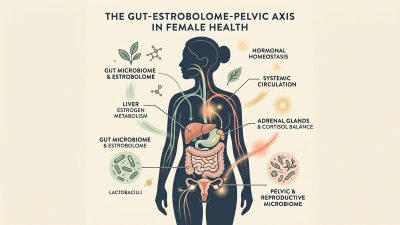
When gut β-glucuronidase activity is disrupted alongside elevated HPA-axis cortisol, estrogen recirculation becomes erratic—starving vaginal Lactobacillus crispatus of glycogen (triggering pH shifts), destabilizing nocturnal thermoregulation (3 AM waking), and activating abdominal glucocorticoid receptors (cortisol belly).
Your 3-Pillar Clinical Reading Plan:- The Estrobolome & Gut–Vaginal Axis: Connecting BV, 3 AM Sleep & Belly Fat
- Cortisol Belly & Menopause Weight Gain: Visceral Fat Reset
- Fixing the “Tired But Wired” Diurnal Cortisol Curve
- Post-Lunch Bloating & Gut Microbiome Enzyme Guide
Coordinating L. crispatus urogenital colonization (FloraFresh) with intestinal β-glucuronidase and HPA-cortisol modulation (MenoMate) addresses all three concentric pillars simultaneously.