Have you ever sat in a doctor’s office feeling like your body is breaking down in three completely unrelated places at once? You talk to your gynecologist about recurrent BV or vaginal pH shifts, you ask your primary care physician why you are jolting awake drenched in sweat at 3:00 AM, and you wonder why you suddenly have post-lunch bloating and a firm layer of hormonal cortisol belly fat that refuses to budge despite clean eating.
In conventional fragmented medicine, you are handed three separate prescriptions: an antibiotic gel for your vagina, a sleeping pill for your nights, and generic advice to “eat less and exercise more” for your waistline. None of them solve the underlying problem because all three symptoms are downstream expressions of a single biological command center: the Estrobolome and the Gut–Vaginal Axis.
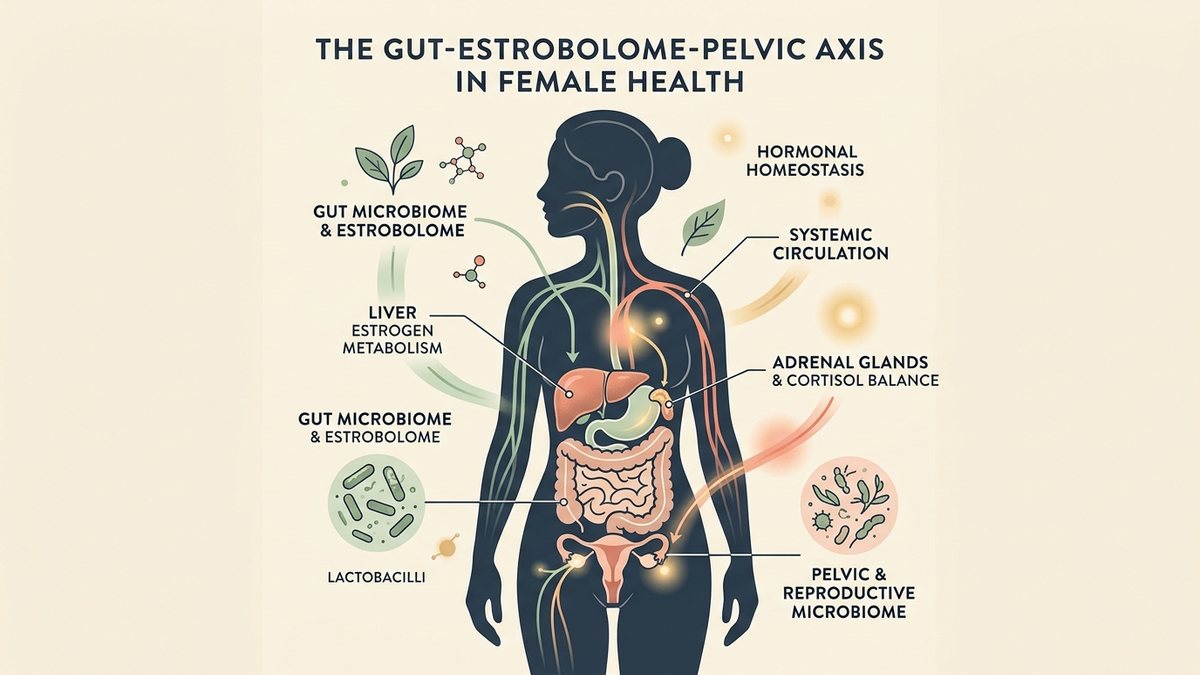
As the flagship integrative guide in our Health Advices (Gut Microbiome & Cortisol) pillar, this article maps out the exact molecular bridge connecting your digestive tract, your Intimate & Vaginal Health, and your Bed Advices & Hormonal Sleep.
Clinical Key Takeaways: The Estrobolome & Gut–Vaginal Axis
- One Root Cause Connecting 3 Symptoms: If you are simultaneously battling recurrent BV or yeast infections (Pillar 1), 3 AM night sweats and insomnia (Pillar 2), and stubborn hormonal cortisol belly fat (Pillar 3), the common denominator is your Estrobolome—the specialized subset of gut bacteria that metabolize and recirculate estrogens via the enzyme β-glucuronidase.
- How the Gut Controls Vaginal pH (3.8–4.5): Active estrogen reabsorbed by the gut estrobolome travels through the bloodstream to the vaginal epithelium, stimulating glycogen production that feeds Lactobacillus crispatus. Meanwhile, oral probiotic strains migrate directly across the perineal bridge to seed the vaginal vault.
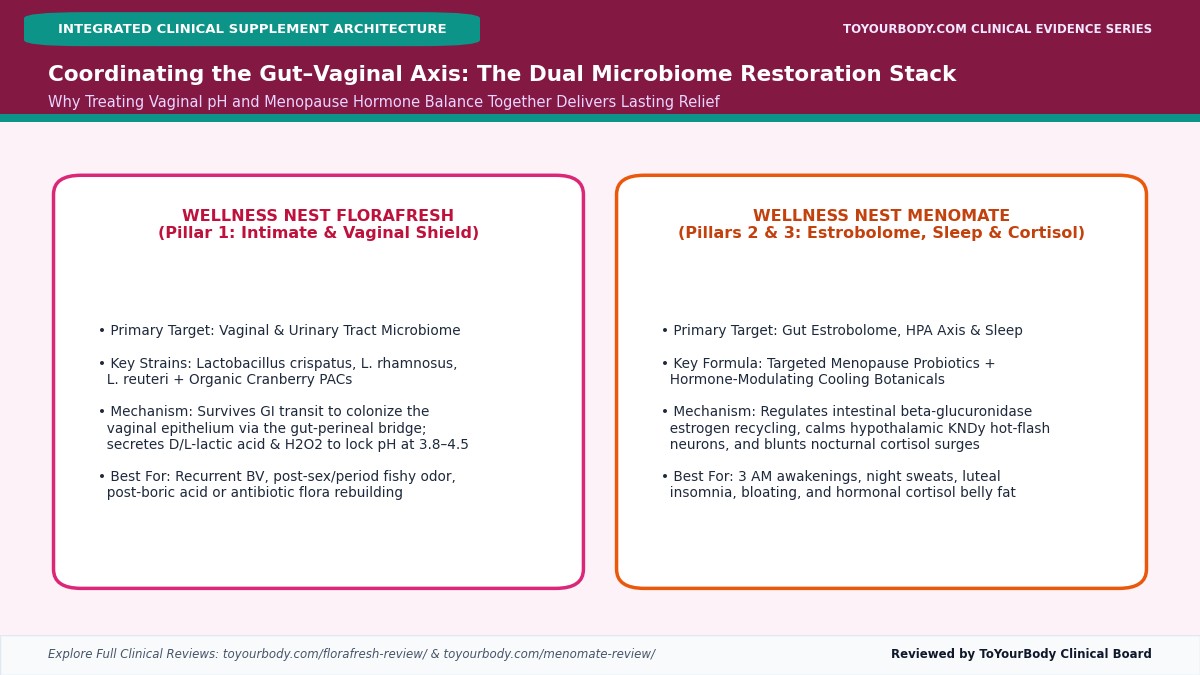
- The Dual Microbiome Protocol: Pairing Wellness Nest FloraFresh (targeted L. crispatus vaginal defense) with Wellness Nest MenoMate (estrobolome, thermoregulation, and HPA-axis cortisol balance) restores the entire gut–vaginal–hormone axis simultaneously.
What Is the Estrobolome? How Gut Bacteria Regulate Estrogen via β-Glucuronidase
After your ovaries (and peripheral tissues) produce estrogens—estradiol (E2), estrone (E1), and estriol (E3)—those hormones circulate through your bloodstream and bind to estrogen receptors in your brain, bones, metabolism, and vaginal tract. Once they have completed a pass, your liver performs Phase I and Phase II detoxification, attaching a glucuronic acid molecule to the estrogen (conjugation) so it can be excreted into bile and sent into your small intestine.
Here is where the Estrobolome takes control. Coined in landmark NIH/PubMed endocrine microbiome research, the estrobolome is the aggregate of enteric bacterial genes whose products are capable of metabolizing estrogens. Specifically, specialized gut microbes secrete an enzyme called β-glucuronidase (encoded by gus and BG gene clusters).
- The Enterohepatic Recycling Loop: Like a molecular pair of scissors, bacterial β-glucuronidase cleaves the glucuronic acid tag off bound estrogens in the gut lumen, converting them back into free, biologically active unconjugated estrogen that is reabsorbed across the intestinal mucosa into the portal vein.
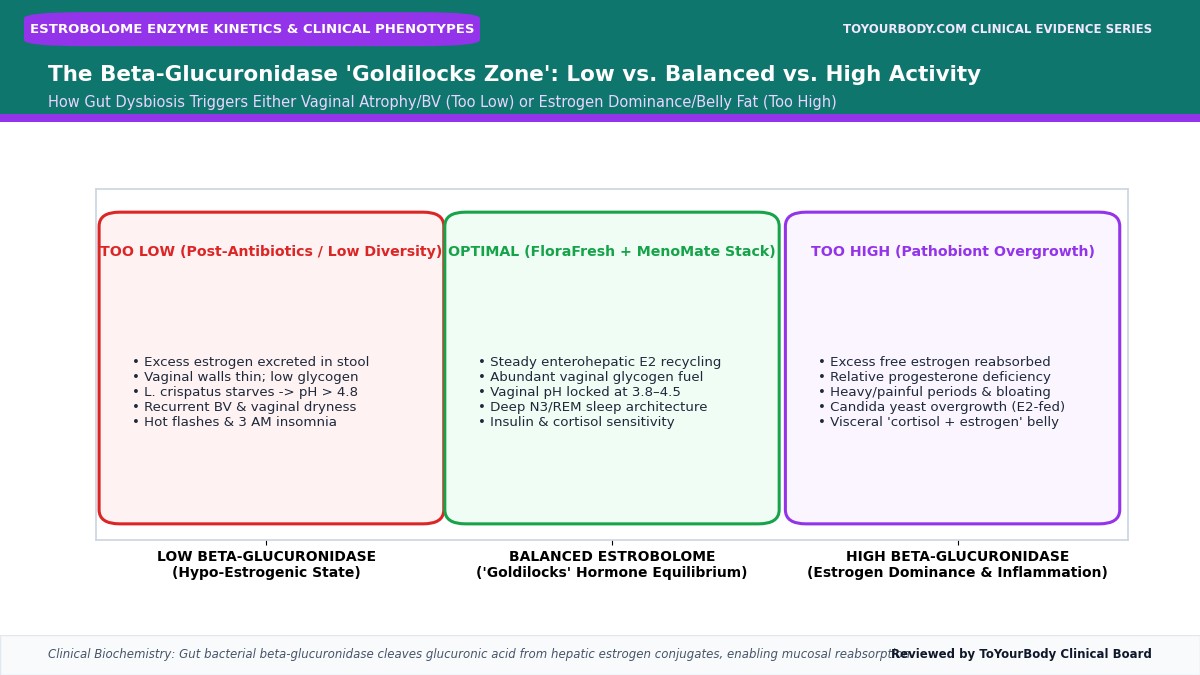
- The Goldilocks Requirement: A healthy gut microbiome acts as a precision thermostat—recirculating just enough active estrogen to nourish your vaginal walls, brain, and metabolism, while allowing excess estrogen metabolites to exit safely in stool.
How the Estrobolome Bridges All 3 Concentric Pillars of Women’s Health
1. Gut → Vaginal Microbiome (Pillar 1: Intimate & Vaginal Health)
Many women are surprised to learn that your gut controls your vaginal pH through two distinct biological highways:
- The Endocrine Glycogen Highway: As detailed in our vaginal self-cleaning physiology guide, protective Lactobacillus crispatus bacteria do not eat dietary food directly—they ferment glycogen stored inside your vaginal epithelial cells into lactic acid to keep vaginal pH between 3.8 and 4.5. What commands your vaginal cells to manufacture and shed that glycogen? Circulating estrogen. When antibiotic use, chronic stress, or perimenopause depletes your gut estrobolome (β-glucuronidase drops too low), less active estrogen is recirculated into your bloodstream. Vaginal glycogen plummets, L. crispatus starves, vaginal pH rises above 4.8, and recurrent BV biofilms or post-sex fishy odor take over.
- The Anatomical Perineal Bridge: Clinical strain-tracking studies confirm that orally ingested human-adapted lactobacilli—specifically Lactobacillus crispatus, L. rhamnosus GR-1, and L. reuteri RC-14—survive stomach acid and bile, colonize the lower colon, and physically ascend across the short anatomical bridge of the perineum to seed the vaginal introitus while outcompeting rectal uropathogens (E. coli and Gardnerella reservoirs).
2. Gut → Nocturnal Sleep & Thermoregulation (Pillar 2: Bed Advices)
Over 90% of the body’s serotonin (the direct metabolic precursor to nocturnal melatonin) and significant peripheral GABA signaling originate in the enteric nervous system. Furthermore, when a dysbiotic estrobolome fails to smooth out daily estrogen fluctuations during perimenopause, erratic drops in circulating estradiol cause hypothalamic KNDy neurons to misfire—triggering night sweats and compounding the progesterone–GABA sleep drop and 3 AM awakenings.
3. Gut → Cortisol Belly & Metabolic Inflammation (Pillar 3: Health Advices)
What happens when chronic psychological stress or a low-fiber, ultra-processed diet alters the gut microbiome? High adrenal cortisol increases intestinal permeability (“leaky gut”), allowing bacterial lipopolysaccharide (LPS) endotoxins into circulation. Simultaneously, pathobiont overgrowth can drive excessive β-glucuronidase activity, flooding the liver with reabsorbed estrogens while progesterone is low (relative estrogen dominance)—or, in late menopause, severe estrogen deficiency impairs insulin sensitivity. Because deep visceral fat cells in the abdomen possess four times more glucocorticoid (cortisol) receptors than subcutaneous fat, this HPA–estrobolome loop directly locks stubborn adipose tissue around the midsection, alongside the tired-but-wired morning cortisol rhythm.
Clinical Mapping Table: Low vs. Balanced vs. High β-Glucuronidase Activity
| Estrobolome State | Vaginal Microbiome & pH Impact (Pillar 1) | Nocturnal Sleep & Vasomotor Impact (Pillar 2) | Metabolic & Cortisol Impact (Pillar 3) | Targeted Clinical Intervention |
|---|---|---|---|---|
| Low β-Glucuronidase (Hypo-Estrogenic Dysbiosis) | Low vaginal glycogen → L. crispatus depletion, vaginal dryness, pH > 4.8, recurrent BV & UTIs | Frequent hot flashes, KNDy neuron instability, 3:00 AM cortisol jolts | Declining insulin sensitivity, central visceral fat redistribution, afternoon fatigue | Prebiotic polyphenols + FloraFresh + MenoMate dual stack |
| High β-Glucuronidase (Estrogen Dominance Dysbiosis) | High glycogen with fungal promotion → recurrent Candida yeast flares or luteal Cytolytic Vaginosis | Severe pre-period PMS insomnia, breast tenderness, luteal anxiety & vivid dreams | Post-lunch bloating, fluid retention, heavy periods, stubborn lower-belly & hip adiposity | Cruciferous sulforaphane/calcium D-glucarate foods, 30g soluble fiber, targeted probiotics |
| Balanced Estrobolome (“Goldilocks” Homeostasis) | Steady vaginal glycogen → >90% L. crispatus dominance, pH locked at 3.8–4.5 | Stable hypothalamic thermostat, smooth nocturnal cortisol nadir, deep N3/REM sleep | Regular daily elimination, flat post-meal digestion, healthy cortisol-to-insulin ratio | Daily maintenance with fermented foods, colorful polyphenols & synbiotic support |
The Integrated Gut–Vaginal Restoration Protocol: Why the FloraFresh + MenoMate Stack Works
When you understand that the gut estrobolome, vaginal pH, and nocturnal HPA-axis cortisol operate as a single interconnected feedback loop, it becomes clear why treating only one end of the axis fails. Suppressing vaginal bacteria without fixing gut reseeding leads to BV relapse; taking sleep aids without calming gut-hormone fluctuations leaves you waking up hot at 3 AM.
1. Pillar 1 Anchor: Wellness Nest FloraFresh
Engineered specifically for the gut–perineal–vaginal highway: delivers clinically studied Lactobacillus crispatus, L. rhamnosus, and L. reuteri plus cranberry proanthocyanidins to lock vaginal pH at 3.8–4.5 and block recurrent BV and yeast biofilms.
Check FloraFresh at Wellness Nest →
Read Full FloraFresh Clinical Review
2. Pillars 2 & 3 Anchor: Wellness Nest MenoMate
Engineered for the Estrobolome & HPA-Sleep Axis: combines hormone-modulating probiotic strains with cooling phyto-botanicals to regulate β-glucuronidase estrogen recycling, stop 3 AM night sweats, and flatten stress-induced cortisol belly storage.
Check MenoMate at Wellness Nest →
Read Full MenoMate Clinical Review
You can also compare both formulations side by side in our Clinical Women’s Health & Microbiome Products Hub.
3 Daily Nutritional Habits That Feed a Balanced Estrobolome
- Cruciferous Indole-3-Carbinol & Sulforaphane (1–2 Cups Daily): Steamed broccoli sprouts, Brussels sprouts, kale, and cauliflower support hepatic Phase I/II estrogen hydroxylation toward the protective 2-OH-estrone pathway and prevent excess intestinal β-glucuronidase spikes.
- 25g–35g Prebiotic Soluble Fiber & Lignans: Ground flaxseed (1–2 tablespoons daily), chia seeds, Jerusalem artichoke, and cooked-and-cooled resistant starches bind excess conjugated hormones in bile while feeding butyrate-producing commensal bacteria that seal the intestinal barrier against LPS endotoxemia.
- Polyphenol-Rich Fermented Foods: Unsweetened kefir, sauerkraut, pomegranate, cranberry, and green tea polyphenols selectively nourish Lactobacillus and Bifidobacterium species while inhibiting β-glucuronidase-overproducing pathobionts like Clostridium and Escherichia.
Frequently Asked Questions (Clinician-Reviewed FAQ)
How long does it take for oral probiotics to reach the vagina via the gut–vaginal axis?
Clinical trials tracking oral Lactobacillus rhamnosus GR-1, L. reuteri RC-14, and L. crispatus show measurable vaginal colonization within 7 to 14 days of daily oral intake, with optimal vaginal pH (3.8–4.5) and biofilm resilience stabilizing over 30 to 60 days.
Can I take FloraFresh and MenoMate together every day?
Yes. Because FloraFresh targets the urogenital Lactobacillus crispatus and cranberry anti-adhesion pathway while MenoMate targets the gut estrobolome and hypothalamic thermoregulatory/cortisol pathways, taking FloraFresh with breakfast and MenoMate with dinner provides complementary 24-hour coverage across all three pillars.
Step-by-step clinical decoder calibrated against ACOG, CDC & NIH thresholds. Answer each quick step for your tailored protocol.
Alkaline Amine Volatilization & L. crispatus Depletion
When alkaline semen (pH 7.1–8.0) or menstrual blood (pH 7.4) buffers vaginal lactic acid above pH 4.7, anaerobic Gardnerella vaginalis biofilms release volatile polyamines (fishy odor). If you recently used 600mg boric acid or antibiotics, bare vaginal mucosa will relapse within 2–3 weeks unless actively reseeded.
Recommended Clinical Guides for Your Pattern:- 24-Hour Vaginal pH Reset After Sex & Period (pH 3.8–4.5)
- 600mg Boric Acid Biofilm Protocol + When to Switch to Probiotics
- Evidence-Based Natural Remedies for Recurrent BV
- Cytolytic Vaginosis (pH < 3.8) vs. Yeast Infection • OTC Yeast Guide • White Discharge & Itching
Replenishes human-adapted Lactobacillus crispatus and L. rhamnosus via the gut–perineal axis to produce D/L-lactic acid and lock vaginal pH at 3.8–4.5.
Check FloraFresh Availability at Wellness Nest →Luteal / Perimenopausal Allopregnanolone Drop & 3 AM Cortisol Rebound
Declining progesterone deprives your brain’s GABAA receptors of calming allopregnanolone while narrowing your hypothalamic thermoneutral zone. Between 2:00 AM and 4:00 AM, a subtle hepatic glycogen dip triggers an unbraked adrenal cortisol and adrenaline surge that jolts you awake.
Tonight’s Clinical Recovery Protocol:- Progesterone–GABA Drop & Non-Hormonal Luteal/Perimenopause Sleep Fix
- Why Do I Wake Up at 3 AM in Menopause? (Cortisol & Glycemic Shield)
- Cooling Hypothalamic KNDy Neurons & Night Sweats Relief
- Magnesium Glycinate vs. L-Threonate & Thermal Dumping Protocol
Stabilizes estrogen recirculation via the gut estrobolome, calms overactive KNDy hot-flash neurons, and blunts 3 AM cortisol awakenings without synthetic hormones.
Check MenoMate Price & Bundles at Wellness Nest →Enterohepatic Estrobolome Dysregulation & HPA Visceral Storage
When gut β-glucuronidase activity is disrupted alongside elevated HPA-axis cortisol, estrogen recirculation becomes erratic—starving vaginal Lactobacillus crispatus of glycogen (triggering pH shifts), destabilizing nocturnal thermoregulation (3 AM waking), and activating abdominal glucocorticoid receptors (cortisol belly).
Your 3-Pillar Clinical Reading Plan:- The Estrobolome & Gut–Vaginal Axis: Connecting BV, 3 AM Sleep & Belly Fat
- Cortisol Belly & Menopause Weight Gain: Visceral Fat Reset
- Fixing the “Tired But Wired” Diurnal Cortisol Curve
- Post-Lunch Bloating & Gut Microbiome Enzyme Guide
Coordinating L. crispatus urogenital colonization (FloraFresh) with intestinal β-glucuronidase and HPA-cortisol modulation (MenoMate) addresses all three concentric pillars simultaneously.