You brush your teeth at 10:30 PM feeling completely exhausted. Yet either you lie in bed with a racing mind unable to cross the threshold into sleep, or you fall asleep only to jolt wide awake at 2:45 AM with a pounding heart, flushed chest, and restless legs. When you check your calendar, it is always the exact same window: the five to seven days before your period starts—or, if you are in your late 30s or 40s, almost every week of the month.
When women search late at night for “why can’t I sleep before my period or during perimenopause,” they are rarely told the true neuroendocrine mechanism. Luteal and perimenopausal insomnia is not “just stress” or poor sleep hygiene; it is a measurable neurochemical withdrawal of your brain’s primary calming neurosteroid: allopregnanolone.
Within our Bed Advices & Hormonal Sleep clinical pillar, let’s examine how falling progesterone disables GABAA sleep signaling, elevates core body temperature, and unmasks the 3 AM menopause cortisol awakening—plus the evidence-based non-hormonal protocol to restore uninterrupted sleep.
Clinical Key Takeaways: The Progesterone–GABA Sleep Connection
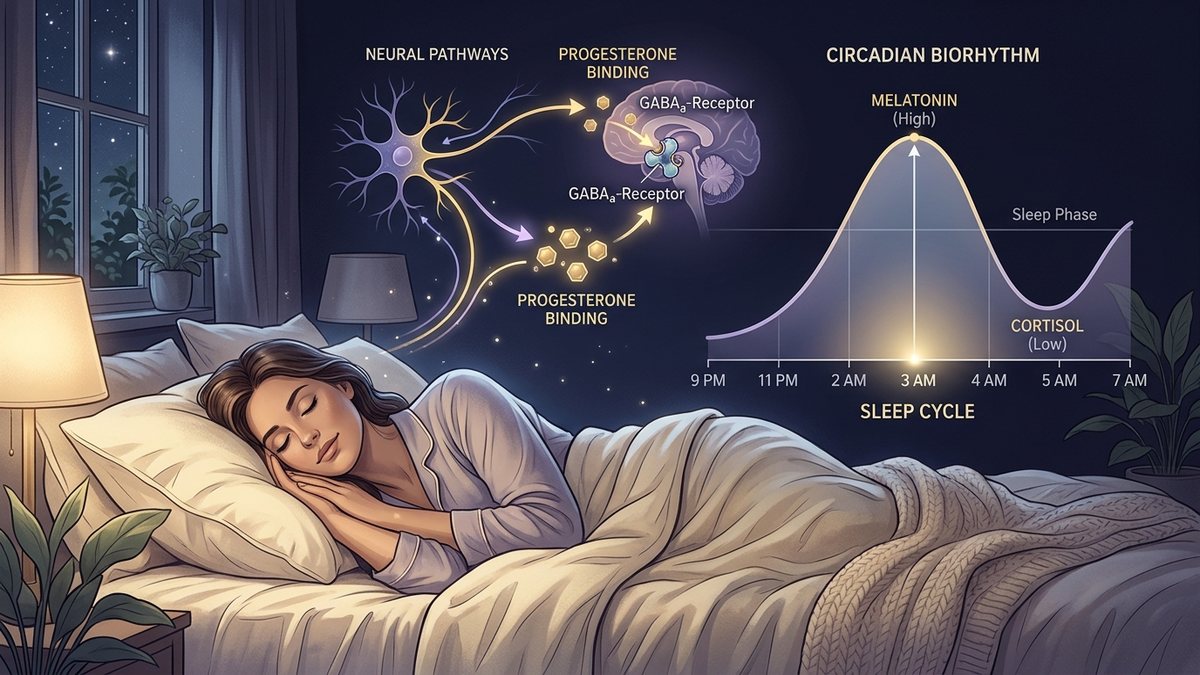
- Why You Feel “Tired But Wired” Before Your Period & in Perimenopause: Progesterone is metabolized in the brain into allopregnanolone (ALLO), a potent neurosteroid that binds to GABAA receptors to calm neural firing and induce deep N3 slow-wave sleep.
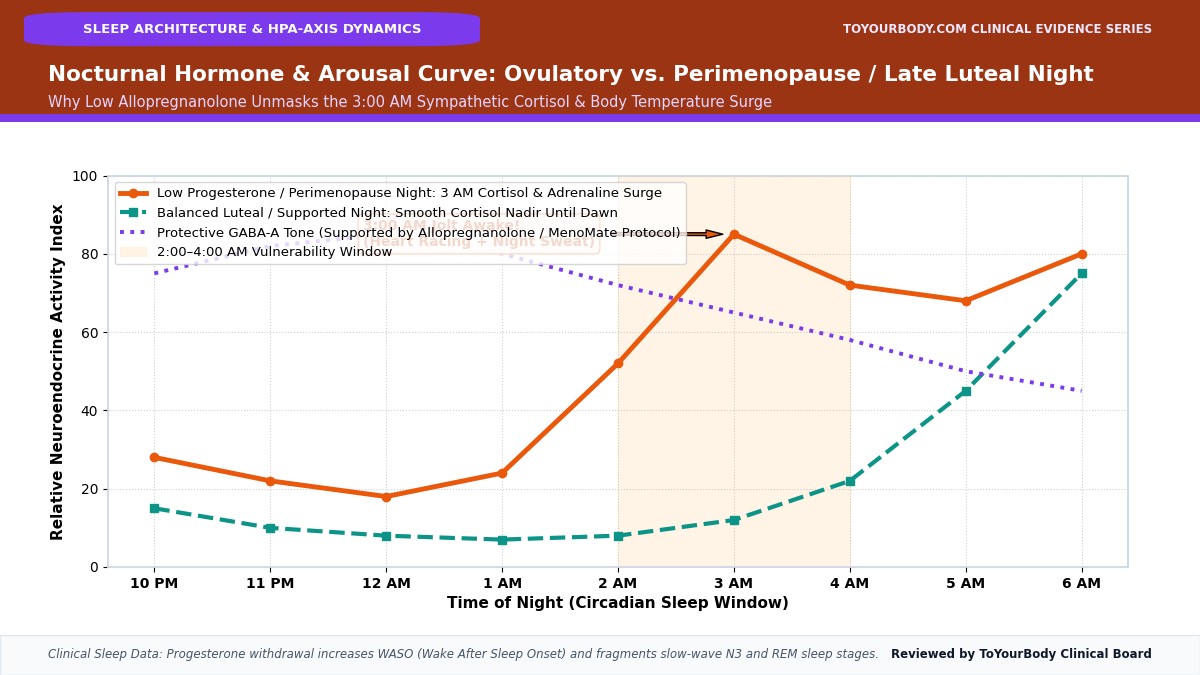
- The Double Nocturnal Shock: When progesterone crashes in the late luteal phase (days 22–28) or becomes erratic during anovulatory perimenopause cycles, your brain experiences acute GABAA withdrawal, baseline core temperature remains shifted by +0.3°C to +0.5°C, and unbraked nocturnal cortisol surges between 2:00 AM and 4:00 AM.
- Non-Hormonal Recovery Protocol: Combine hypothalamic KNDy-cooling and estrobolome support via Wellness Nest MenoMate with evening Magnesium Glycinate (300mg), L-Theanine, and pre-bed glycemic stabilization.
The Neuroendocrine Mechanism: Progesterone, Allopregnanolone (ALLO), and GABAA Receptors
Most people think of progesterone strictly as a reproductive hormone that prepares the uterine lining for pregnancy. In reality, progesterone is one of the human brain’s most powerful neurosteroid precursors.
After ovulation (around Day 14 of a healthy cycle), the corpus luteum secretes up to 20–25 mg of progesterone per day. Progesterone readily crosses the blood–brain barrier, where the enzymes 5α-reductase and 3α-hydroxysteroid dehydrogenase convert it into allopregnanolone (ALLO).
1. Acute GABAA Receptor Withdrawal (“Tired But Wired”)
According to neuroendocrine sleep research indexed by the National Institutes of Health (NIH/PMC), allopregnanolone acts as a potent positive allosteric modulator of synaptic and extrasynaptic GABAA receptors—binding to the exact same inhibitory chloride-channel complex targeted by sedative sleep medications, but cleanly and naturally. When ALLO binds to GABAA receptors, chloride ions flow into neurons, hyperpolarizing the cell membrane, quieting the amygdala (fear/anxiety center), and promoting deep slow-wave sleep.
However, two events shatter this GABAergic calm:
- The Late Luteal Cliff (Days 23–28): If pregnancy does not occur, the corpus luteum involutes and progesterone plummets by more than 80% over 72 hours. Your brain experiences a sudden drop in allopregnanolone, leaving GABAA receptors down-regulated and unbuffered against excitatory glutamate—the exact physiological driver of feeling tired but wired at night in females.
- Anovulatory Perimenopause Cycles (Ages 38–52): Progesterone is the first hormone to decline in perimenopause—often 5 to 8 years before estrogen drops—because aging ovarian follicles fail to ovulate consistently. Without ovulation, no corpus luteum forms, creating months of unopposed estrogen and chronic allopregnanolone deficiency.
2. The +0.3°C to +0.5°C Core Temperature Shift & KNDy Neuron Misfiring
To initiate and stay in deep N3 sleep, your core body temperature must drop by approximately 1°C (1.8°F) at night. During the luteal phase, progesterone shifts your hypothalamic thermostat upward by 0.3°C to 0.5°C, blunting the nocturnal circadian temperature dip. Worse, when perimenopausal estrogen fluctuates alongside low progesterone, hypothalamic KNDy neurons (Kisspeptin/Neurokinin B/Dynorphin) become hypertrophic and misfire, triggering sudden perimenopause night sweats.
3. Unmasking the 2:00–4:00 AM Nocturnal Cortisol Spike
Allopregnanolone normally acts as a physiological brake on the hypothalamic–pituitary–adrenal (HPA) axis, suppressing corticotropin-releasing hormone (CRH). When progesterone and ALLO drop—and nocturnal blood glucose dips around 2:30 AM—your adrenal glands release an unbraked surge of cortisol and epinephrine, jolting you wide awake at 3:00 AM.
Clinical Comparison: Luteal Phase PMS Insomnia vs. Perimenopause Withdrawal vs. Chronic Cortisol Dysregulation
| Clinical Dimension | Luteal Phase PMS / PMDD Insomnia | Perimenopause Hormone Withdrawal Insomnia | Chronic HPA-Axis Cortisol Dysregulation |
|---|---|---|---|
| Primary Hormone Driver | Steep late-luteal drop in progesterone & allopregnanolone (Days 22–28) | Anovulatory low progesterone + erratic estrogen swings + KNDy misfiring | Reversed diurnal cortisol slope (low AM energy, elevated 10 PM–3 AM cortisol) |
| Calendar Pattern | Strictly cyclical: starts 5–7 days before period, resolves Day 2 of flow | Starts as pre-period insomnia, then expands to 2–3+ weeks per month | Year-round; worsens after high-stress days, caffeine, or evening alcohol |
| Signature Night Symptom | Delayed sleep onset, vivid dreams, warm skin, pre-period anxiety | 2:00–4:00 AM sudden awakening with hot flash, night sweat, or palpitations | “Second wind” at 10 PM + light, fragmented sleep & central belly weight |
| First-Line Non-Hormonal Protocol | Evening Mg Glycinate (300mg) + L-Theanine + Vitex/B6 luteal support | Wellness Nest MenoMate (Estrobolome + cooling herbs) + Mg Glycinate | Morning sunlight, phosphatidylserine/ashwagandha, pre-bed protein-fat snack |
The 4-Lever Non-Hormonal Recovery Protocol for Luteal & Perimenopause Sleep
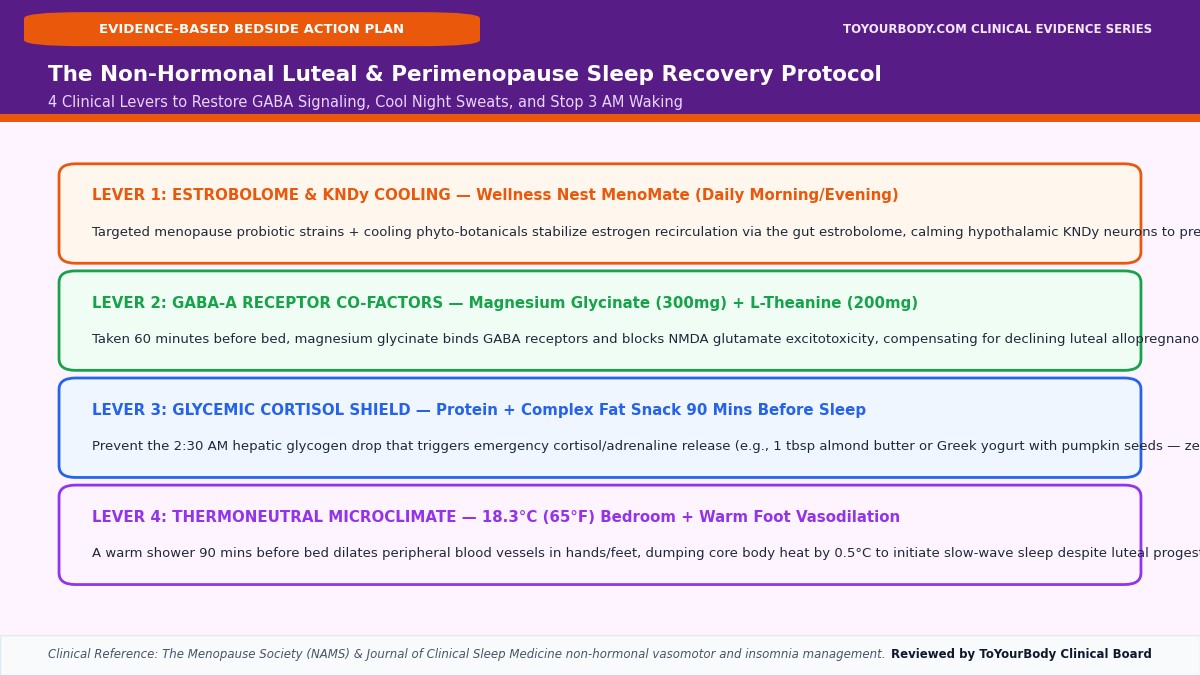
Whether you are not ready for prescription hormone therapy or want a comprehensive physiological foundation that restores deep N3 and REM sleep naturally, clinical sleep medicine targets four specific pathways simultaneously:
Lever 1: Stabilize the Estrobolome & Hypothalamic Thermostat with MenoMate
When ovarian hormone output fluctuates in perimenopause and the late luteal phase, your gut estrobolome acts as the primary buffer that smooths out chaotic hormone peaks and crashes, while cooling botanicals directly quiet overactive hypothalamic KNDy neurons.
Clinical Spotlight: Why Wellness Nest MenoMate Is Our #1 Perimenopause Sleep Protocol
Unlike generic melatonin gummies that wear off after three hours and leave you groggy, Wellness Nest MenoMate addresses the root neuroendocrine triggers of 3 AM waking. By pairing targeted menopause-specific probiotic strains (which regulate intestinal estrogen recirculation and gut-derived GABA/serotonin synthesis) with thermoregulatory cooling botanicals, MenoMate helps blunt nocturnal hot flashes, quiet HPA-axis cortisol spikes, and restore uninterrupted deep sleep—completely hormone-free.
Read our full Clinical MenoMate Review or browse our Hormone & Sleep Supplement Directory.
Lever 2: Direct GABAA Co-Factors — Magnesium Glycinate (300mg) + L-Theanine (200mg)
When allopregnanolone drops before your period, you can directly support the GABAA receptor complex 60 minutes before lights-out. As detailed in our Magnesium Glycinate vs. L-Threonate for Sleep comparison, elemental magnesium acts as a natural voltage-dependent blocker of excitatory NMDA glutamate receptors while potentiating GABAA activity, and the glycine amino acid chelate actively lowers core body temperature by promoting peripheral vasodilation.
Lever 3: The 90-Minute Pre-Bed Glycemic Cortisol Shield
Never go to bed during your luteal phase or perimenopause after a high-sugar dessert or alcohol (which destroys REM sleep and rebounds with a 3 AM glutamate/cortisol surge). Conversely, if you eat dinner at 6:00 PM and go to bed at 10:30 PM, low estrogen impairs hepatic glycogen storage, causing blood glucose to dip at 2:30 AM. Have a small, 120-calorie snack combining protein and healthy fat 90 minutes before bed—such as 1 tablespoon of almond butter on celery or a few spoonfuls of unsweetened Greek yogurt with pumpkin seeds—to keep blood sugar steady until dawn.
Lever 4: Thermal Dumping & Bedroom Microclimate (65°F / 18.3°C)
To overcome progesterone’s +0.4°C thermogenic effect, take a warm shower 90 minutes before bed and step into a cool bedroom set between 64°F and 66°F (17.8°C–18.9°C). Warming the skin dilates blood vessels in your hands and feet, rapidly dumping heat from your core and triggering the pineal melatonin surge required for sleep onset.
Frequently Asked Questions (Clinician-Reviewed FAQ)
Why does melatonin not stop me from waking up at 3 AM before my period?
Melatonin is a circadian “darkness signal” that helps initiate sleep onset, but its half-life is short (40–60 minutes) and it does not correct luteal allopregnanolone withdrawal, GABAA receptor insensitivity, or the 3 AM adrenal cortisol surge. Supporting the estrobolome and HPA axis with MenoMate and magnesium glycinate addresses sleep maintenance through the second half of the night.
At what age does perimenopause progesterone drop insomnia start?
According to The Menopause Society, subtle luteal-phase progesterone decline begins in the late 30s to early 40s (early menopausal transition)—often while menstrual cycles are still regular or slightly shortened (e.g., every 24–26 days)—years before periods stop completely.
Step-by-step clinical decoder calibrated against ACOG, CDC & NIH thresholds. Answer each quick step for your tailored protocol.
Alkaline Amine Volatilization & L. crispatus Depletion
When alkaline semen (pH 7.1–8.0) or menstrual blood (pH 7.4) buffers vaginal lactic acid above pH 4.7, anaerobic Gardnerella vaginalis biofilms release volatile polyamines (fishy odor). If you recently used 600mg boric acid or antibiotics, bare vaginal mucosa will relapse within 2–3 weeks unless actively reseeded.
Recommended Clinical Guides for Your Pattern:- 24-Hour Vaginal pH Reset After Sex & Period (pH 3.8–4.5)
- 600mg Boric Acid Biofilm Protocol + When to Switch to Probiotics
- Evidence-Based Natural Remedies for Recurrent BV
- Cytolytic Vaginosis (pH < 3.8) vs. Yeast Infection • OTC Yeast Guide • White Discharge & Itching
Replenishes human-adapted Lactobacillus crispatus and L. rhamnosus via the gut–perineal axis to produce D/L-lactic acid and lock vaginal pH at 3.8–4.5.
Check FloraFresh Availability at Wellness Nest →Luteal / Perimenopausal Allopregnanolone Drop & 3 AM Cortisol Rebound
Declining progesterone deprives your brain’s GABAA receptors of calming allopregnanolone while narrowing your hypothalamic thermoneutral zone. Between 2:00 AM and 4:00 AM, a subtle hepatic glycogen dip triggers an unbraked adrenal cortisol and adrenaline surge that jolts you awake.
Tonight’s Clinical Recovery Protocol:- Progesterone–GABA Drop & Non-Hormonal Luteal/Perimenopause Sleep Fix
- Why Do I Wake Up at 3 AM in Menopause? (Cortisol & Glycemic Shield)
- Cooling Hypothalamic KNDy Neurons & Night Sweats Relief
- Magnesium Glycinate vs. L-Threonate & Thermal Dumping Protocol
Stabilizes estrogen recirculation via the gut estrobolome, calms overactive KNDy hot-flash neurons, and blunts 3 AM cortisol awakenings without synthetic hormones.
Check MenoMate Price & Bundles at Wellness Nest →Enterohepatic Estrobolome Dysregulation & HPA Visceral Storage
When gut β-glucuronidase activity is disrupted alongside elevated HPA-axis cortisol, estrogen recirculation becomes erratic—starving vaginal Lactobacillus crispatus of glycogen (triggering pH shifts), destabilizing nocturnal thermoregulation (3 AM waking), and activating abdominal glucocorticoid receptors (cortisol belly).
Your 3-Pillar Clinical Reading Plan:- The Estrobolome & Gut–Vaginal Axis: Connecting BV, 3 AM Sleep & Belly Fat
- Cortisol Belly & Menopause Weight Gain: Visceral Fat Reset
- Fixing the “Tired But Wired” Diurnal Cortisol Curve
- Post-Lunch Bloating & Gut Microbiome Enzyme Guide
Coordinating L. crispatus urogenital colonization (FloraFresh) with intestinal β-glucuronidase and HPA-cortisol modulation (MenoMate) addresses all three concentric pillars simultaneously.