Have you ever woken up on Day 7 of your cycle with a flat, comfortable stomach—only to look in the mirror on Day 14 (ovulation) or Day 25 (right before your period) and look six months pregnant by 4:00 PM, even though you ate the exact same healthy meals?
If your jeans fit effortlessly two weeks a month and dig painfully into your waist the other two weeks, you are not dealing with simple overeating or a random food intolerance. You are experiencing biphasic hormonal gut–estrobolome distension.
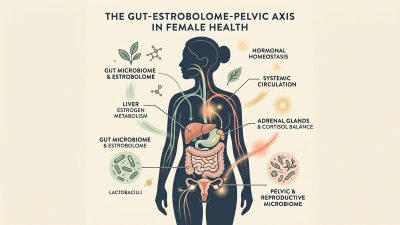
As a cornerstone clinical guide in our Health Advices (Gut Microbiome & Cortisol) pillar—expanding on our post-lunch bloating guide and estrobolome gut–vaginal axis blueprint—let’s examine the exact physiological mechanisms behind ovulation bloating vs. pre-period luteal bloating and how to deflate both naturally.
Clinical Key Takeaways: Ovulation & Pre-Period Hormone Belly Bloating
- Root Physiological Mechanism: Women frequently experience two distinct abdominal bloating spikes every month: Peak #1 at Ovulation (Days 12–15) driven by the pre-ovulatory estradiol peak, mast-cell histamine release, and follicular prostaglandin fluid shift, and Peak #2 Before Your Period (Days 21–28) driven by luteal progesterone slowing intestinal smooth muscle.
- Why Symptoms Persist or Relapse: When your gut estrobolome overproduces the enzyme β-glucuronidase, conjugated estrogen that should be excreted in stool is reabsorbed into circulation—creating estrogen dominance that amplifies both mid-cycle water retention and pre-period colonic fermentation.
- Evidence-Based Recovery Protocol: You can resolve cyclic “endo/hormone belly” by pairing Wellness Nest MenoMate (estrobolome & hormonal balance) with Wellness Nest FloraFresh (Lactobacillus microbiome support), natural prokinetics, and potassium-magnesium electrolyte balancing.
Mechanism #1 (Days 12–15): Why You Bloat During Ovulation (Estrogen, Histamine & Follicular Fluid)
Mid-cycle ovulation bloating usually strikes abruptly between Days 11 and 15 of a typical 28-day cycle (and is often even more intense in perimenopause, when erratic FSH drives “super-ovulation” estradiol surges). Three biological events converge during these 72 hours:
- Estradiol Activation of Aldosterone & Sodium-Water Retention: Right before ovulation, circulating estradiol (E2) reaches its highest peak of the entire month (often 250–500+ pg/mL). As documented in NIH/PubMed endocrinology research, high estradiol stimulates hepatic angiotensinogen synthesis and lowers the osmotic threshold for arginine vasopressin (AVP) and aldosterone—causing your kidneys and extracellular tissues to hold onto 2 to 4 pounds of interstitial water and sodium.
- The Estrogen–Histamine–Mast Cell Loop: Estradiol binds directly to Estrogen Receptor-α on intestinal and pelvic mast cells, triggering them to degranulate and release histamine while simultaneously downregulating the gut enzyme diamine oxidase (DAO) that breaks histamine down. Local histamine increases intestinal capillary permeability and visceral hypersensitivity, making your lower abdomen feel tight, puffy, and tender.
- LH Surge Prostaglandins & Peritoneal Follicular Fluid: When the dominant ovarian follicle ruptures to release the egg (mittelschmerz), it spills prostaglandin-rich follicular fluid and a tiny amount of blood directly into the pelvic peritoneal cavity—irritating the adjacent sigmoid colon and small bowel loops.
Mechanism #2 (Days 21–28): Why Pre-Period Luteal Bloating Is Driven by Progesterone Motility Slowdown
Seven days after ovulation, a completely different hormone takes over the driver’s seat. Compare the physiology of Mid-Cycle Ovulation Bloating against Late-Luteal Pre-Period Bloating in the clinical diagnostic table below:
| Clinical Feature | Mid-Cycle Ovulation Bloating (Days 12–15) | Pre-Period Luteal Bloating (Days 21–28) | Chronic Estrobolome / Cortisol Belly |
|---|---|---|---|
| Primary Hormone Driver | Peak Estradiol (E2) surge + LH prostaglandin spike + Histamine | High Luteal Progesterone (P4) slowing smooth muscle + Day 26 E2/P4 withdrawal | Elevated gut β-glucuronidase + high diurnal HPA cortisol |
| Physical Sensation | Lower pelvic fullness, fluid puffiness, one-sided ovary twinge, clear stretchy mucus | Upper & lower gas distension, sluggish bowel transit / constipation, heavy abdomen | Firm central waist thickening + daily 3 PM post-lunch distension |
| Bowel Motility Pattern | Normal transit time, but high extracellular water & histamine sensitivity | Colonic transit slows by 25–40%; shifts to loose stools on Day 1 of period | Alternating sluggishness, fermentative gas, & sugar cravings |
| Concurrent Intimate Clue | Abundant clear egg-white cervical mucus | Thick milky-white discharge + pre-period night sweats or insomnia | Recurring BV/yeast after periods + 3 AM awakenings |
| Targeted Relief Protocol | Estrobolome clearance (MenoMate) + Potassium/Dandelion + low-histamine meals | Prokinetic ginger/artichoke + Magnesium + FloraFresh | Full 60-day Dual Stack (MenoMate + FloraFresh) + Cortisol Reset |
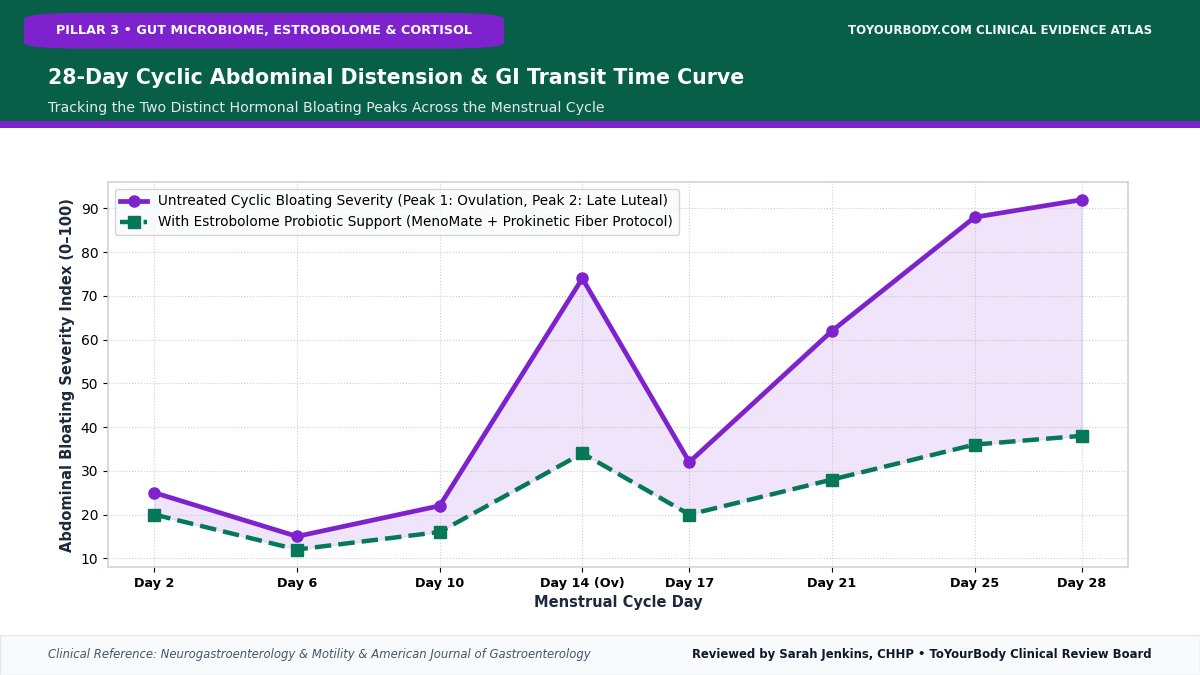
Look at Row 3: during the luteal phase (Days 15–27), progesterone’s evolutionary job is to keep the uterine smooth muscle quiet and relaxed so an embryo can implant. However, progesterone receptors also line the muscularis externa of your small and large intestines! High luteal progesterone relaxes intestinal smooth muscle and suppresses the Migrating Motor Complex (MMC), slowing colonic transit by up to 35% so food sits longer and ferments into hydrogen and methane gas.
Why ‘Healthy’ Raw Salads, Cruciferous Smoothies & Carbonated Water Backfire on Days 21–28
When women feel bloated before their period, they often try to “eat clean” by having a giant raw kale and broccoli salad with a sparkling water. On Day 24 of your cycle, that meal is a recipe for painful distension:
- Raw Insoluble Fiber + Slowed Luteal Transit = Fermentation Chamber: When progesterone has already slowed your small and large bowel motility by 30%, raw raffinose-rich crucifers and raw greens sit in the colon for 48+ hours, where bacteria ferment them into trapped gas.
- Estrobolome β-Glucuronidase Reabsorption: The longer stool sits in your colon due to luteal constipation, the more time bacterial β-glucuronidase enzymes have to slice glucuronic acid off conjugated estrogen—sending unbound estrogen right back into your portal bloodstream to worsen bloating!
- Why You Suddenly Get “Period Poops” on Day 1: The moment your period starts, progesterone crashes to zero and the uterine lining releases a flood of Prostaglandin F2α (PGF2α)—which contracts both the uterus and the adjacent bowel, switching you from 7 days of luteal constipation to sudden Day 1 loose stools.
The 4-Step Cycle-Synced Protocol to Flatten Ovulation & Pre-Period Bloating
Instead of fighting your hormones with restrictive dieting or harsh stimulant laxatives, synchronize your gut, estrobolome, and motility across the month with this four-step clinical protocol:
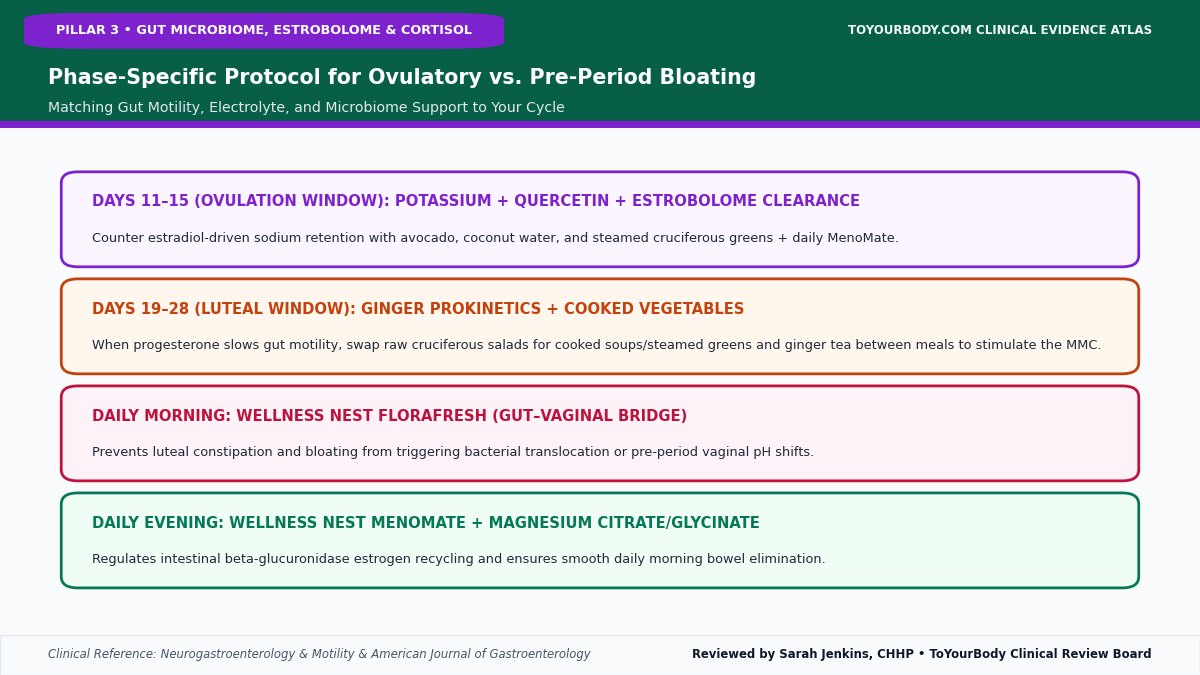
Step 1: Optimize Daily Estrobolome Clearance & Gut–Vaginal Balance (MenoMate + FloraFresh)
To prevent mid-cycle estrogen surges and late-luteal estrogen reabsorption from inflating your abdomen, take Wellness Nest MenoMate and Wellness Nest FloraFresh daily. MenoMate supports healthy intestinal hormone metabolism and calms HPA cortisol, while FloraFresh supplies human-adapted Lactobacillus strains that crowd out gas-producing, β-glucuronidase-secreting anaerobes across both the gut and vaginal tract.
Step 2: Days 11–16 (Ovulation Window) — Potassium Flushing & Quercetin/DAO Histamine Support
During the 4 days around ovulation, counteract estradiol-driven sodium retention by increasing dietary potassium to 3,500–4,000mg/day (avocado, coconut water, cooked spinach, white beans), sipping organic dandelion leaf tea (a natural potassium-sparing mild diuretic), and temporarily minimizing high-histamine aged cheeses and red wine (which also trigger 3 AM hot flashes).
Step 3: Days 18–28 (Luteal Pre-Period Window) — Switch to Cooked Foods & Ginger/Artichoke Prokinetics
During the week before your period, trade raw salads for warm, cooked, easily digested meals (steamed zucchini, roasted carrots, bone-broth soups, wild fish, and sautéed greens with olive oil). Take 500mg of standardized Ginger Root + Artichoke Leaf extract before lunch and dinner to stimulate gastric emptying and Reactivate your Migrating Motor Complex (MMC) against progesterone’s braking effect.
Step 4: Space Meals 4 Hours Apart & Take Evening Magnesium
Your small intestine’s self-cleaning wave (the MMC) only fires when you have been fasting for at least 90 to 120 minutes. Grazing on snacks every hour completely shuts off the MMC, trapping gas in the jejunum and ileum. Pair 4-hour meal spacing with evening Magnesium Bisglycinate to keep morning bowel elimination effortless on Days 21–28.
Deflate Cyclic Hormone Bloating Across Both Axes: MenoMate + FloraFresh
Cyclic ovulation and pre-period bloating isn’t caused by eating too much—it is driven by estrogen-induced water retention, progesterone-slowed intestinal transit, and gut estrobolome dysbiosis. Pair Wellness Nest MenoMate (estrobolome & hormone metabolism) with Wellness Nest FloraFresh (gut–vaginal Lactobacillus balance) to flatten cyclic belly distension all month long.
The 5-Minute Evening Vagal & Iliopsoas De-Bloating Routine
- Clockwise I-L-U Abdominal Massage: Lying on your back with knees bent, use warm hands to stroke firmly down the left descending colon (from left ribs to left hip), across the transverse colon (right to left ribs), and up the ascending colon (right hip to right ribs) for 3 minutes to mechanically move trapped luteal gas.
- Legs-Up-the-Wall (Viparita Karani) for 5 Minutes: Elevating your legs shifts autonomic tone from sympathetic (which clamps the ileocecal valve shut) to parasympathetic vagal rest-and-digest, while draining lower-extremity and pelvic venous pooling during ovulation.
- Check Your 3-Axis Score: Run your cyclic symptoms through our Interactive Estrobolome, Cortisol Belly & Gut–Vaginal Calculator.
Red Flags: When Cyclic Bloating Requires a Gynecological Ultrasound
While functional hormonal bloating rises and falls with your cycle and flattens in the morning, always request a transvaginal ultrasound and clinical evaluation if you experience:
- Persistent, Non-Fluctuating Abdominal Distension That Never Goes Down in the Morning: Combined with early satiety (feeling full after a few bites), pelvic pressure, or urinary urgency, ACOG guidelines mandate ruling out ovarian cysts, fibroids, or ovarian neoplasms.
- Severe, Debilitating Pain During Bowel Movements on Your Period (Dyschezia) or Deep Dyspareunia: Classic clinical signs of rectovaginal or bowel endometriosis (“endo belly”) or adenomyosis.
Frequently Asked Questions (Clinician-Reviewed FAQ)
Why do I bloat so badly during ovulation (around Day 14)?
Right before ovulation, estradiol peaks at its highest level of the month. High estradiol increases renal sodium and water retention via aldosterone, stimulates gut mast cells to release histamine, and is followed by follicular rupture that releases irritating prostaglandins into the pelvis.
Why does my stomach look pregnant the week before my period?
During the luteal phase (Days 15–28), the corpus luteum secretes high levels of progesterone. Progesterone relaxes smooth muscle throughout your body—including your small and large intestines—slowing gut transit by up to 35% and allowing food to ferment into trapped gas.
How do Wellness Nest MenoMate and FloraFresh help with hormonal bloating?
MenoMate regulates the gut estrobolome so excess conjugated estrogen is properly cleared in stool instead of reabsorbed, while FloraFresh replenishes beneficial Lactobacillus strains that crowd out gas-producing anaerobes and protect vaginal pH during hormone shifts.
Why do I go from constipated before my period to diarrhea on Day 1?
Before your period, high progesterone slows bowel motility (causing luteal constipation). As soon as bleeding starts, progesterone drops to zero and the uterus releases Prostaglandin F2-alpha, which stimulates smooth-muscle contractions in both the uterus and the colon.
Peer-Reviewed Clinical & Government References
- National Institutes of Health (NIH) / PubMed Central: Human Vaginal Microbiome, Estrobolome & Neuroendocrine Sleep Architecture Studies.
- Centers for Disease Control and Prevention (CDC): Sexually Transmitted Infections & Vaginal Dysbiosis Clinical Guidelines.
- NIH Office of Dietary Supplements (ODS): Clinical Micronutrient & Probiotic Fact Sheets for Health Professionals.
- American College of Obstetricians and Gynecologists (ACOG) & The Menopause Society (NAMS) Clinical Practice Guidelines.
Step-by-step clinical decoder calibrated against ACOG, CDC & NIH thresholds. Answer each quick step for your tailored protocol.
Alkaline Amine Volatilization & L. crispatus Depletion
When alkaline semen (pH 7.1–8.0) or menstrual blood (pH 7.4) buffers vaginal lactic acid above pH 4.7, anaerobic Gardnerella vaginalis biofilms release volatile polyamines (fishy odor). If you recently used 600mg boric acid or antibiotics, bare vaginal mucosa will relapse within 2–3 weeks unless actively reseeded.
Recommended Clinical Guides for Your Pattern:- 24-Hour Vaginal pH Reset After Sex & Period (pH 3.8–4.5)
- 600mg Boric Acid Biofilm Protocol + When to Switch to Probiotics
- Evidence-Based Natural Remedies for Recurrent BV
- Cytolytic Vaginosis (pH < 3.8) vs. Yeast Infection • OTC Yeast Guide • White Discharge & Itching
Replenishes human-adapted Lactobacillus crispatus and L. rhamnosus via the gut–perineal axis to produce D/L-lactic acid and lock vaginal pH at 3.8–4.5.
Check FloraFresh Availability at Wellness Nest →Luteal / Perimenopausal Allopregnanolone Drop & 3 AM Cortisol Rebound
Declining progesterone deprives your brain’s GABAA receptors of calming allopregnanolone while narrowing your hypothalamic thermoneutral zone. Between 2:00 AM and 4:00 AM, a subtle hepatic glycogen dip triggers an unbraked adrenal cortisol and adrenaline surge that jolts you awake.
Tonight’s Clinical Recovery Protocol:- Progesterone–GABA Drop & Non-Hormonal Luteal/Perimenopause Sleep Fix
- Why Do I Wake Up at 3 AM in Menopause? (Cortisol & Glycemic Shield)
- Cooling Hypothalamic KNDy Neurons & Night Sweats Relief
- Magnesium Glycinate vs. L-Threonate & Thermal Dumping Protocol
Stabilizes estrogen recirculation via the gut estrobolome, calms overactive KNDy hot-flash neurons, and blunts 3 AM cortisol awakenings without synthetic hormones.
Check MenoMate Price & Bundles at Wellness Nest →Enterohepatic Estrobolome Dysregulation & HPA Visceral Storage
When gut β-glucuronidase activity is disrupted alongside elevated HPA-axis cortisol, estrogen recirculation becomes erratic—starving vaginal Lactobacillus crispatus of glycogen (triggering pH shifts), destabilizing nocturnal thermoregulation (3 AM waking), and activating abdominal glucocorticoid receptors (cortisol belly).
Your 3-Pillar Clinical Reading Plan:- The Estrobolome & Gut–Vaginal Axis: Connecting BV, 3 AM Sleep & Belly Fat
- Cortisol Belly & Menopause Weight Gain: Visceral Fat Reset
- Fixing the “Tired But Wired” Diurnal Cortisol Curve
- Post-Lunch Bloating & Gut Microbiome Enzyme Guide
Coordinating L. crispatus urogenital colonization (FloraFresh) with intestinal β-glucuronidase and HPA-cortisol modulation (MenoMate) addresses all three concentric pillars simultaneously.