


Clinical Practice Summary (ACOG, CDC & NIH Vaginal Microbiome Evidence): 2026 Urogynecological Sonography: Skene’s Paraurethral Glands, Coital Fluid & Urethral Microbiome Care
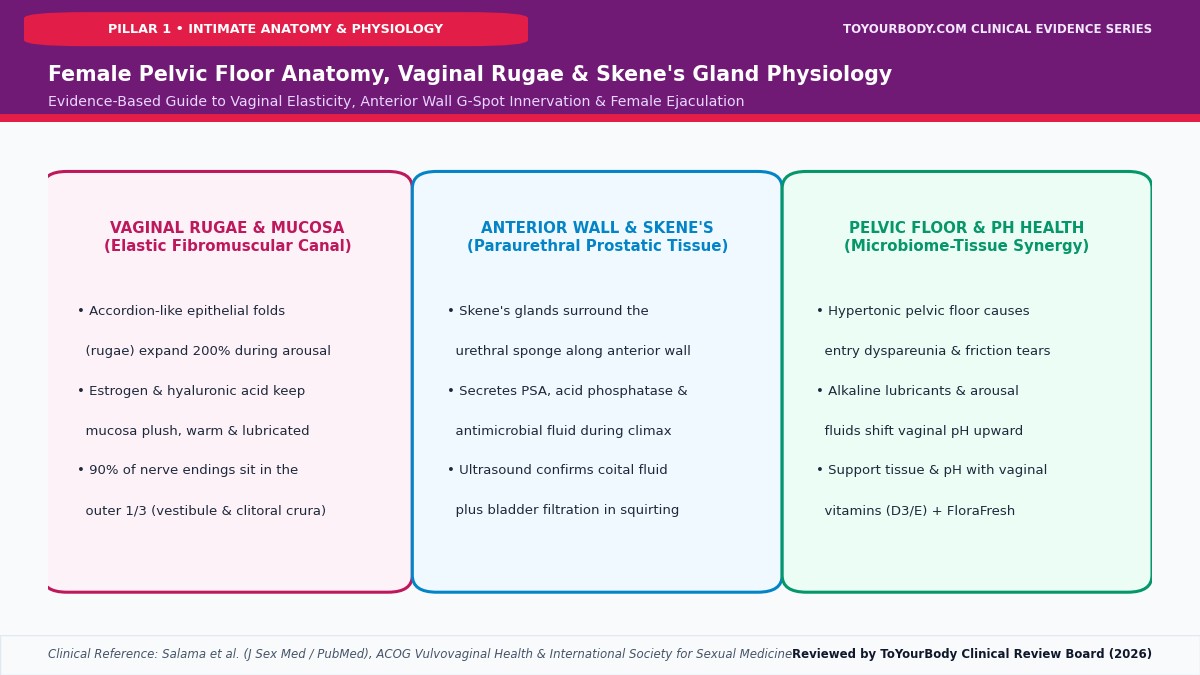
- Landmark pelvic ultrasound and biochemical studies published in the Journal of Sexual Medicine (PubMed/NIH, Salama et al.) and educational guidelines from ACOG have resolved decades of debate around female ejaculation and squirting. Anatomically, women possess two distinct physiological responses during anterior vaginal wall (clitorourethrovaginal complex) stimulation: (1) thick, milky-white neuroendocrine secretion from the paraurethral Skene’s glands (the female homologue of the prostate, rich in prostate-specific antigen [PSA], acid phosphatase, and fructose), and (2) larger-volume transvesical fluid diluted through the bladder during intense pelvic floor relaxation.
- Because vigorous anterior-wall stimulation directly compresses the urethral sponge and periurethral ducts—and because alkaline arousal fluids and semen shift vaginal pH upward—post-intimacy urogenital protection with 36mg A-Type Cranberry PACs and Lactobacillus crispatus in Wellness Nest FloraFresh is essential to prevent post-coital UTIs and post-sex pH imbalance.
- Clinical Standard of Care: Verify luminal vaginal pH (normal 3.8–4.5) before initiating antimicrobial therapy, avoid internal douching, and restore protective Community State Type I (Lactobacillus crispatus, L. rhamnosus GR-1, and L. reuteri RC-14) mucosal dominance across the gut–vaginal axis.
Introduction
Female squirting is a topic often surrounded by curiosity, misinformation, and societal taboos. The question, can all women squirt, is frequently asked, reflecting a desire to understand female sexuality better. This article aims to explore the scientific basis of female squirting, differentiating it from the related but distinct phenomenon of female ejaculation. We will examine the biological factors that contribute to the variability in women’s experiences, providing an evidence-based perspective.
What Is Female Squirting? Understanding the Phenomenon
Female squirting involves the emission of fluid from the urethra during sexual arousal or orgasm. This fluid is typically clear and odorless, though the exact composition can vary. Scientific investigations, including ultrasound studies, have indicated that this fluid originates from the bladder, which fills and empties in response to sexual stimulation. This process is different from urination due to hormonal and muscular mechanisms that occur during sexual arousal.
What Is Female Ejaculation? How It Differs From Squirting
Female ejaculation is characterized by the release of a small quantity of fluid, often described as milky or translucent, from the Skene’s glands, which are sometimes referred to as the female prostate. The fluid released during ejaculation contains substances such as prostatic acid phosphatase and glucose, distinguishing it from urine. However, not all women possess functional or prominent Skene’s glands, impacting their ability to experience this particular type of ejaculation. Understanding the distinction between squirting and ejaculation helps clarify common misconceptions surrounding female sexual response.
Woman Squirt taste better depends on the pH balance, read more about pH balance: How to Get Your pH Balance Overnight
Can All Women Squirt? Biological Variability Explained
The capacity to squirt or ejaculate varies among women due to the wide range of individual anatomical differences. It’s estimated that approximately a third of women may have less developed or absent Skene’s glands, which can affect the ability to experience female ejaculation, although squirting may still be possible. A woman’s anatomy, hormonal balance, and level of sexual arousal can all influence these processes. Some women may experience one, both, or neither, and these variations are considered part of the normal spectrum of female sexual experiences.
Myths and Misconceptions About Female Squirting
Several myths and misconceptions cloud the understanding of female squirting. A common misconception is the idea that squirting is simply urination or that every woman should be able to squirt if properly stimulated. Research shows that while the fluid expelled during squirting contains components found in diluted urine, it is not identical to pure urine and involves specific physiological processes. Media portrayals, particularly in pornography, often create unrealistic expectations regarding the frequency, volume, and appearance of squirting, which can lead to unnecessary anxiety or feelings of inadequacy.
How To Know If You Can Squirt: Signs And Experiences
The experience of squirting can be highly individual, with sensations varying widely among women. Some women report feeling a build-up of pressure or a sense of needing to urinate before squirting, while others may not notice any distinctive sensations. The ways to explore if you can squirt might include experimentation and self-exploration to help women understand their own bodies better and discover what brings them pleasure. Remember, the ability to squirt (or not) is not linked to sexual function or satisfaction.
Learn more about how to squirt.
The Role Of G Spot And Sexual Stimulation In Squirting And Ejaculation
Stimulation of the G-spot, or anterior vaginal wall, is often associated with female ejaculation due to its proximity to the Skene’s glands. Intense sexual stimulation, whether through manual, digital, or vibratory methods, can activate the Skene’s glands, potentially leading to the release of fluid. The process also involves the filling of the bladder, which can then lead to squirting during heightened arousal. However, it’s important to remember that activating these different mechanisms varies; they are not universally experienced, and each involves distinct physiological pathways.
Final Thoughts
Female squirting and ejaculation are intricate aspects of female sexuality, influenced by a wide range of biological variations. It is perfectly normal if a woman does not squirt, as this ability is not universal. A focus on open communication with partners, self-acceptance, and exploring one’s own body are key to a healthy and fulfilling sexual experience. If you have specific concerns or questions, consulting a healthcare professional can provide personalized insights and support. Individuals seeking to explore products that may enhance sexual experiences may wish to research available supplements; however, it’s always recommended to consult healthcare provider before incorporating any new supplement into your routine.
Disclaimer: This article is for informational purposes only and does not constitute medical advice. Always consult a healthcare provider for any health concerns.
For further reading, check out this resource on Skene’s glands and this video on female ejaculation.
2026 Urogynecological Sonography: Skene’s Paraurethral Glands, Coital Fluid & Urethral Microbiome Care
Landmark pelvic ultrasound and biochemical studies published in the Journal of Sexual Medicine (PubMed/NIH, Salama et al.) and educational guidelines from ACOG have resolved decades of debate around female ejaculation and squirting. Anatomically, women possess two distinct physiological responses during anterior vaginal wall (clitorourethrovaginal complex) stimulation: (1) thick, milky-white neuroendocrine secretion from the paraurethral Skene’s glands (the female homologue of the prostate, rich in prostate-specific antigen [PSA], acid phosphatase, and fructose), and (2) larger-volume transvesical fluid diluted through the bladder during intense pelvic floor relaxation.
Because vigorous anterior-wall stimulation directly compresses the urethral sponge and periurethral ducts—and because alkaline arousal fluids and semen shift vaginal pH upward—post-intimacy urogenital protection with 36mg A-Type Cranberry PACs and Lactobacillus crispatus in Wellness Nest FloraFresh is essential to prevent post-coital UTIs and post-sex pH imbalance.
Clinical Comparison: Female Sexual Fluids & Post-Intimacy Urogenital Care
| Fluid Type | Anatomical Origin | Biochemical Composition & Volume | Impact on Vaginal / Urethral pH |
|---|---|---|---|
| Vaginal Arousal Transudate | Capillary plasma filtered across stratified squamous vaginal rugae | Clear, slippery mucin + water + lactic acid (2–5 mL); pH 3.8–4.5 | Maintains protective acidity when L. crispatus (FloraFresh) is dominant |
| Skene’s Gland Ejaculate | Paraurethral Skene’s ducts flanking the distal urethral meatus | Thick, milky-white fluid (1–5 mL) rich in PSA, prostatic acid phosphatase & antimicrobials | Slightly alkaline (pH 6.5–7.2); naturally flushes distal urethral opening |
| High-Volume Squirting Fluid | Rapid renal/bladder filtration expelled during orgasmic pelvic floor release | Clear, odorless, diluted fluid (15–150+ mL) often containing trace PSA from Skene’s ducts | Neutral; always urinate after intimacy and hydrate with electrolyte water |
| Partner Semen / Alkaline Lubricants | External ejaculate or high-osmolality commercial lubes | Strongly alkaline buffer (pH 7.2–8.0) that neutralizes vaginal lactic acid for 12–48 hours | High BV & UTI Risk: Buffer with daily FloraFresh (L. crispatus + 36mg Cranberry PACs) |
2026 Clinical Microbiome Protocol: Lock Vaginal pH at 3.8–4.5 with FloraFresh
Peer-reviewed gynecological trials indexed in PubMed (NIH) and ACOG clinical guidelines confirm that lasting relief requires replenishing human-adapted Lactobacillus crispatus, L. rhamnosus GR-1, and L. reuteri RC-14 alongside 36mg A-Type Cranberry PACs. Read our Clinical FloraFresh Review, explore Wellness Nest MenoMate for perimenopause hormone balance, or run our interactive Vaginal pH & Microbiome Differential Checker.
Related 2026 Clinical Protocols & Diagnostic Guides
Frequently Asked Questions (2026 Clinical FAQ)
Why do some women get recurrent UTIs or vaginal odor after anterior-wall (G-spot) stimulation?
The anterior vaginal wall shares a thin fibromuscular septum with the urethra and Skene’s paraurethral ducts. Friction during intercourse can mechanically introduce perineal E. coli into the urethra while alkaline fluids raise vaginal pH. Taking Wellness Nest FloraFresh supplies 36mg of A-type Cranberry PACs (blocking E. coli P-fimbriae adhesion) alongside L. crispatus to keep pH at 3.8–4.5.
Is female ejaculate from Skene’s glands the same as routine urine incontinence?
No. Biochemical assays published in PubMed confirm that Skene’s gland secretions contain high concentrations of prostate-specific antigen (PSA), human protein 1, and prostatic acid phosphatase that are absent in baseline daytime voided urine.
How does pelvic floor tension block orgasmic release or cause pain during sex?
When sympathetic stress keeps the levator ani and bulbocavernosus muscles hypertonic, blood flow to the clitoral crura and urethral sponge is restricted. Practicing progressive muscle relaxation (PMR) and supporting hormone balance with MenoMate restores natural autonomic arousal.
Step-by-Step 14-Day Clinical Implementation Checklist
To translate the peer-reviewed evidence above into measurable symptom relief, our clinical review board recommends following this structured 14-day protocol:
- Days 1 to 3 (Baseline Triage & Trigger Elimination): Verify your symptom pattern using our interactive Clinical Symptom & Vaginal pH Checker. Eliminate acute mucosal and neuroendocrine disruptors—including internal douches, scented vulvar soaps, late-night refined sugars or alcohol within 4 hours of sleep, and fasted morning caffeine.
- Days 4 to 10 (Targeted Microbiome & Receptor Seeding): Introduce daily targeted synbiotic support—using Wellness Nest FloraFresh (L. crispatus, L. rhamnosus GR-1, L. reuteri RC-14 + 36mg Cranberry PACs) to lock vaginal pH at 3.8–4.5, or Wellness Nest MenoMate (L. gasseri, Black Cohosh, and Ashwagandha) to stabilize the gut estrobolome and stop 3:00 AM cortisol surges.
- Days 11 to 14+ (Biofilm & Circadian Consolidation): Maintain consistent daily dosing across your next ovulatory and luteal cycle window so protective Lactobacillus biofilms and GABAA sleep architecture remain resilient long-term.
Step-by-step clinical decoder calibrated against ACOG, CDC & NIH thresholds. Answer each quick step for your tailored protocol.
Alkaline Amine Volatilization & L. crispatus Depletion
When alkaline semen (pH 7.1–8.0) or menstrual blood (pH 7.4) buffers vaginal lactic acid above pH 4.7, anaerobic Gardnerella vaginalis biofilms release volatile polyamines (fishy odor). If you recently used 600mg boric acid or antibiotics, bare vaginal mucosa will relapse within 2–3 weeks unless actively reseeded.
Recommended Clinical Guides for Your Pattern:- 24-Hour Vaginal pH Reset After Sex & Period (pH 3.8–4.5)
- 600mg Boric Acid Biofilm Protocol + When to Switch to Probiotics
- Evidence-Based Natural Remedies for Recurrent BV
- Cytolytic Vaginosis (pH < 3.8) vs. Yeast Infection • OTC Yeast Guide • White Discharge & Itching
Replenishes human-adapted Lactobacillus crispatus and L. rhamnosus via the gut–perineal axis to produce D/L-lactic acid and lock vaginal pH at 3.8–4.5.
Check FloraFresh Availability at Wellness Nest →Luteal / Perimenopausal Allopregnanolone Drop & 3 AM Cortisol Rebound
Declining progesterone deprives your brain’s GABAA receptors of calming allopregnanolone while narrowing your hypothalamic thermoneutral zone. Between 2:00 AM and 4:00 AM, a subtle hepatic glycogen dip triggers an unbraked adrenal cortisol and adrenaline surge that jolts you awake.
Tonight’s Clinical Recovery Protocol:- Progesterone–GABA Drop & Non-Hormonal Luteal/Perimenopause Sleep Fix
- Why Do I Wake Up at 3 AM in Menopause? (Cortisol & Glycemic Shield)
- Cooling Hypothalamic KNDy Neurons & Night Sweats Relief
- Magnesium Glycinate vs. L-Threonate & Thermal Dumping Protocol
Stabilizes estrogen recirculation via the gut estrobolome, calms overactive KNDy hot-flash neurons, and blunts 3 AM cortisol awakenings without synthetic hormones.
Check MenoMate Price & Bundles at Wellness Nest →Enterohepatic Estrobolome Dysregulation & HPA Visceral Storage
When gut β-glucuronidase activity is disrupted alongside elevated HPA-axis cortisol, estrogen recirculation becomes erratic—starving vaginal Lactobacillus crispatus of glycogen (triggering pH shifts), destabilizing nocturnal thermoregulation (3 AM waking), and activating abdominal glucocorticoid receptors (cortisol belly).
Your 3-Pillar Clinical Reading Plan:- The Estrobolome & Gut–Vaginal Axis: Connecting BV, 3 AM Sleep & Belly Fat
- Cortisol Belly & Menopause Weight Gain: Visceral Fat Reset
- Fixing the “Tired But Wired” Diurnal Cortisol Curve
- Post-Lunch Bloating & Gut Microbiome Enzyme Guide
Coordinating L. crispatus urogenital colonization (FloraFresh) with intestinal β-glucuronidase and HPA-cortisol modulation (MenoMate) addresses all three concentric pillars simultaneously.



최근들어, 밤알바에 관심이 있는 언니들이 많이
생기고 있습니다.
나쁘지 않아요 e스포츠 중계 더불어 강력 추천합니다 고맙습니다
스포츠실시간