What does squirting feel like? During the build-up phase, internal stimulation of the anterior vaginal wall (the urethral sponge and G-spot / clitourethrovaginal complex) creates an intense, warm fullness that initially mimics the urgency to urinate. Within 10 to 30 seconds of sustained rhythmic stimulation, that urgency shifts into a deep, involuntary pelvic floor contraction followed by a warm, pulsing release of fluid and profound muscular relaxation.
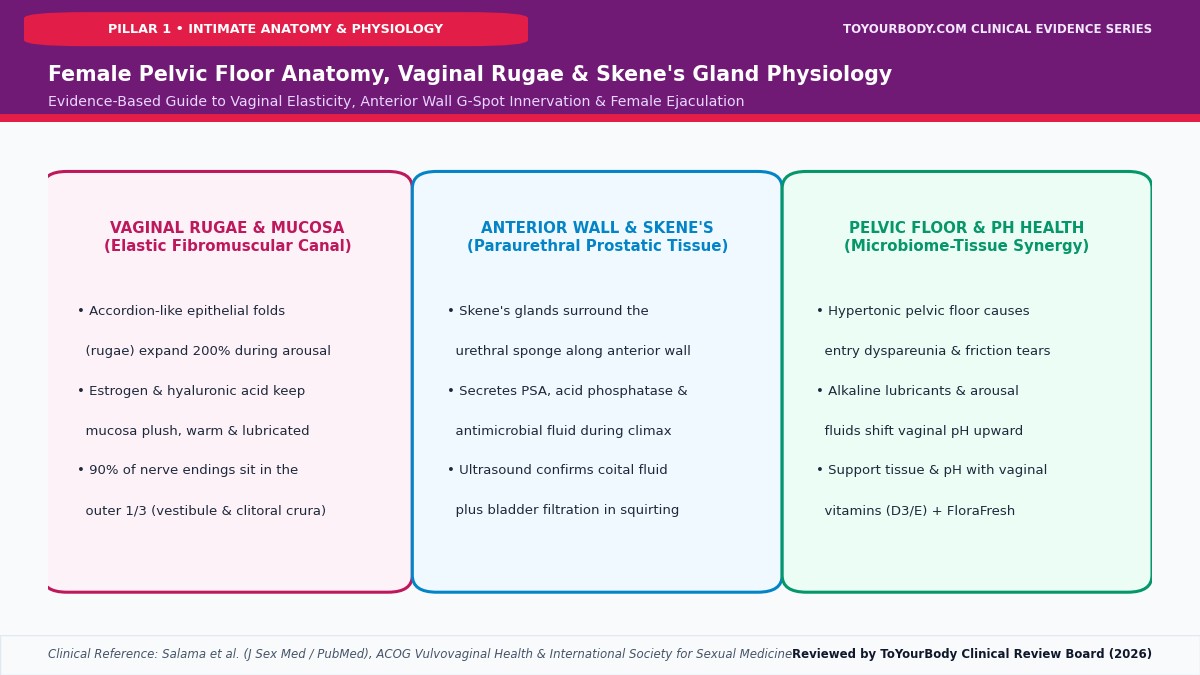
- Why it feels like peeing at first: The paraurethral (Skene’s) glands wrap directly around the lower urethra and bladder neck, sharing pudendal and pelvic splanchnic nerve pathways.
- Two distinct fluids on pelvic ultrasound: High-resolution transperineal ultrasound confirms both concentrated prostatic-specific antigen (PSA) fluid from Skene’s ducts and diluted coital fluid expelled through the urethra during orgasmic contractions.
- Post-release microbiome rule: Because alkaline coital fluid and partner fluids temporarily raise vaginal pH above 4.5, supporting Lactobacillus crispatus dominance (see our FloraFresh Clinical Review) prevents post-intimacy irritation.
Why Do So Many Women Ask What Squirting Feels Like?
If you have read our foundational anatomical guide on whether all women can squirt, the very next question almost every woman and partner asks is sensory: What does squirting actually feel like from the inside, and how do you tell the difference between arousal build-up and needing to use the bathroom?
In clinical gynecology and sexual medicine, this question is crucial because the #1 barrier preventing women from experiencing female ejaculation or coital fluid release is reflexive pelvic floor guarding. The moment internal anterior-wall stimulation triggers a bladder-pressure signal, most women instinctively clench their pubococcygeus (PC) muscles and pull away out of fear of urinary incontinence. Understanding the exact three-stage neurological transition explains why that sensation happens and how the body shifts from pressure to pleasure.
The 3 Sensory Stages of Female Squirting: From Pressure to Release
Across clinical interviews and urodynamic mapping studies, women who experience Skene’s gland expulsion or high-volume coital squirting consistently describe three distinct physiological phases:
Stage 1: Anterior Wall Engorgement (“The False Urge to Pee”)
When fingers, a curved internal toy, or a partner’s angle apply firm upward pressure against the front (anterior) wall of the vagina—roughly 1.5 to 2 inches inside, just behind the pubic bone—you are stimulating the urethral sponge and the internal bulbs of the clitoris. Because the anterior vaginal wall shares a dense fascial septum with the urethra and trigone of the bladder, rapid blood engorgement activates stretch receptors that the brain normally interprets as bladder fullness.
At this first contact, the sensation can feel startlingly intense, slightly uncomfortable, or unmistakably like you need to urinate immediately—even if you emptied your bladder five minutes earlier.
Stage 2: The Neurological Crossover (Warmth, Swelling & Deep Pressure)
If stimulation continues steadily with a “come-hither” upward motion rather than jabbing, the autonomic nervous system transitions from sympathetic guarding to parasympathetic vasocongestion. Within 15 to 45 seconds, the sharp “need to pee” alarm melts into a heavy, magnetic, warm fullness deep behind the pubic bone. On physical examination, the ridged mucosal folds (rugae) of the anterior wall swell and feel firmer, spongy, and slightly textured—like the roof of the mouth.
Stage 3: Expulsive Pelvic Release (Bearing Down Instead of Holding Back)
Unlike a purely external clitoral orgasm—which often involves rapid, tight inward clamping of the pelvic floor—squirting requires a brief paradoxical reflex: the pelvic floor contracts rhythmically while the urethral sphincter relaxes, accompanied by a gentle abdominal bearing-down sensation (valsalva). Women describe the moment of release as a sudden, warm gush or rhythmic pulsing rush that leaves the entire pelvic basin feeling weightless, deeply decompressed, and free of residual tension.
Clinical Comparison: Squirting Sensation vs. Normal Urination vs. Arousal Lubrication
| Physiological Feature | Skene’s Gland / Coital Squirting | Normal Voluntary Urination | Vaginal Arousal Lubrication |
|---|---|---|---|
| Primary Trigger | Sustained anterior vaginal wall (G-spot) & clitoral network stimulation | Detrusor muscle stretch from accumulated bladder urine | Early psychological & physical arousal (within 10–30 seconds) |
| Internal Sensation | Initial urgency shifting into deep, warm pulsing pleasure & involuntary release | Mechanical bladder relief with zero erotic pleasure | Smooth, slippery moisture coating the vaginal canal & vulva |
| Biochemical Markers | Contains Prostatic Acid Phosphatase (PAP), PSA, fructose, glucose & diluted urea | High creatinine, concentrated urea, uric acid, yellow urochrome pigment | Plasma transudate through vaginal epithelium + Bartholin’s mucins (see wetness guide) |
| Typical Color & Scent | Clear to milky-white; odorless or very faintly sweet/alkaline | Pale straw to amber; distinct ammonia/urea scent | Clear, slippery, mildly acidic (normal lactic acid pH 3.8–4.5) |
Why Emptying Your Bladder Before Intimacy Removes the Mental Block
In pelvic floor physical therapy, the single most effective step for women curious about their natural expulsive response is simple: urinate completely right before intimacy. When you know for a certainty that your bladder is empty, your prefrontal cortex stops interpreting anterior-wall nerve signals as a bathroom emergency. Instead of tightening your pelvic floor when the warm urgency builds, you can breathe deeply into your lower belly, relax your jaw and inner thighs, and allow the paraurethral ducts to release naturally.
Post-Intimacy Microbiome Care: Protecting Vaginal pH (3.8–4.5) After High-Fluid Sessions
One clinical detail rarely discussed in mainstream articles is how intense internal friction, lubricants, and neutral-to-alkaline secretions affect the vaginal ecosystem. Healthy vaginal tissue relies on Lactobacillus crispatus and Lactobacillus jensenii to maintain a protective lactic-acid shield between pH 3.8 and 4.5. When repeated friction, hyper-osmolar lubricants, or partner semen (pH 7.2–8.0) buffer that acidity, women frequently notice burning or itching after sex or a temporary post-sex pH shift.
- Always urinate within 15–20 minutes after intimacy: Peeing after sex mechanically flushes E. coli and transient bacteria away from the short female urethra, which is especially important after intense urethral-sponge stimulation.
- Rinse externally with warm water only: Never douche or use scented washes inside the canal—the vagina is a self-cleaning organ.
- Replenish protective Lactobacilli from within: For women prone to post-intimacy odor or pH fluctuations, daily oral supplementation with clinically studied urogenital strains (read our 2026 Wellness Nest FloraFresh Clinical Review) helps sustain L. crispatus colonization and keeps pH locked in the optimal 3.8–4.5 zone.
Frequently Asked Questions
Does squirting feel the same as a clitoral or G-spot orgasm?
Not always. Some women experience squirting simultaneously with a powerful blended clitourethrovaginal orgasm, while others experience the fluid release as a distinct, deeply relieving pressure wave just seconds before or during rhythmic anterior-wall stimulation.
Why do my pelvic muscles feel sore or fatigued afterward?
During high-arousal anterior wall stimulation, the levator ani and bulbocavernosus muscles undergo intense involuntary contractions. Gentle diaphragmatic breathing and warm hydration help release residual pelvic floor hypertonicity.
Step-by-step clinical decoder calibrated against ACOG, CDC & NIH thresholds. Answer each quick step for your tailored protocol.
Alkaline Amine Volatilization & L. crispatus Depletion
When alkaline semen (pH 7.1–8.0) or menstrual blood (pH 7.4) buffers vaginal lactic acid above pH 4.7, anaerobic Gardnerella vaginalis biofilms release volatile polyamines (fishy odor). If you recently used 600mg boric acid or antibiotics, bare vaginal mucosa will relapse within 2–3 weeks unless actively reseeded.
Recommended Clinical Guides for Your Pattern:- 24-Hour Vaginal pH Reset After Sex & Period (pH 3.8–4.5)
- 600mg Boric Acid Biofilm Protocol + When to Switch to Probiotics
- Evidence-Based Natural Remedies for Recurrent BV
- Cytolytic Vaginosis (pH < 3.8) vs. Yeast Infection • OTC Yeast Guide • White Discharge & Itching
Replenishes human-adapted Lactobacillus crispatus and L. rhamnosus via the gut–perineal axis to produce D/L-lactic acid and lock vaginal pH at 3.8–4.5.
Check FloraFresh Availability at Wellness Nest →Luteal / Perimenopausal Allopregnanolone Drop & 3 AM Cortisol Rebound
Declining progesterone deprives your brain’s GABAA receptors of calming allopregnanolone while narrowing your hypothalamic thermoneutral zone. Between 2:00 AM and 4:00 AM, a subtle hepatic glycogen dip triggers an unbraked adrenal cortisol and adrenaline surge that jolts you awake.
Tonight’s Clinical Recovery Protocol:- Progesterone–GABA Drop & Non-Hormonal Luteal/Perimenopause Sleep Fix
- Why Do I Wake Up at 3 AM in Menopause? (Cortisol & Glycemic Shield)
- Cooling Hypothalamic KNDy Neurons & Night Sweats Relief
- Magnesium Glycinate vs. L-Threonate & Thermal Dumping Protocol
Stabilizes estrogen recirculation via the gut estrobolome, calms overactive KNDy hot-flash neurons, and blunts 3 AM cortisol awakenings without synthetic hormones.
Check MenoMate Price & Bundles at Wellness Nest →Enterohepatic Estrobolome Dysregulation & HPA Visceral Storage
When gut β-glucuronidase activity is disrupted alongside elevated HPA-axis cortisol, estrogen recirculation becomes erratic—starving vaginal Lactobacillus crispatus of glycogen (triggering pH shifts), destabilizing nocturnal thermoregulation (3 AM waking), and activating abdominal glucocorticoid receptors (cortisol belly).
Your 3-Pillar Clinical Reading Plan:- The Estrobolome & Gut–Vaginal Axis: Connecting BV, 3 AM Sleep & Belly Fat
- Cortisol Belly & Menopause Weight Gain: Visceral Fat Reset
- Fixing the “Tired But Wired” Diurnal Cortisol Curve
- Post-Lunch Bloating & Gut Microbiome Enzyme Guide
Coordinating L. crispatus urogenital colonization (FloraFresh) with intestinal β-glucuronidase and HPA-cortisol modulation (MenoMate) addresses all three concentric pillars simultaneously.