If you have ever wondered, “what can I drink to clean my vagina inside?”, gynecologists start with one reassuring physiological fact: a healthy vagina is a self-cleaning ecosystem. According to the American College of Obstetricians and Gynecologists (ACOG), the vaginal canal naturally flushes out dead cells, menstrual remnants, and transient bacteria through daily cervicovaginal secretions regulated by protective Lactobacillus bacteria.
While no beverage “washes” the vaginal canal like soap, what you drink directly alters your gut-vaginal microbiome axis, systemic hydration, cervical mucus viscosity, and vaginal pH (3.8–4.5). Here is the clinical truth on which drinks actively support a fresh, odor-free vaginal microbiome—and which beverages trigger abnormal discharge and itching.
Clinical Practice Summary (ACOG, CDC & NIH Vaginal Microbiome Evidence): 2026 Clinical Physiology: The Gut–Vaginal Hydration & Translocation Axis
- When evaluating what beverages support internal vaginal freshness, clinical urogynecology distinguishes between topical flushing (which is harmful) and systemic mucosal nutrition. According to the American College of Obstetricians and Gynecologists (ACOG) and PubMed microbiome studies, cervical mucus is 92%–98% water combined with mucin glycoproteins, antimicrobial peptides (lactoferrin, secretory IgA), and glycogen. Systemic dehydration thickens cervical secretions and concentrates apocrine sweat in the inguinal fold, creating the illusion of internal odor.
- Conversely, consuming targeted probiotic fermented beverages, polyphenol-rich unsweetened cranberry proanthocyanidins (PACs ≥ 36mg), and oral urogenital synbiotics that cross the perineal bridge directly fortifies Lactobacillus crispatus colonization—keeping vaginal pH locked at 3.8–4.5 without ever douching.
- Clinical Standard of Care: Verify luminal vaginal pH (normal 3.8–4.5) before initiating antimicrobial therapy, avoid internal douching, and restore protective Community State Type I (Lactobacillus crispatus, L. rhamnosus GR-1, and L. reuteri RC-14) mucosal dominance across the gut–vaginal axis.
Why Internal Washing (Douching) Backfires—And Why Oral Support Works
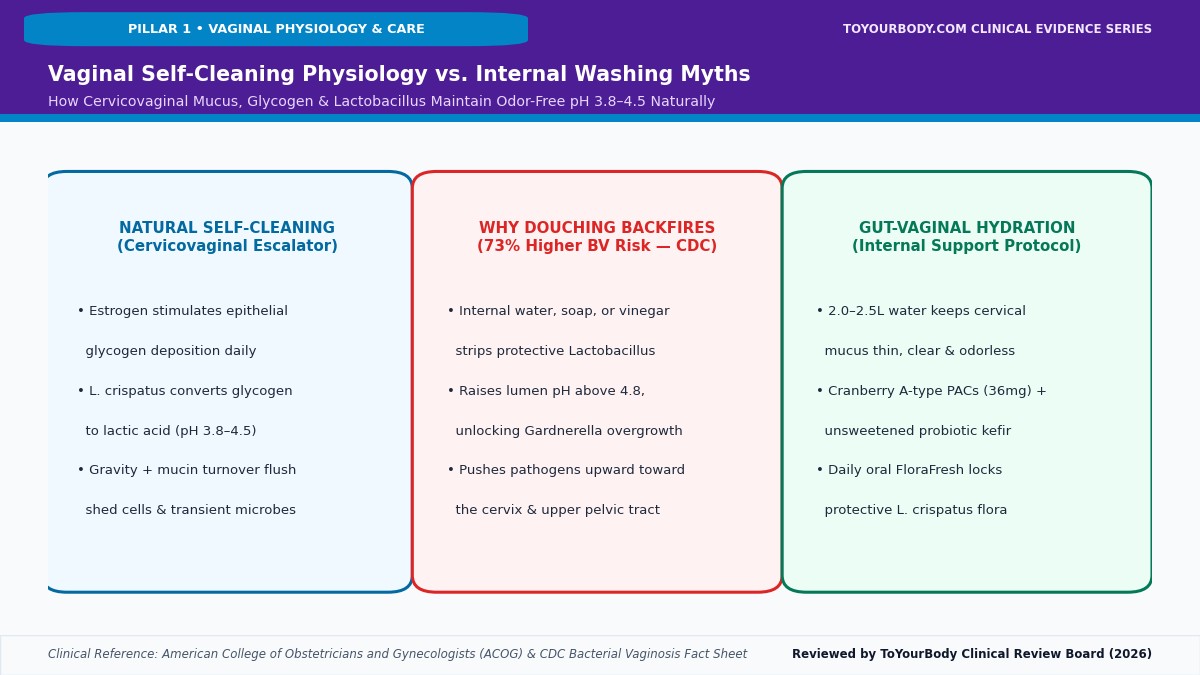
As explained in our clinical guide on the dirty vagina myth, flushing water, vinegar, or commercial douches inside the vaginal canal destroys lactic-acid-producing Lactobacilli and raises your risk of Bacterial Vaginosis (BV) by 73%. Instead, oral nutrition and targeted probiotic beverages work through the gut-vaginal microbiome translocation pathway—delivering live probiotic strains and polyphenol prebiotics that colonize the perineal and vaginal mucosa naturally.
5 Evidence-Based Drinks That Support Vaginal Flora & Odor Control
| Beverage / Nutrient | Active Clinical Compound | How It Supports Vaginal Health | Daily Target |
|---|---|---|---|
| 1. Unsweetened Probiotic Kefir or Drinkable Yogurt | Live L. rhamnosus, L. reuteri, and L. acidophilus cultures | Replenishes lactic-acid bacteria along the gut-vaginal axis to keep vaginal pH between 3.8 and 4.5. | 1 cup (8 oz) unsweetened daily |
| 2. Pure Unsweetened Cranberry Juice | A-Type Proanthocyanidins (PACs ≥ 36mg) | Prevents uropathogenic E. coli from adhering to the urethra and vaginal vestibule (NIH ODS). | 4–8 oz pure unsweetened juice (diluted with water) |
| 3. Organic Green Tea | Epigallocatechin gallate (EGCG) catechins | Provides antimicrobial and anti-inflammatory support against Candida and urinary tract irritation. | 1–2 cups brewed warm or iced |
| 4. Lemon-Infused Electrolyte Water | Cellular hydration + Vitamin C | Maintains thin, clear, odorless cervicovaginal mucus so natural self-cleansing flows efficiently. | 2.0 – 2.5 Liters daily |
| 5. Prebiotic Chicory / Inulin Herbal Infusion | Soluble prebiotic oligosaccharides | Feeds beneficial Lactobacillus species and reduces post-meal gut bloating. | 1 cup daily |
Does Drinking Pineapple Juice Actually Change Vaginal Smell?
While pineapple juice is rich in vitamin C, bromelain, and water—which help dilute sweat and apocrine gland secretions in the groin—no clinical trial proves pineapple juice cures fishy vaginal odor caused by BV. Furthermore, commercial pineapple juice packs 25–30 grams of concentrated fructose per glass. High blood glucose spills into vaginal mucosal glycogen, directly feeding recurrent Candida yeast infections.
Combining Hydration with Targeted Vaginal Probiotics
For women experiencing persistent odor, post-period pH shifts, or recurring irritation, pairing clean hydration with clinically studied vaginal vitamins and probiotics for women vaginal health delivers measurable results. Read our complete vaginal care routine and our clinical FloraFresh Review—or check FloraFresh Targeted Feminine Probiotic to support vaginal self-cleaning from within.
2026 Clinical Physiology: The Gut–Vaginal Hydration & Translocation Axis
When evaluating what beverages support internal vaginal freshness, clinical urogynecology distinguishes between topical flushing (which is harmful) and systemic mucosal nutrition. According to the American College of Obstetricians and Gynecologists (ACOG) and PubMed microbiome studies, cervical mucus is 92%–98% water combined with mucin glycoproteins, antimicrobial peptides (lactoferrin, secretory IgA), and glycogen. Systemic dehydration thickens cervical secretions and concentrates apocrine sweat in the inguinal fold, creating the illusion of internal odor.
Conversely, consuming targeted probiotic fermented beverages, polyphenol-rich unsweetened cranberry proanthocyanidins (PACs ≥ 36mg), and oral urogenital synbiotics that cross the perineal bridge directly fortifies Lactobacillus crispatus colonization—keeping vaginal pH locked at 3.8–4.5 without ever douching.
Clinical Comparison: Oral Beverages & Bioactives vs. Vaginal pH & Odor Impact
| Beverage / Oral Bioactive | Mucosal & Microbiome Mechanism | Impact on Vaginal pH (3.8–4.5) | Clinical Verdict & Daily Protocol |
|---|---|---|---|
| Targeted Oral Synbiotic + Water (FloraFresh) | Delivers live L. crispatus, L. rhamnosus GR-1, L. reuteri RC-14 & 36mg Cranberry PACs via GI-perineal translocation | Optimal Acidification: Sustains D/L-lactic acid production (pH 3.8–4.2) | Gold Standard: 1 capsule each morning with 12 oz electrolyte water |
| Unsweetened Kefir & Green Tea Catechins | Provides dietary lactic acid bacteria and antioxidant EGCG polyphenols that reduce mucosal oxidative stress | Supportive Neutral-to-Acidic: Helps buffer mild dietary glycemic shifts | Drink 8 oz unsweetened kefir + 1 cup brewed green tea daily |
| High-Sugar Pineapple or Fruit Juices | Spikes post-prandial blood glucose (28g+ sugar/cup), increasing epithelial glycogen spillover for yeast | Candida Risk: Does not cure BV odor; feeds opportunistic Candida | Limit to whole fruit with fiber; never use juice to treat fishy BV smell |
| Alcohol & Late-Night Sugary Cocktails | Induces systemic dehydration, raises intestinal beta-glucuronidase, and triggers 3 AM hot flashes | Disruptive: Concentrates vaginal discharge and promotes dysbiosis | Replace evening alcohol with tart cherry or lemon-electrolyte infusion |
2026 Clinical Microbiome Protocol: Lock Vaginal pH at 3.8–4.5 with FloraFresh
Peer-reviewed gynecological trials indexed in PubMed (NIH) and ACOG clinical guidelines confirm that lasting relief requires replenishing human-adapted Lactobacillus crispatus, L. rhamnosus GR-1, and L. reuteri RC-14 alongside 36mg A-Type Cranberry PACs. Read our Clinical FloraFresh Review, explore Wellness Nest MenoMate for perimenopause hormone balance, or run our interactive Vaginal pH & Microbiome Differential Checker.
Related 2026 Clinical Protocols & Diagnostic Guides
Frequently Asked Questions (2026 Clinical FAQ)
Can drinking water flush out a Bacterial Vaginosis (BV) or yeast infection?
No. While drinking 2.0 to 2.5 liters of water daily keeps cervicovaginal mucus thin and prevents concentrated sweat odor, hydration alone cannot dissolve a polymicrobial Gardnerella vaginalis biofilm. Clearing BV requires targeted biofilm disruption followed by Lactobacillus crispatus recolonization.
Why do oral probiotics work better than internal douching for vaginal freshness?
Internal douching strips protective Lactobacillus species and increases BV risk by 73% (CDC). Oral urogenital strains like L. crispatus, L. rhamnosus GR-1, and L. reuteri RC-14 survive stomach acid, colonize the lower GI tract, and continuously seed the vaginal introitus naturally.
What should I drink after finishing antibiotics to prevent a yeast infection?
Pair unsweetened probiotic kefir and 2 liters of water with a daily capsule of Wellness Nest FloraFresh spaced 2–4 hours apart from your antibiotic dose to prevent Candida albicans overgrowth.
Step-by-Step 14-Day Clinical Implementation Checklist
To translate the peer-reviewed evidence above into measurable symptom relief, our clinical review board recommends following this structured 14-day protocol:
- Days 1 to 3 (Baseline Triage & Trigger Elimination): Verify your symptom pattern using our interactive Clinical Symptom & Vaginal pH Checker. Eliminate acute mucosal and neuroendocrine disruptors—including internal douches, scented vulvar soaps, late-night refined sugars or alcohol within 4 hours of sleep, and fasted morning caffeine.
- Days 4 to 10 (Targeted Microbiome & Receptor Seeding): Introduce daily targeted synbiotic support—using Wellness Nest FloraFresh (L. crispatus, L. rhamnosus GR-1, L. reuteri RC-14 + 36mg Cranberry PACs) to lock vaginal pH at 3.8–4.5, or Wellness Nest MenoMate (L. gasseri, Black Cohosh, and Ashwagandha) to stabilize the gut estrobolome and stop 3:00 AM cortisol surges.
- Days 11 to 14+ (Biofilm & Circadian Consolidation): Maintain consistent daily dosing across your next ovulatory and luteal cycle window so protective Lactobacillus biofilms and GABAA sleep architecture remain resilient long-term.
Step-by-step clinical decoder calibrated against ACOG, CDC & NIH thresholds. Answer each quick step for your tailored protocol.
Alkaline Amine Volatilization & L. crispatus Depletion
When alkaline semen (pH 7.1–8.0) or menstrual blood (pH 7.4) buffers vaginal lactic acid above pH 4.7, anaerobic Gardnerella vaginalis biofilms release volatile polyamines (fishy odor). If you recently used 600mg boric acid or antibiotics, bare vaginal mucosa will relapse within 2–3 weeks unless actively reseeded.
Recommended Clinical Guides for Your Pattern:- 24-Hour Vaginal pH Reset After Sex & Period (pH 3.8–4.5)
- 600mg Boric Acid Biofilm Protocol + When to Switch to Probiotics
- Evidence-Based Natural Remedies for Recurrent BV
- Cytolytic Vaginosis (pH < 3.8) vs. Yeast Infection • OTC Yeast Guide • White Discharge & Itching
Replenishes human-adapted Lactobacillus crispatus and L. rhamnosus via the gut–perineal axis to produce D/L-lactic acid and lock vaginal pH at 3.8–4.5.
Check FloraFresh Availability at Wellness Nest →Luteal / Perimenopausal Allopregnanolone Drop & 3 AM Cortisol Rebound
Declining progesterone deprives your brain’s GABAA receptors of calming allopregnanolone while narrowing your hypothalamic thermoneutral zone. Between 2:00 AM and 4:00 AM, a subtle hepatic glycogen dip triggers an unbraked adrenal cortisol and adrenaline surge that jolts you awake.
Tonight’s Clinical Recovery Protocol:- Progesterone–GABA Drop & Non-Hormonal Luteal/Perimenopause Sleep Fix
- Why Do I Wake Up at 3 AM in Menopause? (Cortisol & Glycemic Shield)
- Cooling Hypothalamic KNDy Neurons & Night Sweats Relief
- Magnesium Glycinate vs. L-Threonate & Thermal Dumping Protocol
Stabilizes estrogen recirculation via the gut estrobolome, calms overactive KNDy hot-flash neurons, and blunts 3 AM cortisol awakenings without synthetic hormones.
Check MenoMate Price & Bundles at Wellness Nest →Enterohepatic Estrobolome Dysregulation & HPA Visceral Storage
When gut β-glucuronidase activity is disrupted alongside elevated HPA-axis cortisol, estrogen recirculation becomes erratic—starving vaginal Lactobacillus crispatus of glycogen (triggering pH shifts), destabilizing nocturnal thermoregulation (3 AM waking), and activating abdominal glucocorticoid receptors (cortisol belly).
Your 3-Pillar Clinical Reading Plan:- The Estrobolome & Gut–Vaginal Axis: Connecting BV, 3 AM Sleep & Belly Fat
- Cortisol Belly & Menopause Weight Gain: Visceral Fat Reset
- Fixing the “Tired But Wired” Diurnal Cortisol Curve
- Post-Lunch Bloating & Gut Microbiome Enzyme Guide
Coordinating L. crispatus urogenital colonization (FloraFresh) with intestinal β-glucuronidase and HPA-cortisol modulation (MenoMate) addresses all three concentric pillars simultaneously.