Choosing the best OTC for yeast infection requires understanding how antifungal active ingredients interact with Candida albicans and your underlying vaginal microbiome. According to the Centers for Disease Control and Prevention (CDC), roughly 75% of women experience at least one episode of vulvovaginal candidiasis (VVC), and nearly 40–45% experience two or more episodes.
Before reaching for a 1-day high-dose ointment that can trigger intense mucosal burning, use this clinical guide to compare 1-day, 3-day, and 7-day azole regimens, verify your symptoms against yeast infection discharge color charts, and protect your protective Lactobacillus barrier.
Clinical Practice Summary (ACOG, CDC & NIH Vaginal Microbiome Evidence): 2026 Differential Pharmacology: Why 50%+ of Self-Diagnosed Yeast Infections Fail OTC Azoles
- Clinical diagnostic audits published by the CDC and ACOG reveal a startling statistic: more than 50% of women who purchase over-the-counter miconazole or clotrimazole for vulvar itching and white discharge do not actually have uncomplicated Candida albicans. Instead, many have Cytolytic Vaginosis (CV)—a hyper-acidic (pH < 3.8) overgrowth of lactobacilli that mimics cottage-cheese discharge—or azole-resistant Candida glabrata.
- Even when true Candida albicans is present—especially immediately after a course of oral antibiotics—fungistatic azole creams only inhibit ergosterol synthesis in active fungal hyphae. Without immediate post-treatment reseeding using Lactobacillus crispatus, L. rhamnosus GR-1, and L. reuteri RC-14, surviving yeast spores re-germinate as soon as luteal-phase glycogen rises.
- Clinical Standard of Care: Verify luminal vaginal pH (normal 3.8–4.5) before initiating antimicrobial therapy, avoid internal douching, and restore protective Community State Type I (Lactobacillus crispatus, L. rhamnosus GR-1, and L. reuteri RC-14) mucosal dominance across the gut–vaginal axis.
Step 1: Confirm It Is Actually a Yeast Infection (Not BV)
Studies published by the American College of Obstetricians and Gynecologists (ACOG) show that more than half of women who self-treat with over-the-counter yeast medication actually have Bacterial Vaginosis (BV) or contact dermatitis. Using an antifungal when you have BV leaves anaerobic bacteria untreated while irritating delicate vulvar tissue.
- Classic Yeast Infection (Candida): Thick, odorless, cottage-cheese white discharge and intense vulvar itching, redness, and stinging during urination. Vaginal pH typically remains normal (3.8–4.5).
- Bacterial Vaginosis (BV): Thin, milky or grayish discharge accompanied by a distinct fishy vaginal odor (especially after intercourse) and an elevated pH above 4.5. If this matches your symptoms, see our guide on natural remedies for BV and biofilm recovery.
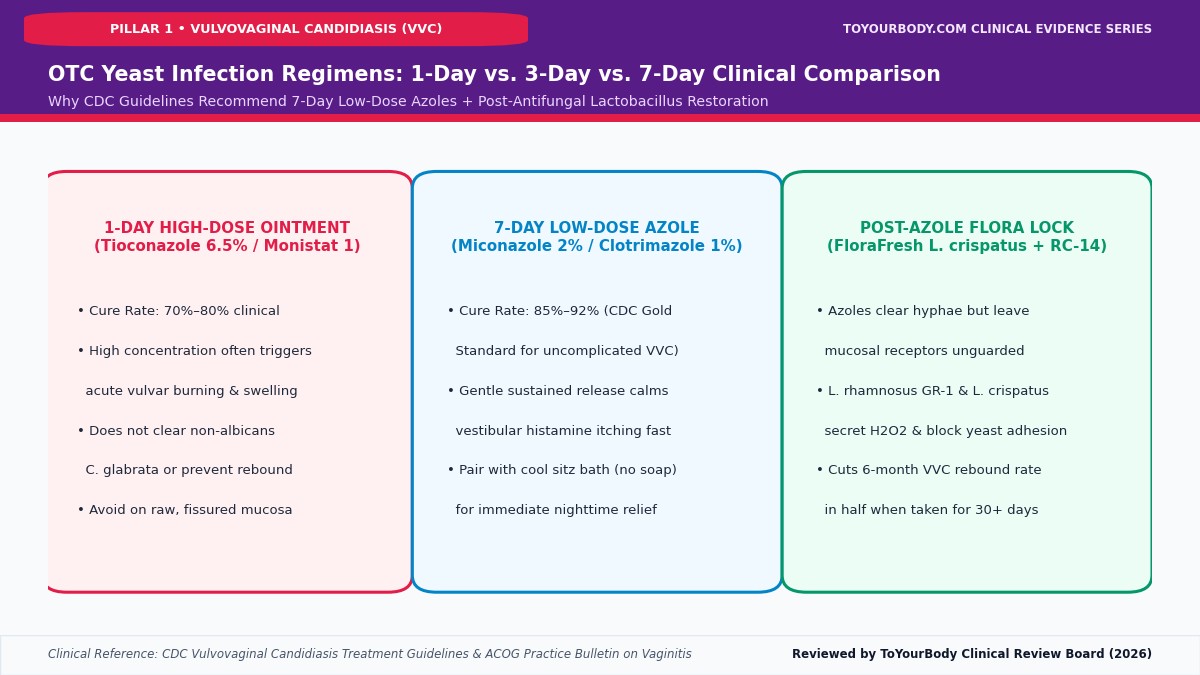
Clinical Comparison: 1-Day vs. 3-Day vs. 7-Day OTC Antifungals
| Active Ingredient (Brand Example) | Regimen Length | Clinical Cure Rate | Best For / Clinical Notes |
|---|---|---|---|
| Miconazole Nitrate 2%–4% (Monistat 7 / Monistat 3) | 3-Day or 7-Day Suppository + Cream | 85% – 92% | CDC Gold Standard: 7-day low-dose miconazole causes significantly less burning and achieves the highest sustained cure rate. |
| Clotrimazole 1%–2% (Gyne-Lotrimin 3 / 7) | 3-Day or 7-Day Intravaginal Cream | 80% – 88% | Gentler base formulation for sensitive mucosa prone to miconazole stinging. |
| Tioconazole 6.5% (Monistat 1 / Vagistat-1) | Single High-Dose Ointment | 70% – 80% | Convenient single dose, but concentrated ointment frequently causes temporary vulvar burning and swelling. |
| Boric Acid 600mg Suppository | 7–14 Nights Intravaginal | 75% – 85% (Non-albicans) | Recommended by CDC guidelines specifically for stubborn or azole-resistant Candida glabrata strains. |
How to Stop Itching Down There Immediately While the Antifungal Works
Azole suppositories take 24 to 72 hours to break down fungal cell walls. If you need to know how to stop itching down there immediately at night, apply a pea-sized layer of external 1% clotrimazole or miconazole cream to the vestibule, use a cool compress for 10 minutes to calm histamine nerve fibers, and read our clinical evaluation on whether Epsom salt baths help yeast infections.
Why Yeast Infections Rebound—And How to Rebuild Vaginal Flora
Hormonal fluctuations, oral antibiotics, and high-glycemic diets deplete hydrogen-peroxide-producing Lactobacillus crispatus, allowing opportunistic Candida spores to re-colonize within weeks. Once your 3-day or 7-day OTC antifungal course is complete, restoring vaginal acidity is critical:
- Replenish Targeted Probiotic Strains: Clinical trials indexed on NIH Office of Dietary Supplements demonstrate that L. rhamnosus GR-1, L. reuteri RC-14, and L. crispatus inhibit fungal biofilm adhesion. Compare delivery formats in our vaginal probiotics suppository guide and probiotics for women vaginal health breakdown.
- Daily Microbiome Protection: Read our comprehensive FloraFresh Review or check availability directly for FloraFresh Targeted Feminine Probiotic to maintain a resilient 3.8–4.5 pH year-round.
2026 Differential Pharmacology: Why 50%+ of Self-Diagnosed Yeast Infections Fail OTC Azoles
Clinical diagnostic audits published by the CDC and ACOG reveal a startling statistic: more than 50% of women who purchase over-the-counter miconazole or clotrimazole for vulvar itching and white discharge do not actually have uncomplicated Candida albicans. Instead, many have Cytolytic Vaginosis (CV)—a hyper-acidic (pH < 3.8) overgrowth of lactobacilli that mimics cottage-cheese discharge—or azole-resistant Candida glabrata.
Even when true Candida albicans is present—especially immediately after a course of oral antibiotics—fungistatic azole creams only inhibit ergosterol synthesis in active fungal hyphae. Without immediate post-treatment reseeding using Lactobacillus crispatus, L. rhamnosus GR-1, and L. reuteri RC-14, surviving yeast spores re-germinate as soon as luteal-phase glycogen rises.
Differential Matrix: True Candida albicans vs. Non-albicans Yeast vs. Cytolytic Vaginosis
| Condition | Vaginal pH Strip Reading | Discharge & Symptom Timing | Optimal Clinical Protocol |
|---|---|---|---|
| Uncomplicated Candida albicans | Normal (pH 4.0 – 4.5) | Thick, odorless cottage-cheese clumps; intense vulvar itching; flares after antibiotics or high sugar | 7-day OTC Miconazole 2% or Clotrimazole 1% + 30-day oral FloraFresh lock |
| Azole-Resistant Candida glabrata | Normal (pH 4.0 – 4.5) | Chronic burning and mild white discharge that fails Monistat and oral fluconazole | 600mg intravaginal boric acid for 14 nights + morning oral FloraFresh (12h apart) |
| Cytolytic Vaginosis (CV) | Hyper-Acidic (pH 3.0 – 3.8) | Pasty white discharge & vulvar stinging that peaks 7 days before period and stops during menses | Stop all probiotics & antifungals; use alkaline baking soda sitz baths |
| Bacterial Vaginosis (BV) | Elevated (pH > 4.5) | Thin milky or grayish discharge with distinct fishy odor after sex or period | Avoid yeast creams; follow our BV biofilm & L. crispatus protocol |
2026 Clinical Microbiome Protocol: Lock Vaginal pH at 3.8–4.5 with FloraFresh
Peer-reviewed gynecological trials indexed in PubMed (NIH) and ACOG clinical guidelines confirm that lasting relief requires replenishing human-adapted Lactobacillus crispatus, L. rhamnosus GR-1, and L. reuteri RC-14 alongside 36mg A-Type Cranberry PACs. Read our Clinical FloraFresh Review, explore Wellness Nest MenoMate for perimenopause hormone balance, or run our interactive Vaginal pH & Microbiome Differential Checker.
Related 2026 Clinical Protocols & Diagnostic Guides
Frequently Asked Questions (2026 Clinical FAQ)
Why does Monistat 1 burn so much more than Monistat 7?
Monistat 1 contains a highly concentrated 6.5% tioconazole or 1200mg miconazole ointment designed to sit in the vaginal vault for days. On raw, fissured vulvovaginal tissue, this high osmolarity triggers intense C-fiber neurogenic burning. CDC guidelines favor 7-day low-dose (2% miconazole) regimens for superior comfort and cure rates.
Should I test my vaginal pH before buying OTC yeast infection medication?
Yes. If your vaginal pH strip reads above 4.5, your symptoms are likely caused by Bacterial Vaginosis or Trichomoniasis rather than yeast alone. If your pH is below 3.8 and Monistat fails, consider Cytolytic Vaginosis.
When should I start taking FloraFresh after an OTC yeast treatment?
You can start taking oral Wellness Nest FloraFresh on Day 1 of your topical azole cream, because oral probiotic capsules travel through the digestive tract and reach the vaginal mucosa via the perineal bridge without being inactivated by topical miconazole.
Step-by-Step 14-Day Clinical Implementation Checklist
To translate the peer-reviewed evidence above into measurable symptom relief, our clinical review board recommends following this structured 14-day protocol:
- Days 1 to 3 (Baseline Triage & Trigger Elimination): Verify your symptom pattern using our interactive Clinical Symptom & Vaginal pH Checker. Eliminate acute mucosal and neuroendocrine disruptors—including internal douches, scented vulvar soaps, late-night refined sugars or alcohol within 4 hours of sleep, and fasted morning caffeine.
- Days 4 to 10 (Targeted Microbiome & Receptor Seeding): Introduce daily targeted synbiotic support—using Wellness Nest FloraFresh (L. crispatus, L. rhamnosus GR-1, L. reuteri RC-14 + 36mg Cranberry PACs) to lock vaginal pH at 3.8–4.5, or Wellness Nest MenoMate (L. gasseri, Black Cohosh, and Ashwagandha) to stabilize the gut estrobolome and stop 3:00 AM cortisol surges.
- Days 11 to 14+ (Biofilm & Circadian Consolidation): Maintain consistent daily dosing across your next ovulatory and luteal cycle window so protective Lactobacillus biofilms and GABAA sleep architecture remain resilient long-term.
Step-by-step clinical decoder calibrated against ACOG, CDC & NIH thresholds. Answer each quick step for your tailored protocol.
Alkaline Amine Volatilization & L. crispatus Depletion
When alkaline semen (pH 7.1–8.0) or menstrual blood (pH 7.4) buffers vaginal lactic acid above pH 4.7, anaerobic Gardnerella vaginalis biofilms release volatile polyamines (fishy odor). If you recently used 600mg boric acid or antibiotics, bare vaginal mucosa will relapse within 2–3 weeks unless actively reseeded.
Recommended Clinical Guides for Your Pattern:- 24-Hour Vaginal pH Reset After Sex & Period (pH 3.8–4.5)
- 600mg Boric Acid Biofilm Protocol + When to Switch to Probiotics
- Evidence-Based Natural Remedies for Recurrent BV
- Cytolytic Vaginosis (pH < 3.8) vs. Yeast Infection • OTC Yeast Guide • White Discharge & Itching
Replenishes human-adapted Lactobacillus crispatus and L. rhamnosus via the gut–perineal axis to produce D/L-lactic acid and lock vaginal pH at 3.8–4.5.
Check FloraFresh Availability at Wellness Nest →Luteal / Perimenopausal Allopregnanolone Drop & 3 AM Cortisol Rebound
Declining progesterone deprives your brain’s GABAA receptors of calming allopregnanolone while narrowing your hypothalamic thermoneutral zone. Between 2:00 AM and 4:00 AM, a subtle hepatic glycogen dip triggers an unbraked adrenal cortisol and adrenaline surge that jolts you awake.
Tonight’s Clinical Recovery Protocol:- Progesterone–GABA Drop & Non-Hormonal Luteal/Perimenopause Sleep Fix
- Why Do I Wake Up at 3 AM in Menopause? (Cortisol & Glycemic Shield)
- Cooling Hypothalamic KNDy Neurons & Night Sweats Relief
- Magnesium Glycinate vs. L-Threonate & Thermal Dumping Protocol
Stabilizes estrogen recirculation via the gut estrobolome, calms overactive KNDy hot-flash neurons, and blunts 3 AM cortisol awakenings without synthetic hormones.
Check MenoMate Price & Bundles at Wellness Nest →Enterohepatic Estrobolome Dysregulation & HPA Visceral Storage
When gut β-glucuronidase activity is disrupted alongside elevated HPA-axis cortisol, estrogen recirculation becomes erratic—starving vaginal Lactobacillus crispatus of glycogen (triggering pH shifts), destabilizing nocturnal thermoregulation (3 AM waking), and activating abdominal glucocorticoid receptors (cortisol belly).
Your 3-Pillar Clinical Reading Plan:- The Estrobolome & Gut–Vaginal Axis: Connecting BV, 3 AM Sleep & Belly Fat
- Cortisol Belly & Menopause Weight Gain: Visceral Fat Reset
- Fixing the “Tired But Wired” Diurnal Cortisol Curve
- Post-Lunch Bloating & Gut Microbiome Enzyme Guide
Coordinating L. crispatus urogenital colonization (FloraFresh) with intestinal β-glucuronidase and HPA-cortisol modulation (MenoMate) addresses all three concentric pillars simultaneously.