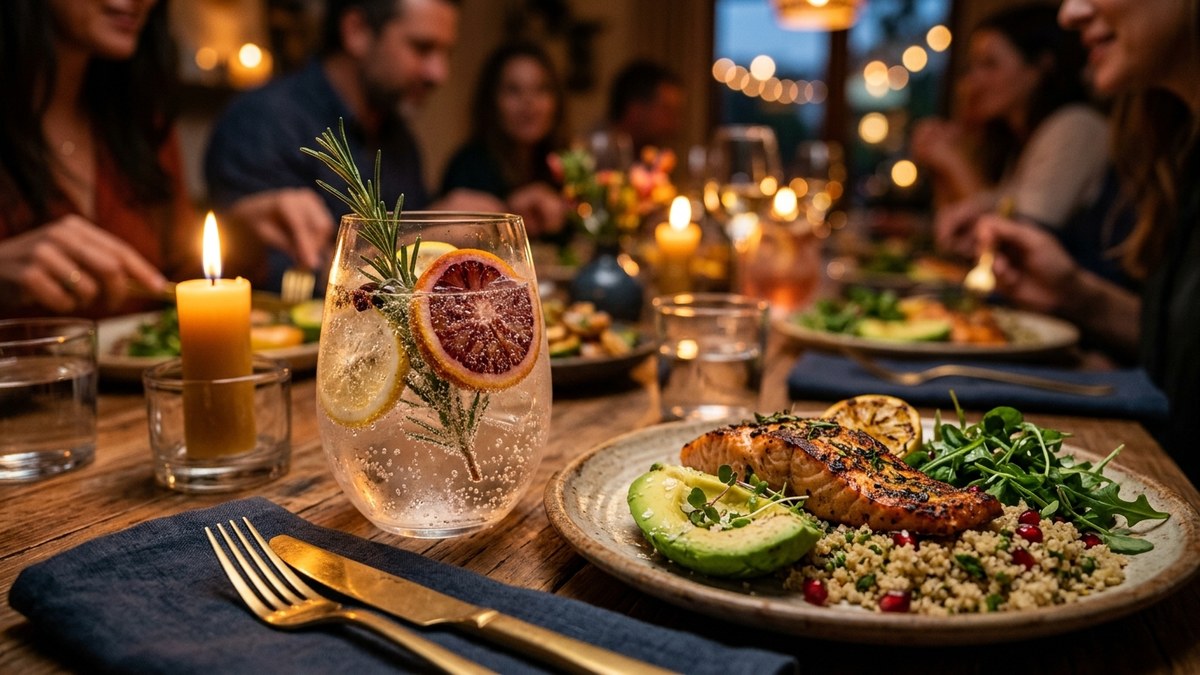
Ask almost any woman between ages 38 and 55 when her worst night sweats and 3:00 AM racing-heart awakenings happen, and she will tell you the exact same story: “I went out for Italian food or had a single glass of Pinot Noir at 7:30 PM, fell asleep in five minutes flat, and then woke up at 2:45 AM feeling like my veins were filled with lava.”
In your 20s, your liver, pancreas, and hypothalamus could absorb a late pasta dinner or a glass of wine without disrupting your sleep. In perimenopause and menopause, that exact same meal acts like liquid lighter fluid poured directly onto your brain’s thermoregulatory center.
In this flagship Bed Advices & Hormonal Sleep guide, we trace the four-hour biochemical countdown that turns evening wine and refined carbohydrates into a 3:00 AM vasomotor hot flash and rebound insomnia—and show you how to enjoy social evenings without sacrificing your sleep.
Clinical Key Takeaways: Why Wine & Late Carbs Trigger 3 AM Hot Flashes
- Root Physiological Mechanism: While a glass of wine at 8:00 PM initially sedates the brain by mimicking GABA, as your liver metabolizes ethanol into acetaldehyde between 1:30 AM and 3:30 AM, it triggers an acute glutamate excitatory rebound, histamine release, and peripheral cutaneous vasodilation.
- Why Symptoms Persist or Relapse: Simultaneously, ethanol monopolizes hepatic detox enzymes and inhibits gluconeogenesis, while late-night refined carbohydrates provoke an insulin surge followed by a 2:45 AM reactive blood glucose dip—forcing your adrenal glands to fire emergency epinephrine and cortisol that directly ignite hypothalamic KNDy hot-flash neurons.
- Evidence-Based Recovery Protocol: Eliminating 3 AM metabolic hot flashes requires a 3-to-4-hour alcohol cutoff, a fiber-protein dinner anchor, and daily Wellness Nest MenoMate to stabilize the gut–liver estrobolome and expand your hypothalamic thermoneutral zone.
The 4-Hour Biochemical Countdown: What Happens Between Your 8 PM Drink and 3 AM Awakening
Why does alcohol help you fall asleep at 10:30 PM only to rip you out of sleep in a pool of sweat at 3:00 AM? Clinical polysomnography and endocrine research funded by the National Institute on Alcohol Abuse and Alcoholism (NIAAA/NIH) reveals a four-part physiological cascade:
1. Phase 1 (8:00 PM – 12:30 AM): Artificial GABA Sedation & Suppressed REM
Ethanol is a small, water- and fat-soluble molecule that crosses the blood–brain barrier within minutes. Initially, it acts as a positive allosteric modulator of GABAA receptors while suppressing excitatory NMDA glutamate receptors. You fall into a heavy, sedated first half of the night—which is why so many exhausted perimenopausal women mistakenly use a glass of wine as a “nightcap.”
2. Phase 2 (1:30 AM – 3:30 AM): The Acetaldehyde & Glutamate Rebound
Your liver clears ethanol via alcohol dehydrogenase (ADH) at a fixed zero-order rate of roughly one standard drink every 90 to 120 minutes, converting ethanol into acetaldehyde—a toxic intermediate that stimulates mast-cell histamine release and peripheral vasodilation. The moment blood alcohol concentration (BAC) drops toward zero around 2:00 AM to 3:00 AM, your brain’s upregulated NMDA glutamate receptors snap back with a vengeance. Deep slow-wave sleep shatters into fragmented, hyper-aroused REM sleep.
3. Hepatic Estrogen Traffic Jam (Acute Estradiol Spike & Crash)
Because ethanol metabolism consumes huge quantities of hepatic NAD+ (increasing the NADH/NAD+ ratio), it stalls normal Phase I/II liver clearance of circulating estradiol. Clinical studies show that a single evening drink causes an acute transient spike in blood estradiol followed by a steep midnight crash—and as we explain in our KNDy neuron night-sweat guide, rapid estrogen withdrawal is the #1 trigger for a hypothalamic hot flash!
4. The Late-Carb Reactive Hypoglycemia & Epinephrine Dump
When you pair evening alcohol (or eat dessert, white rice, bread, or pasta within 3 hours of bed), your pancreas releases a large bolus of insulin. Because declining perimenopausal estrogen already reduces peripheral insulin sensitivity, that over-secreted insulin drives blood glucose down too far around 2:30 AM to 3:15 AM—while ethanol simultaneously blocks your liver from making new glucose (hepatic gluconeogenesis). To rescue your brain from low blood sugar, your adrenal medulla fires epinephrine (adrenaline) and cortisol, igniting a drenching 3:00 AM hot flash.
Metabolic Trigger Matrix: Evening Foods & Drinks Ranked by 3 AM Hot-Flash Risk
Compare how common evening beverages and dinner compositions impact overnight blood glucose stability, hepatic estrogen clearance, and 3 AM KNDy vasomotor firing:
| Evening Intake (7:00 PM – 10:00 PM) | 2:30 AM Glycemic & Hepatic Impact | 3 AM Hot Flash & Palpitation Risk | Clinical Swap / Buffer Strategy |
|---|---|---|---|
| Red Wine, Champagne, or Sweet Cocktails | High histamine/tyramine + NADH liver block + reactive glucose drop | Extreme Risk (85–95%) of 2:30–3:30 AM drenching sweat & tachycardia | Switch to tart cherry spritzer with lime, or finish 1 dry drink before 6:00 PM with protein |
| Refined Pasta, Pizza, White Rice, or Sweet Dessert | Steep 9:00 PM insulin spike → 2:45 AM reactive hypoglycemia → adrenaline surge | High Risk (75%) of 3 AM cortisol awakening & warm flush | Eat fiber + 30g protein first; swap refined starch for roasted root veggies + olive oil |
| Aggressive Fasting (Skipping Dinner / 4 PM Cutoff) | Depleted hepatic glycogen stores by 2:00 AM → premature cortisol gluconeogenesis | Moderate-to-High Risk in stressed perimenopausal women | Add a 100-kcal 9:00 PM protein-fat glycemic anchor |
| Wild Salmon/Poultry + Cruciferous Greens + MenoMate | Flat overnight glucose curve + smooth Phase II/III estrobolome clearance | Lowest Risk (<10%) — continuous deep N3/REM sleep through 6 AM | Pair with 300mg Magnesium Bisglycinate 60 mins pre-bed |
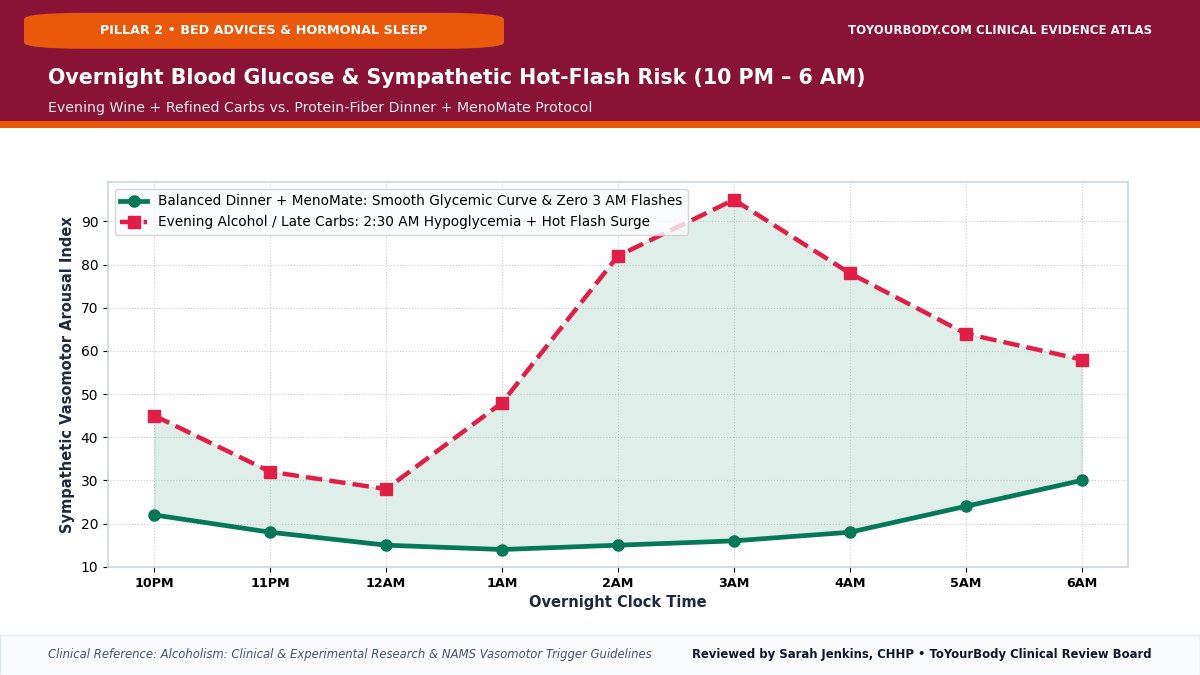
Look at Row 1: red wine is a triple threat in perimenopause because it combines ethanol (glutamate rebound), sugar/congeners (insulin spike), and biogenic amines like histamine and tyramine—which directly stimulate hypothalamic H1 receptors and norepinephrine release to trigger flushing.
How Alcohol & Sugar Also Disrupt the Gut–Vaginal Axis (The Double Blow)
The fallout from evening alcohol and refined carbohydrates doesn’t stop at your hypothalamus—it travels straight down the gut–vaginal axis:
- Estrobolome β-Glucuronidase Elevation: Alcohol and high-sugar diets feed dysbiotic gut bacteria that overproduce β-glucuronidase, uncoupling conjugated estrogen in the colon and worsening next-day bloating, breast tenderness, and mood swings.
- Vaginal Glycogen & Candida Fueling: Nocturnal hyperglycemia and insulin resistance increase mucosal glucose availability, which fuels Candida albicans yeast overgrowth and destabilizes vaginal pH.
The 4-Rule Evening Metabolic Shield to Sleep Through 3 AM Cool & Dry
You don’t have to live like a monk to sleep through the night in perimenopause. Follow these four clinical rules to protect your liver, blood sugar, and hypothalamus:
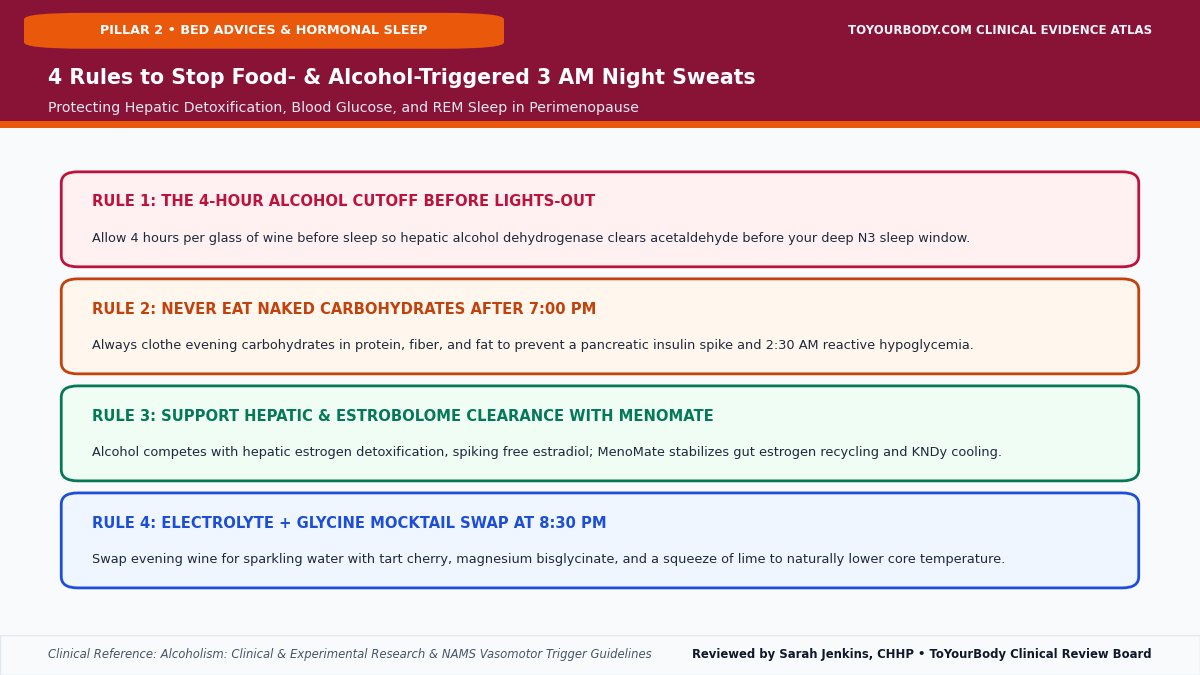
Rule 1: Protect the Gut–Liver Estrobolome & KNDy Center Daily With MenoMate
Take Wellness Nest MenoMate every day with dinner or before bed. Its targeted probiotic strains support healthy intestinal hormone metabolism across the estrobolome, while its concentrated cooling botanicals widen your hypothalamic thermoneutral zone—making your brain far more resilient against minor thermal or glycemic ripples overnight.
Rule 2: Sequence Your Dinner Plate (Fiber → Protein/Fat → Complex Carbs Last)
Continuous glucose monitor (CGM) studies show that eating non-starchy cruciferous vegetables (broccoli, arugula, Brussels sprouts) and 30 grams of clean protein + healthy fat before touching any starch reduces the post-meal glucose and insulin spike by up to 40% to 50%. No 9:00 PM insulin spike means no 2:45 AM reactive hypoglycemia crash—and no 3:00 AM adrenaline hot flash.
Rule 3: The “6:30 PM Social Drink Protocol” (When You Choose to Have a Drink)
If you enjoy a glass of wine or a cocktail at a social event, shift it to the 5:00 PM to 6:30 PM happy-hour window alongside protein and olives/nuts, limit to 1 dry serving (such as dry white wine, Sauvignon Blanc, or clear spirits with soda water instead of high-histamine red wine or sugary mixers), and drink 12 oz of electrolyte water plus 300mg Magnesium Bisglycinate before bed to replace urinary mineral loss.
Rule 4: Take a 12-Minute Post-Dinner Walk
A gentle 12- to 15-minute stroll after dinner activates GLUT4 glucose transporters in your leg muscles, clearing circulating glucose out of your bloodstream without requiring extra pancreatic insulin—guaranteeing a flat, peaceful overnight glucose curve.
Buffer Nocturnal Hot Flashes & Estrogen Swings With Wellness Nest MenoMate
Even a single glass of wine or a refined-carb pasta dinner can ignite a 3:00 AM furnace in perimenopause by stalling hepatic estrogen clearance and triggering a reactive glycemic crash. Wellness Nest MenoMate supports gut–liver estrobolome balance and calms hypothalamic KNDy neurons so you can sleep cool and uninterrupted.
Explore our Clinical MenoMate Review or browse our Menopause & Sleep Supplement Directory.
Cooling Mocktail Swaps That Actually Support Progesterone–GABA Sleep
When you want the ritual of pouring an evening drink in a wine glass at 8:00 PM without the 3:00 AM furnace, try these clinically functional swaps:
- Montmorency Tart Cherry + Sparkling Mineral Water + Lime: Unsweetened tart cherry concentrate contains natural melatonin and proanthocyanidins that lower nocturnal core body temperature and extend sleep duration by up to 34 minutes in clinical trials.
- Iced Chamomile–Tulsi (Holy Basil) Botanical Infusion: Apigenin in chamomile binds directly to benzodiazepine sites on brain GABAA receptors without any 3 AM glutamate rebound, while Tulsi lowers evening salivary cortisol.
- Protect Both Pillars Simultaneously: If evening sugar or wine also triggers cyclic vaginal itching or odor, pair your evening MenoMate with morning Wellness Nest FloraFresh.
When Post-Meal Flushing or Night Sweats Warrant Medical Screening
Consult your healthcare provider for targeted lab testing if you experience:
- Prediabetes or Insulin Resistance (HbA1c ≥ 5.7% or Fasting Insulin > 8 uIU/mL): Perimenopausal estrogen decline frequently unmasks underlying insulin resistance; request a fasting insulin, HbA1c, and lipid panel.
- Severe Immediate Flushing or Nasal Congestion After 2 Sips of Wine: May indicate histamine intolerance (DAO enzyme deficiency), sulfite sensitivity, or ALDH2 genetic polymorphism.
Frequently Asked Questions (Clinician-Reviewed FAQ)
Why does just one glass of wine give me night sweats at 3 AM in perimenopause?
About 4 to 6 hours after drinking (around 2:00–3:30 AM), your liver finishes converting ethanol into acetaldehyde, triggering a rebound surge in excitatory glutamate, histamine release, and an acute drop in blood sugar and estradiol. That neurochemical rebound directly activates hypothalamic KNDy neurons to fire a drenching hot flash.
Why do carbs or sugar at night cause 3 AM waking and hot flashes?
Eating refined carbohydrates or sweets late at night causes a high insulin spike followed 4 to 5 hours later by a reactive blood sugar drop around 2:45 AM. Your adrenal glands release emergency adrenaline (epinephrine) and cortisol to raise blood sugar, which wakes you up and ignites a hot flash.
How does Wellness Nest MenoMate help stop 3 AM metabolic hot flashes?
MenoMate supports the gut–liver estrobolome with targeted probiotics while calming hypothalamic KNDy thermoregulatory pathways with cooling botanicals—buffering your internal thermostat so overnight hormone and metabolic shifts don’t trigger drenching sweats.
What is the best evening snack to prevent a 3 AM blood sugar drop?
If dinner was early or light, have a small 100-calorie snack combining protein, fiber, and healthy fat 60–90 minutes before bed—such as 1 tablespoon of almond butter on celery, a small handful of walnuts, or unsweetened Greek yogurt with chia seeds.
Peer-Reviewed Clinical & Government References
- National Institutes of Health (NIH) / PubMed Central: Human Vaginal Microbiome, Estrobolome & Neuroendocrine Sleep Architecture Studies.
- Centers for Disease Control and Prevention (CDC): Sexually Transmitted Infections & Vaginal Dysbiosis Clinical Guidelines.
- NIH Office of Dietary Supplements (ODS): Clinical Micronutrient & Probiotic Fact Sheets for Health Professionals.
- American College of Obstetricians and Gynecologists (ACOG) & The Menopause Society (NAMS) Clinical Practice Guidelines.
Step-by-step clinical decoder calibrated against ACOG, CDC & NIH thresholds. Answer each quick step for your tailored protocol.
Alkaline Amine Volatilization & L. crispatus Depletion
When alkaline semen (pH 7.1–8.0) or menstrual blood (pH 7.4) buffers vaginal lactic acid above pH 4.7, anaerobic Gardnerella vaginalis biofilms release volatile polyamines (fishy odor). If you recently used 600mg boric acid or antibiotics, bare vaginal mucosa will relapse within 2–3 weeks unless actively reseeded.
Recommended Clinical Guides for Your Pattern:- 24-Hour Vaginal pH Reset After Sex & Period (pH 3.8–4.5)
- 600mg Boric Acid Biofilm Protocol + When to Switch to Probiotics
- Evidence-Based Natural Remedies for Recurrent BV
- Cytolytic Vaginosis (pH < 3.8) vs. Yeast Infection • OTC Yeast Guide • White Discharge & Itching
Replenishes human-adapted Lactobacillus crispatus and L. rhamnosus via the gut–perineal axis to produce D/L-lactic acid and lock vaginal pH at 3.8–4.5.
Check FloraFresh Availability at Wellness Nest →Luteal / Perimenopausal Allopregnanolone Drop & 3 AM Cortisol Rebound
Declining progesterone deprives your brain’s GABAA receptors of calming allopregnanolone while narrowing your hypothalamic thermoneutral zone. Between 2:00 AM and 4:00 AM, a subtle hepatic glycogen dip triggers an unbraked adrenal cortisol and adrenaline surge that jolts you awake.
Tonight’s Clinical Recovery Protocol:- Progesterone–GABA Drop & Non-Hormonal Luteal/Perimenopause Sleep Fix
- Why Do I Wake Up at 3 AM in Menopause? (Cortisol & Glycemic Shield)
- Cooling Hypothalamic KNDy Neurons & Night Sweats Relief
- Magnesium Glycinate vs. L-Threonate & Thermal Dumping Protocol
Stabilizes estrogen recirculation via the gut estrobolome, calms overactive KNDy hot-flash neurons, and blunts 3 AM cortisol awakenings without synthetic hormones.
Check MenoMate Price & Bundles at Wellness Nest →Enterohepatic Estrobolome Dysregulation & HPA Visceral Storage
When gut β-glucuronidase activity is disrupted alongside elevated HPA-axis cortisol, estrogen recirculation becomes erratic—starving vaginal Lactobacillus crispatus of glycogen (triggering pH shifts), destabilizing nocturnal thermoregulation (3 AM waking), and activating abdominal glucocorticoid receptors (cortisol belly).
Your 3-Pillar Clinical Reading Plan:- The Estrobolome & Gut–Vaginal Axis: Connecting BV, 3 AM Sleep & Belly Fat
- Cortisol Belly & Menopause Weight Gain: Visceral Fat Reset
- Fixing the “Tired But Wired” Diurnal Cortisol Curve
- Post-Lunch Bloating & Gut Microbiome Enzyme Guide
Coordinating L. crispatus urogenital colonization (FloraFresh) with intestinal β-glucuronidase and HPA-cortisol modulation (MenoMate) addresses all three concentric pillars simultaneously.