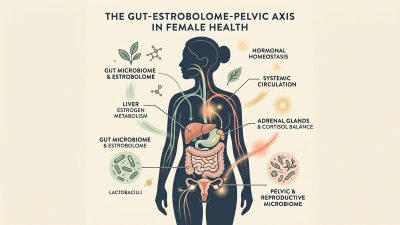
Have you ever been told you have symptoms of “estrogen dominance”—heavy or clotted periods, severe cyclic breast tenderness, mood swings, fibroids, pre-period belly bloating, and stubborn lower-body weight—even though your ovaries aren’t overproducing estrogen?
Even more puzzling: why do women with these exact PMS and perimenopausal estrogen-dominance symptoms almost always suffer from recurring yeast infections or Bacterial Vaginosis (BV) right before or after their period?
The missing diagnostic link isn’t in your ovaries—it is a single microbial enzyme inside your colon called beta-glucuronidase (β-glucuronidase). Building on our foundational Estrobolome & Gut–Vaginal Axis guide within our Health Advices pillar, let’s examine how high β-glucuronidase hijacks Phase III hormone clearance and how to normalize it naturally.
Clinical Key Takeaways: High Beta-Glucuronidase, Estrobolome & BV/PMS Link
- Root Physiological Mechanism: Beta-glucuronidase (β-glucuronidase / GUS) is a bacterial enzyme produced inside your large intestine by the estrobolome—the specific subset of gut microbes (especially Clostridia, Bacteroides, and Escherichia species) that regulate circulating estrogen levels.
- Why Symptoms Persist or Relapse: After your liver conjugates used estrogen with glucuronic acid (Phase II glucuronidation) and excretes it into bile for stool elimination, excess intestinal β-glucuronidase acts like molecular scissors—slicing off the glucuronic acid tag and forcing active estrogen back into your portal bloodstream (enterohepatic recirculation).
- Evidence-Based Recovery Protocol: Lowering elevated β-glucuronidase requires crowding out GUS-producing anaerobes with Wellness Nest MenoMate and Wellness Nest FloraFresh (Lactobacillus rhamnosus, L. reuteri, and L. crispatus) alongside Calcium D-Glucarate and soluble prebiotic fiber.
Phase I, II & III Estrogen Detoxification: How Beta-Glucuronidase Hijacks the Exit Door
Once estradiol (E2) and estrone (E1) have finished signaling your cells, your body must deactivate and eliminate them so they do not accumulate to toxic, proliferative levels. This clearance happens across three sequential phases:
- Phase I (Hepatic Hydroxylation): Cytochrome P450 enzymes in your liver (CYP1A1, CYP1B1, CYP3A4) convert estrogens into 2-OH, 4-OH, or 16α-OH catechol estrogen intermediates.
- Phase II (Hepatic Conjugation — Methylation & Glucuronidation): Through COMT methylation and UDP-glucuronosyltransferase (UGT) enzymes, your liver attaches a water-soluble glucuronic acid molecule onto the used estrogen. Think of glucuronic acid as a “molecular shipping label” that locks estrogen in an inactive state so it can be pumped into bile and excreted out through your stool.
- Phase III (Intestinal Estrobolome Elimination): Bile carries conjugated estrogen-glucuronide into your small and large intestines. In a healthy gut microbiome, roughly 85% to 90% of this bound estrogen exits cleanly in your daily bowel movement.
What Happens When Fecal Beta-Glucuronidase Is Elevated
As detailed in landmark microbiome oncology and endocrinology studies published in PubMed Central (NIH), when gut dysbiosis occurs (often after broad-spectrum antibiotics, chronic stress, alcohol, or low-fiber diets), pathogenic bacteria express high levels of the gus gene encoding β-glucuronidase. This enzyme cleaves the glucuronic acid bond right inside the colon—reactivating free, unbound estrogen (and xenoestrogens/BPA!) so they are reabsorbed across the colonic mucosa straight back into your portal vein.
Clinical Symptom Matrix: Low vs. Optimal vs. High Beta-Glucuronidase Activity
Comprehensive stool tests (such as GI-MAP or Genova GI Effects) measure fecal β-glucuronidase directly. Even without a stool lab, you can identify your pattern using the clinical comparison table below (and our Interactive Estrobolome Calculator):
| Clinical Dimension | Optimal Estrobolome (β-Glucuronidase Balanced) | High β-Glucuronidase (Estrogen Reabsorption) | Low β-Glucuronidase (Hypo-Estrogenic Dysbiosis) |
|---|---|---|---|
| Enterohepatic Estrogen Fate | 85–90% excreted in stool; 10–15% gently recycled for baseline tone | Excessive reactivation & reabsorption of unbound E1/E2 & xenoestrogens | Under-recycling of estrogen; accelerates estrogen deficiency |
| Menstrual & Breast Symptoms | Painless 28-day cycle, minimal PMS, comfortable breasts | Heavy/clotted flow, fibrocystic breast soreness, luteal rage/irritability | Light/scanty flow, vaginal dryness, high pH >5.0 & UTIs |
| Gut & Metabolic Profile | 1–2 smooth daily bowel movements (Bristol 4), flat stomach | Ovulation & pre-period bloating, sluggish transit, hip/thigh/waist weight | Dry stools, low mucosal butyrate, accelerated bone/collagen loss |
| Vaginal Microbiome Impact | Stable pH 3.8–4.5 dominated by Lactobacillus crispatus | Cyclic pre-period yeast infections (high glycogen/glucose) & post-period BV | Glycogen starvation of vaginal lactobacilli (atrophic vaginitis) |
| Targeted Protocol | Maintenance FloraFresh + diverse plant fiber | MenoMate + FloraFresh + Calcium D-Glucarate + DIM/Sulforaphane | MenoMate + FloraFresh + prebiotic GOS/inulin + phytoestrogens |
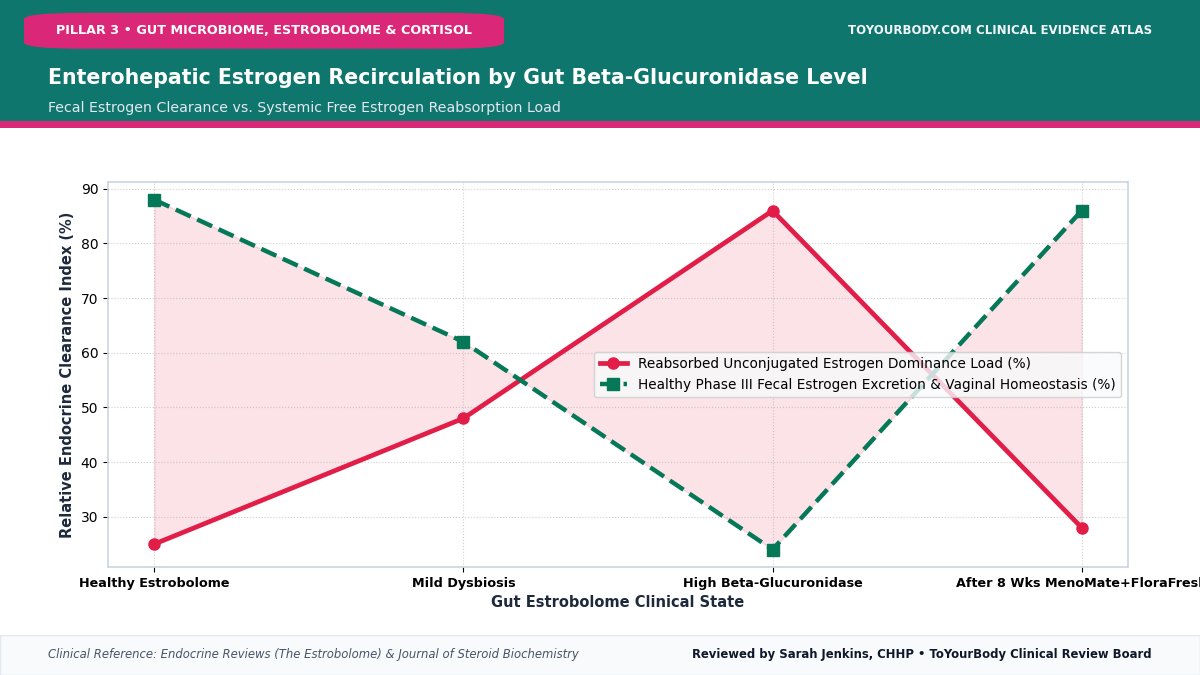
Look at Row 4: high fecal β-glucuronidase explains why so many women are trapped in a monthly pendulum between pre-period Candida yeast flaring (driven by excessive reabsorbed estrogen spiking vaginal epithelial glycogen and suppressing local Th17 antifungal immunity) and post-period BV (when that towering estrogen surge crashes down and fecal anaerobes migrate across the perineum).
What Causes Gut Bacteria to Overproduce Beta-Glucuronidase?
Why do certain gut microbes turn up β-glucuronidase expression in the first place? When pathogenic or opportunistic bacteria (such as Bacteroides fragilis, Clostridium perfringens, Escherichia coli, and Staphylococcus) are starved of complex plant polysaccharides, they scavenge glucuronic acid from your liver’s conjugated hormones and bile acids to use as a carbon energy source! Four everyday triggers accelerate this:
- Repeated Antibiotic Courses (Flagyl, Augmentin, Macrobid): Wipes out protective lactic-acid-producing Lactobacillus and Bifidobacterium species, leaving GUS-producing Bacteroides and Clostridia unchallenged.
- High Saturated Animal Fat + Low Prebiotic Fiber Diets: Increases hepatic bile acid secretion, which selectively feeds bile-tolerant, β-glucuronidase-producing anaerobes.
- Slow Bowel Transit (Luteal Constipation): If stool sits in the descending and sigmoid colon for 36 to 72 hours instead of 18 to 24 hours, bacterial β-glucuronidase has triple the contact time to deconjugate estrogen.
- Evening Alcohol & Xenoestrogen Exposure (Plastics/Pesticides): Overloads hepatic UGT glucuronidation pathways.
The 4-Step Clinical Protocol to Lower High Beta-Glucuronidase & Balance Estrogen
Clinical studies show that you can reduce fecal β-glucuronidase activity by 30% to 50% within 4 weeks by reshaping your intestinal microbiome and supporting Phase II/III glucuronidation:
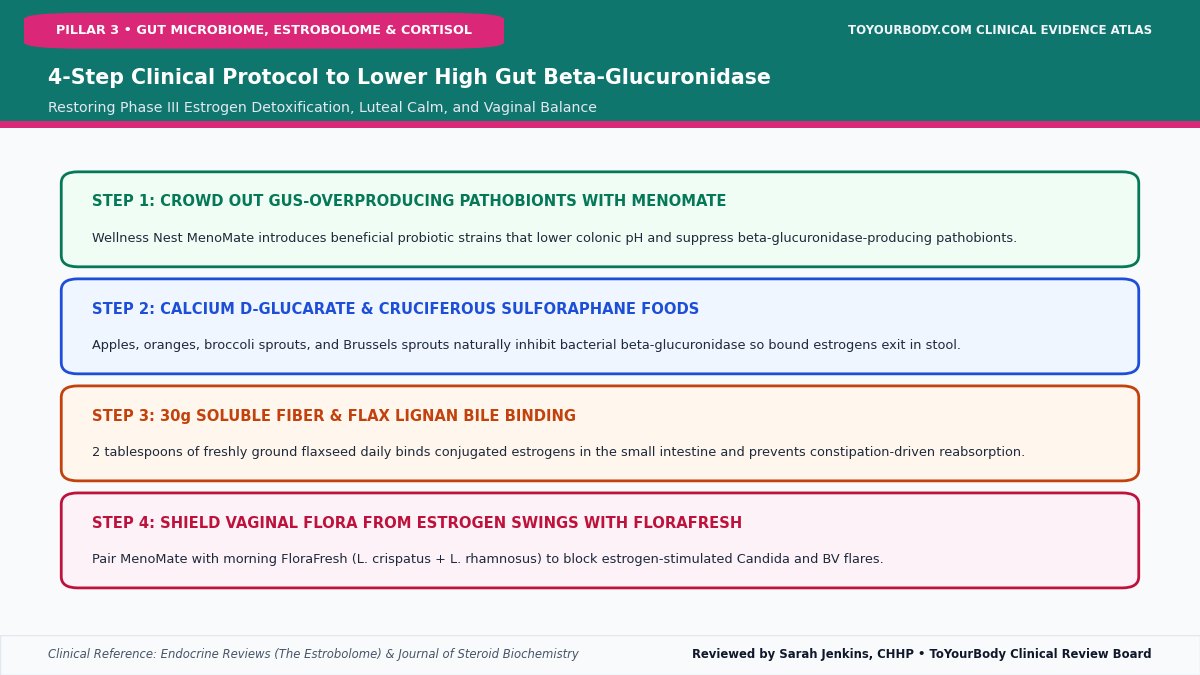
Step 1: Reseed the Estrobolome & Vaginal Tract With MenoMate + FloraFresh
Randomized human trials demonstrate that oral supplementation with Lactobacillus rhamnosus, L. acidophilus, L. reuteri, and Bifidobacterium strains significantly lowers fecal β-glucuronidase activity by acidifying the colonic lumen and competitively excluding GUS-producing Clostridia and E. coli. Take Wellness Nest MenoMate (formulated specifically for the gut–hormone estrobolome and vasomotor balance) alongside Wellness Nest FloraFresh (which delivers L. crispatus, L. rhamnosus, and L. reuteri down the gut–vaginal highway to protect vaginal pH).
Step 2: Add Calcium D-Glucarate (500mg – 1,000mg Daily)
Found naturally in oranges, apples, grapefruit, and cruciferous vegetables, Calcium D-Glucarate is converted by stomach acid into D-glucaro-1,4-lactone—a direct, competitive molecular inhibitor of bacterial β-glucuronidase inside the intestinal lumen. It keeps the “shipping label” glued onto conjugated estrogen for up to 5 hours so it exits safely in your stool.
Step 3: Feed Butyrate Producers With 30g of Diverse Soluble & Cruciferous Fiber
Provide your beneficial microbes with preferred prebiotic carbohydrates—steamed broccoli sprouts (rich in sulforaphane for Phase II detox), cooked carrots, chia seeds, ground flaxseed, and kiwifruit—so bacteria stop scavenging glucuronic acid from your hormones.
Step 4: Guarantee a Daily Morning Bowel Elimination
Even low β-glucuronidase cannot save you if you only have a bowel movement every 3 days. Pair 2.5 liters of mineral water with 300mg evening Magnesium Bisglycinate to ensure complete morning Phase III clearance.
Reset Your Estrobolome & Vaginal Axis: MenoMate + FloraFresh
When dysbiotic gut bacteria overproduce the enzyme beta-glucuronidase, inactivated estrogen meant for stool elimination is sliced open and reabsorbed into your bloodstream—driving heavy periods, breast tenderness, 3 AM waking, and recurrent vaginal dysbiosis. Combine Wellness Nest MenoMate (estrobolome & liver–gut support) with Wellness Nest FloraFresh (Lactobacillus crispatus & L. rhamnosus) to restore healthy hormone clearance.
Liver-Supportive Foods That Synergize With Your Estrobolome Reset
- 1 Cup of Cooked Cruciferous Vegetables Daily: Broccoli, cauliflower, bok choy, and Brussels sprouts supply indole-3-carbinol (I3C) and diindolylmethane (DIM), shifting Phase I liver metabolism toward protective 2-hydroxyestrone (2-OH-E1) instead of proliferative 16α-OH-E1.
- Choline & Methylation Cofactors (Pasture-Raised Eggs & Dark Leafy Greens): Supports hepatic phosphatidylcholine bile flow and COMT catechol-estrogen methylation.
- Minimize Endocrine-Disrupting Plastics: Never microwave food in plastic containers; bisphenols (BPA/BPS) and phthalates are detoxified via the exact same hepatic UGT glucuronidation enzyme system as your endogenous estradiol.
When to Order Functional Stool & Hormone Testing With Your Practitioner
Consider partnering with an integrative gynecologist or functional medicine physician for targeted testing if you experience:
- Quantitative PCR Stool Testing (e.g., GI-MAP): Directly measures fecal β-glucuronidase enzyme activity (typically normal <2,486 U/g) alongside Candida, Clostridia, and short-chain fatty acids.
- DUTCH Complete (Dried Urine for Total Comprehensive Hormones): Maps Phase I (2-OH, 4-OH, 16-OH) and Phase II (COMT methylation) estrogen metabolites alongside your 4-point diurnal free cortisol curve.
Frequently Asked Questions (Clinician-Reviewed FAQ)
What does high beta-glucuronidase on a GI-MAP stool test mean?
High fecal beta-glucuronidase means that dysbiotic bacteria in your colon are producing excess GUS enzyme, which breaks the bond on conjugated estrogen excreted by your liver. Instead of leaving your body in stool, that reactivated estrogen is reabsorbed into your bloodstream—causing estrogen dominance symptoms.
Can high beta-glucuronidase cause recurrent BV or yeast infections?
Yes. High beta-glucuronidase reflects colonic overgrowth of anaerobes (like Bacteroides and E. coli) that also translocate to the vagina, while the resulting estrogen spikes and crashes destabilize vaginal glycogen and pH—triggering cyclic pre-period yeast infections and post-period BV.
How do Probiotics (MenoMate & FloraFresh) lower beta-glucuronidase?
Human clinical trials show that specific Lactobacillus and Bifidobacterium strains lower colonic pH via lactic and short-chain fatty acids and crowd out GUS-producing anaerobes, reducing fecal beta-glucuronidase activity by up to 40–50%.
Can I take Calcium D-Glucarate together with Wellness Nest MenoMate?
Yes. Calcium D-Glucarate directly inhibits existing beta-glucuronidase enzyme in the gut lumen during the first 4–8 weeks, while MenoMate and FloraFresh permanently reshape the underlying microbiome so fewer GUS enzymes are produced long-term.
Peer-Reviewed Clinical & Government References
- National Institutes of Health (NIH) / PubMed Central: Human Vaginal Microbiome, Estrobolome & Neuroendocrine Sleep Architecture Studies.
- Centers for Disease Control and Prevention (CDC): Sexually Transmitted Infections & Vaginal Dysbiosis Clinical Guidelines.
- NIH Office of Dietary Supplements (ODS): Clinical Micronutrient & Probiotic Fact Sheets for Health Professionals.
- American College of Obstetricians and Gynecologists (ACOG) & The Menopause Society (NAMS) Clinical Practice Guidelines.
Step-by-step clinical decoder calibrated against ACOG, CDC & NIH thresholds. Answer each quick step for your tailored protocol.
Alkaline Amine Volatilization & L. crispatus Depletion
When alkaline semen (pH 7.1–8.0) or menstrual blood (pH 7.4) buffers vaginal lactic acid above pH 4.7, anaerobic Gardnerella vaginalis biofilms release volatile polyamines (fishy odor). If you recently used 600mg boric acid or antibiotics, bare vaginal mucosa will relapse within 2–3 weeks unless actively reseeded.
Recommended Clinical Guides for Your Pattern:- 24-Hour Vaginal pH Reset After Sex & Period (pH 3.8–4.5)
- 600mg Boric Acid Biofilm Protocol + When to Switch to Probiotics
- Evidence-Based Natural Remedies for Recurrent BV
- Cytolytic Vaginosis (pH < 3.8) vs. Yeast Infection • OTC Yeast Guide • White Discharge & Itching
Replenishes human-adapted Lactobacillus crispatus and L. rhamnosus via the gut–perineal axis to produce D/L-lactic acid and lock vaginal pH at 3.8–4.5.
Check FloraFresh Availability at Wellness Nest →Luteal / Perimenopausal Allopregnanolone Drop & 3 AM Cortisol Rebound
Declining progesterone deprives your brain’s GABAA receptors of calming allopregnanolone while narrowing your hypothalamic thermoneutral zone. Between 2:00 AM and 4:00 AM, a subtle hepatic glycogen dip triggers an unbraked adrenal cortisol and adrenaline surge that jolts you awake.
Tonight’s Clinical Recovery Protocol:- Progesterone–GABA Drop & Non-Hormonal Luteal/Perimenopause Sleep Fix
- Why Do I Wake Up at 3 AM in Menopause? (Cortisol & Glycemic Shield)
- Cooling Hypothalamic KNDy Neurons & Night Sweats Relief
- Magnesium Glycinate vs. L-Threonate & Thermal Dumping Protocol
Stabilizes estrogen recirculation via the gut estrobolome, calms overactive KNDy hot-flash neurons, and blunts 3 AM cortisol awakenings without synthetic hormones.
Check MenoMate Price & Bundles at Wellness Nest →Enterohepatic Estrobolome Dysregulation & HPA Visceral Storage
When gut β-glucuronidase activity is disrupted alongside elevated HPA-axis cortisol, estrogen recirculation becomes erratic—starving vaginal Lactobacillus crispatus of glycogen (triggering pH shifts), destabilizing nocturnal thermoregulation (3 AM waking), and activating abdominal glucocorticoid receptors (cortisol belly).
Your 3-Pillar Clinical Reading Plan:- The Estrobolome & Gut–Vaginal Axis: Connecting BV, 3 AM Sleep & Belly Fat
- Cortisol Belly & Menopause Weight Gain: Visceral Fat Reset
- Fixing the “Tired But Wired” Diurnal Cortisol Curve
- Post-Lunch Bloating & Gut Microbiome Enzyme Guide
Coordinating L. crispatus urogenital colonization (FloraFresh) with intestinal β-glucuronidase and HPA-cortisol modulation (MenoMate) addresses all three concentric pillars simultaneously.