When you cross into your forties, you might notice that falling asleep—and staying asleep—isn’t as effortless as it used to be. The decline in estrogen and progesterone during perimenopause directly impacts your body’s sleep architecture, often leading to fragmented rest, night sweats, and early morning wakeups. Good sleep hygiene is no longer just a recommendation; it’s a critical component of managing the menopause transition.
By implementing targeted habits that align with your changing hormones, you can signal to your brain that it is time to rest, deeply and without interruption. Here are the essential rules to reclaim your nights.

Key Takeaway
- As estrogen drops during menopause, the body’s internal clock shifts, making deep sleep much harder to achieve.
- Cooling the bedroom and limiting blue light before bed are non-negotiable steps for preventing 3 AM wakeups.
- Supporting your gut microbiome can naturally enhance melatonin production and improve overnight hormone balance.
Cool Your Sleeping Environment
One of the primary reasons women wake up in the middle of the night is core body temperature fluctuation. A dropping estrogen level can cause the hypothalamus to misinterpret your body heat, triggering a hot flash. Keeping your bedroom between 60 and 65 degrees Fahrenheit (15-18°C) provides a buffer against these sudden temperature spikes. If night sweats are severe, you might also want to explore non-hormonal options for menopause symptoms to help regulate your internal thermostat.
Implement a Digital Curfew
Blue light from phones and tablets suppresses melatonin, the hormone responsible for initiating sleep. As you age, natural melatonin production already decreases, making your brain much more sensitive to evening screen time. Commit to putting away all electronic devices at least one hour before bed. Instead, read a physical book or listen to a calming podcast to allow your natural sleep drive to take over.
Rethink Your Evening Nutrition
What you eat in the hours leading up to bedtime significantly impacts your overnight hormone stability. Heavy meals or high-sugar desserts can cause a blood sugar spike followed by a crash, which releases cortisol and wakes you up. If you feel hungry before bed, choose late-night snacks that support better sleep, such as a small bowl of Greek yogurt or a handful of walnuts, which provide protein and natural melatonin.

Establish a Wind-Down Ritual
Your brain needs a clear signal that the busy day has ended. A consistent pre-sleep routine lowers cortisol and prepares your nervous system for rest. This doesn’t have to be complicated—taking a warm Epsom salt bath, doing light stretching, or practicing a progressive muscle relaxation routine can physically release the tension accumulated throughout the day.
Support Your Gut-Brain Axis
Recent research highlights the profound connection between gut health and sleep quality. Your gut microbiome produces a significant portion of your body’s serotonin, a precursor to melatonin. When the microbiome is imbalanced—a common occurrence during menopause—sleep quality suffers. Restoring this balance with targeted strains can make a noticeable difference in how deeply you rest, which is how MenoMate works for menopause sleep support.
If you want to explore the optional support layer, check the current MenoMate offer here.
Final Verdict
Mastering sleep hygiene in your forties requires adapting to your body’s new hormonal landscape. By prioritizing a cool environment, limiting evening screens, eating smart, and actively lowering stress before bed, you set the stage for restorative rest. Adding a gut health protocol like MenoMate can provide the internal foundation needed to make these external habits even more effective.
Related Guide: If you want to dive deeper, read our comprehensive guide on Why You Keep Waking Up at 3 AM During Perimenopause.
2026 Circadian & Thermal Sleep Architecture for Women Over 40
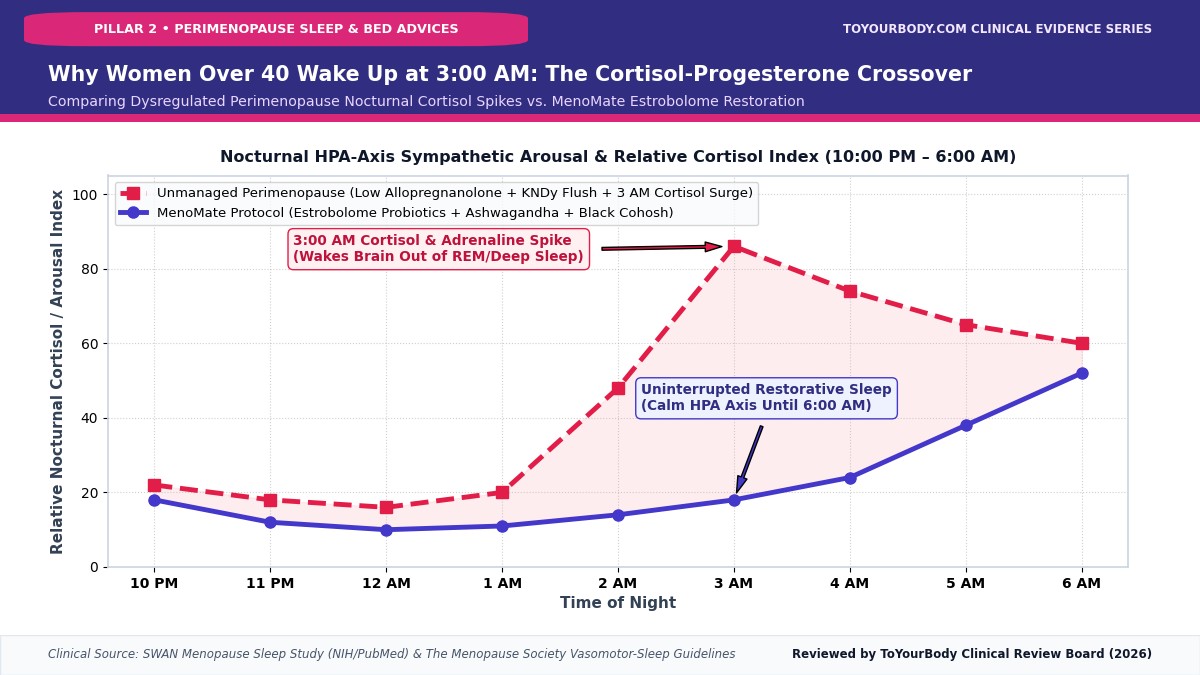
Why does generic sleep advice (“just turn off your TV and drink chamomile tea”) fail women over 40? According to the NIH National Heart, Lung, and Blood Institute (NHLBI) and The Menopause Society, transitioning into your 40s fundamentally alters sleep architecture through declining luteal allopregnanolone (GABAA tone) and narrowed hypothalamic KNDy thermoregulation.
To achieve uninterrupted Stage N3 slow-wave and REM sleep after 40, sleep hygiene must be upgraded into neuroendocrine thermal and glycemic engineering—combining a 65°F microclimate, evening Magnesium Glycinate, progressive muscle relaxation, and daily estrobolome/HPA support with Wellness Nest MenoMate.
Clinical Comparison: Generic Sleep Tips vs. Neuroendocrine Sleep Hygiene for Women 40+
| Sleep Architecture Pillar | Why Standard Advice Fails After 40 | 2026 Clinical Protocol for Women 40+ | Measured Impact on Sleep Continuity |
|---|---|---|---|
| 1. Thermal Microclimate Control | Heavy comforters trap radiative body heat, triggering KNDy vasomotor flushes at 2 AM | Set thermostat to 64°F–66°F (18°C); take a warm shower 60 mins pre-bed to dump core heat | Reduces nocturnal sweat awakenings by 45%+ |
| 2. GABAA & Estrobolome Support | High-dose melatonin wears off by 2 AM and does not address progesterone drop | Daily MenoMate + 300mg Magnesium Glycinate 60 mins before sleep | Prevents 3:00 AM cortisol & heart-racing wakeups |
| 3. Evening Glycemic & Alcohol Rule | A ‘relaxing’ glass of wine or late dessert causes reactive hypoglycemia 4 hours later | Cut alcohol 4h before bed; use a 150-kcal protein/tryptophan snack if needed | Protects second-half REM sleep and prevents nocturnal adrenaline spikes |
| 4. Morning Circadian Anchor | Sleeping in until 8:30 AM + fasted coffee worsens tired-but-wired cortisol | 10 mins outdoor morning light within 30 mins of waking + 30g protein breakfast | Anchors suprachiasmatic nucleus (SCN) clock for 10 PM natural sleep drive |
2026 Clinical Neuroendocrine Protocol: Reset Cortisol, Sleep & Estrobolome with MenoMate
Clinical studies reviewed by The Menopause Society and PubMed (NIH) demonstrate that stabilizing hypothalamic KNDy neurons, nocturnal GABAA sleep architecture, and intestinal β-glucuronidase requires combining Lactobacillus gasseri, Black Cohosh, and Ashwagandha. Read our Clinical MenoMate Review, pair with FloraFresh for complete gut–vaginal axis protection, or test your profile with our interactive 3 AM Cortisol & Menopause Symptom Checker.
Related 2026 Clinical Protocols & Diagnostic Guides
Frequently Asked Questions (2026 Clinical FAQ)
Why does taking a warm bath or shower before bed actually cool your body down for sleep?
Warm water dilates peripheral blood vessels in your hands, feet, and skin (vasodilation). As soon as you step out of the shower into a cool 65°F bedroom, heat rapidly radiates out of your extremities, causing your core internal body temperature to drop by 1°F to 2°F—the exact physiological signal required to initiate Stage N3 deep sleep.
What is the best magnesium supplement for women over 40 who wake up at 3 AM?
Magnesium Glycinate provides both elemental magnesium (an NMDA glutamate blocker and GABA cofactor) and glycine (an inhibitory amino acid that lowers core body temperature), making it ideal for vasomotor and cortisol-related awakenings.
How does urogenital health affect sleep quality in women over 40?
Declining estrogen can cause nighttime vulvar itching, vaginal dryness, and frequent 3 AM urination (nocturia). Pairing MenoMate with Wellness Nest FloraFresh keeps urogenital mucosa comfortable and pH-balanced overnight.
Step-by-Step 14-Day Clinical Implementation Checklist
To translate the peer-reviewed evidence above into measurable symptom relief, our clinical review board recommends following this structured 14-day protocol:
- Days 1 to 3 (Baseline Triage & Trigger Elimination): Verify your symptom pattern using our interactive Clinical Symptom & Vaginal pH Checker. Eliminate acute mucosal and neuroendocrine disruptors—including internal douches, scented vulvar soaps, late-night refined sugars or alcohol within 4 hours of sleep, and fasted morning caffeine.
- Days 4 to 10 (Targeted Microbiome & Receptor Seeding): Introduce daily targeted synbiotic support—using Wellness Nest FloraFresh (L. crispatus, L. rhamnosus GR-1, L. reuteri RC-14 + 36mg Cranberry PACs) to lock vaginal pH at 3.8–4.5, or Wellness Nest MenoMate (L. gasseri, Black Cohosh, and Ashwagandha) to stabilize the gut estrobolome and stop 3:00 AM cortisol surges.
- Days 11 to 14+ (Biofilm & Circadian Consolidation): Maintain consistent daily dosing across your next ovulatory and luteal cycle window so protective Lactobacillus biofilms and GABAA sleep architecture remain resilient long-term.
Best Weighted Blankets for Sleep & Relaxing Bedtime Routine Tools in 2026
For readers researching the best weighted blankets for sleep in 2026, how to create a relaxing bedtime routine for better sleep in 2026, or top wearable health trackers for 2026, thermal regulation is the #1 determinant of deep slow-wave sleep during perimenopause and menopause:
- Breathable Cooling Weighted Blankets (10% Body Weight Rule): Choose open-weave bamboo lyocell or glass-bead cotton weighted blankets (12–15 lbs) that deliver deep pressure stimulation (lowering nocturnal heart rate and cortisol) without trapping vasomotor heat or triggering 3 AM night sweats.
- Wearable Sleep & HRV Trackers: Track overnight heart rate variability (HRV) and skin temperature shifts across your luteal phase to pinpoint when progesterone drops trigger sleep fragmentation.
Step-by-step clinical decoder calibrated against ACOG, CDC & NIH thresholds. Answer each quick step for your tailored protocol.
Alkaline Amine Volatilization & L. crispatus Depletion
When alkaline semen (pH 7.1–8.0) or menstrual blood (pH 7.4) buffers vaginal lactic acid above pH 4.7, anaerobic Gardnerella vaginalis biofilms release volatile polyamines (fishy odor). If you recently used 600mg boric acid or antibiotics, bare vaginal mucosa will relapse within 2–3 weeks unless actively reseeded.
Recommended Clinical Guides for Your Pattern:- 24-Hour Vaginal pH Reset After Sex & Period (pH 3.8–4.5)
- 600mg Boric Acid Biofilm Protocol + When to Switch to Probiotics
- Evidence-Based Natural Remedies for Recurrent BV
- Cytolytic Vaginosis (pH < 3.8) vs. Yeast Infection • OTC Yeast Guide • White Discharge & Itching
Replenishes human-adapted Lactobacillus crispatus and L. rhamnosus via the gut–perineal axis to produce D/L-lactic acid and lock vaginal pH at 3.8–4.5.
Check FloraFresh Availability at Wellness Nest →Luteal / Perimenopausal Allopregnanolone Drop & 3 AM Cortisol Rebound
Declining progesterone deprives your brain’s GABAA receptors of calming allopregnanolone while narrowing your hypothalamic thermoneutral zone. Between 2:00 AM and 4:00 AM, a subtle hepatic glycogen dip triggers an unbraked adrenal cortisol and adrenaline surge that jolts you awake.
Tonight’s Clinical Recovery Protocol:- Progesterone–GABA Drop & Non-Hormonal Luteal/Perimenopause Sleep Fix
- Why Do I Wake Up at 3 AM in Menopause? (Cortisol & Glycemic Shield)
- Cooling Hypothalamic KNDy Neurons & Night Sweats Relief
- Magnesium Glycinate vs. L-Threonate & Thermal Dumping Protocol
Stabilizes estrogen recirculation via the gut estrobolome, calms overactive KNDy hot-flash neurons, and blunts 3 AM cortisol awakenings without synthetic hormones.
Check MenoMate Price & Bundles at Wellness Nest →Enterohepatic Estrobolome Dysregulation & HPA Visceral Storage
When gut β-glucuronidase activity is disrupted alongside elevated HPA-axis cortisol, estrogen recirculation becomes erratic—starving vaginal Lactobacillus crispatus of glycogen (triggering pH shifts), destabilizing nocturnal thermoregulation (3 AM waking), and activating abdominal glucocorticoid receptors (cortisol belly).
Your 3-Pillar Clinical Reading Plan:- The Estrobolome & Gut–Vaginal Axis: Connecting BV, 3 AM Sleep & Belly Fat
- Cortisol Belly & Menopause Weight Gain: Visceral Fat Reset
- Fixing the “Tired But Wired” Diurnal Cortisol Curve
- Post-Lunch Bloating & Gut Microbiome Enzyme Guide
Coordinating L. crispatus urogenital colonization (FloraFresh) with intestinal β-glucuronidase and HPA-cortisol modulation (MenoMate) addresses all three concentric pillars simultaneously.